




Titanium Vs Stainless Steel: Which Material Is Better For Corrosion-Resistant Industrial Equipment?
 Aug 10, 2026|
Material selection is one of the most important decisions in industrial equipment design. The wrong material choice can lead to corrosion problems, unexpected maintenance, production downtime, and increased operating costs.
Among corrosion-resistant materials, titanium and stainless steel are two widely used options. Stainless steel is known for its excellent balance between cost, mechanical properties, and manufacturability, while titanium is recognized for superior corrosion resistance, lightweight design, and long-term stability in demanding environments.
However, choosing between titanium and stainless steel is not simply about determining which material is "better." The right choice depends on the operating environment, service requirements, maintenance expectations, and total lifecycle cost.
China Super Tech Co., Ltd. provides advanced metal solutions including titanium and titanium alloy products, Titanium Semiconductor Components, synthetic diamond products, niobium, tantalum, and other precision metal materials. With large inventory availability, complete material specifications, and customized manufacturing capabilities, we support customers worldwide with both standard products and engineered solutions.
Titanium vs Stainless Steel: Key Material Differences
Titanium and stainless steel both offer corrosion resistance, but their protection mechanisms and performance characteristics are different.
| Comparison Item | Titanium | Stainless Steel |
|---|---|---|
| Material Type | Lightweight transition metal and titanium alloys | Iron-based alloy containing chromium, nickel, and other elements |
| Corrosion Protection | Stable titanium oxide passive layer | Chromium oxide passive layer |
| Density | Approx. 4.5 g/cm³ | Approx. 7.9–8.0 g/cm³ |
| Strength-to-Weight Ratio | Excellent | Good |
| Fabrication Difficulty | Requires specialized processing | Easier machining and welding |
| Initial Material Cost | Higher | Lower |
| Long-Term Durability | Excellent in aggressive environments | Excellent in general industrial environments |
The main difference is that titanium maintains stable performance in more aggressive environments, while stainless steel provides a cost-effective solution for many standard applications.
Corrosion Resistance: When Is Titanium the Better Choice?
Corrosion resistance is often the deciding factor between titanium and stainless steel.
Stainless Steel Performance
Stainless steel grades such as 304 and 316L are widely used because they provide reliable corrosion resistance and excellent manufacturing flexibility.
316L stainless steel is especially popular because the addition of molybdenum improves resistance to chloride corrosion.
Typical applications include:
Industrial pipelines
Food processing equipment
Pharmaceutical systems
General chemical equipment
Liquid cooling systems
However, under severe operating conditions, stainless steel may face risks such as:
Pitting corrosion
Crevice corrosion
Stress corrosion cracking
These risks become more significant in environments containing high chloride concentrations, aggressive chemicals, or continuous exposure to corrosive media.
Titanium Performance
Titanium forms a highly stable oxide film that provides excellent protection against corrosion.
Titanium is commonly selected for environments involving:
Seawater exposure
Chemical processing
High-purity systems
Semiconductor manufacturing
Aggressive industrial chemicals
Compared with stainless steel, titanium offers better resistance in many harsh environments and can maintain performance for longer periods with less maintenance.
For industries where equipment failure causes significant production losses, titanium can provide better long-term value despite its higher initial cost.
China Super Tech Titanium and Advanced Metal Solutions
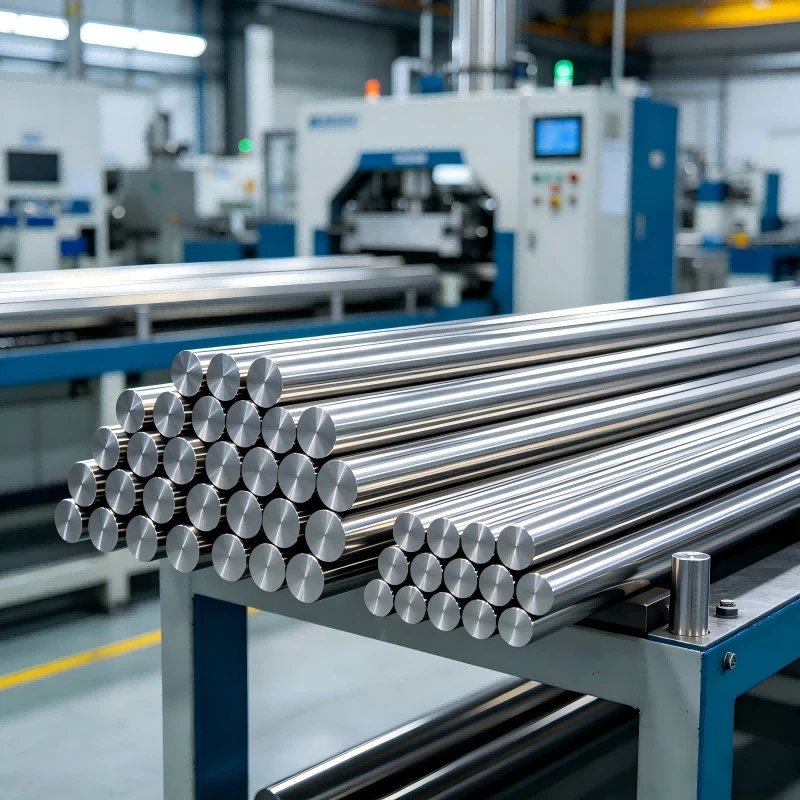
China Super Tech Co., Ltd. specializes in advanced metal materials and precision manufacturing solutions for global industrial customers.
Our product range includes:
Titanium and titanium alloy products
Titanium Semiconductor Components
Titanium precision machined parts
Synthetic diamond materials
Niobium and tantalum products
Customized metal components
With sufficient inventory, complete material grades, and flexible production capabilities, China Super Tech supports customers from material selection to finished component delivery.
Our advantages include:
Large inventory for standard products
Fast shipment capability
Complete material specifications
Customized manufacturing services
One-stop supply solutions
Whether customers require standard titanium products or customized titanium components for complex industrial applications, we provide reliable material solutions based on engineering requirements.
Conclusion: Titanium or Stainless Steel, Which One Is Better?
There is no universal answer to whether titanium or stainless steel is better.
Stainless steel remains an excellent choice when:
Cost efficiency is important
Operating conditions are moderate
Standard manufacturing processes are preferred
Titanium is the better option when:
Corrosion resistance is critical
Equipment operates in aggressive environments
Long service life is required
Semiconductor or high-purity applications are involved
The best material choice is the one that delivers the highest reliability and lowest total cost throughout the equipment lifecycle.
For advanced industrial applications requiring stable performance, titanium provides a proven solution for next-generation equipment design.
Need Help Choosing the Right Material?
China Super Tech Co., Ltd. provides titanium materials, Titanium Semiconductor Components, and customized metal solutions with complete specifications, large inventory, and professional manufacturing support.
Contact us for material selection advice and customized solutions for your application.
📩 sales@moly-tungsten.com|+86 13436334453|https://www.moly-tungsten.com/