




Beyond Copper: How High Thermal Conductivity Diamond Enables Faster And More Reliable Semiconductor Cooling
 Jul 31, 2026|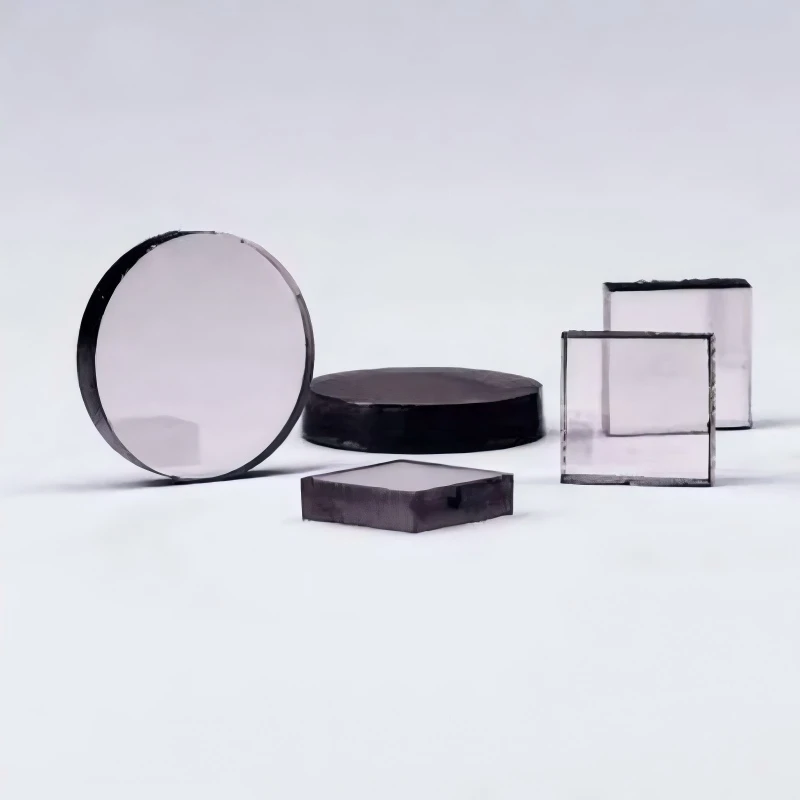
Pure copper has been used as a semiconductor heat dissipation substrate for several decades, with a thermal conductivity of approximately 400 W/m·K. In the current era where AI GPUs exceed 1000W and SiC/GaN power modules have a heat flux density of over 1000 W/cm², the physical limit of copper has been reached: hotspots cannot be quickly spread out, the chip junction temperature rises, triggering frequency reduction, and a 10°C increase in temperature leads to a 50% decrease in reliability. The package also warps and detaches due to the mismatch in CTE (16.7 ppm/℃) with silicon (2.6)/SiC.
High thermal conductivity synthetic diamond (polycrystalline CVD 1500–2000 W/m·K, single crystal IIa 2200–2400 W/m·K) is 5–5.5 times that of copper, with a CTE of only 1–2 ppm/℃, achieving nearly zero thermal mismatch with the chip; it is also an electrical insulator, allowing for direct attachment of bare dies, and can withstand 1200°C and a density of 3.5 g/cm³ (copper 9). The CVD diamond heat sink reduces the GPU junction temperature by 15–25°C, releasing 10–22% of the computing power; the diamond-copper composite (Diamond/Cu, 40–60% volume fraction) achieves 600–1000 W/m·K, balancing cost and manufacturability, and has become the main production force for AI servers and automotive-grade SiC inverters.
Procurement decision: It's not about "whether to replace or not", but "how to configure".
Flagship HPC/RF GaN: Single crystal/multi-crystal CVD diamond heat sink + Ti/Pt/Au metallization, near-junction heat dissipation;
Mainstream AI servers/automotive-grade power: Diamond/Cu composite substrate, CTE adjusted to match SiC;
Vacuum chambers and carriers: Tungsten copper, molybdenum copper for electronic packaging, titanium alloy for wafer holders and vacuum furnace components.
The pitfalls of decentralized procurement are quite evident: A power semiconductor factory separately purchased CVD diamond, tungsten copper substrate, and TC4 carrier. The delivery schedules of the three were 2 weeks apart. The metalization on the diamond surface did not meet the standards, resulting in voids in AuSn soldering, and the entire batch was scrapped. Another factory bought pure copper IHS and outsourced diamond composite. The interface thermal resistance exceeded the standard, and the chips still experienced frequency reduction.

One-stop solution provided by China Super Tech Co., Ltd.
We were founded in Beijing in 2013. We have our own full-process factory for powder metallurgy + precision processing + vacuum heat treatment, without outsourcing or trade markups. Our prices are 20–40% lower than those of European and American distributors for the same specifications. We export to over 30 countries.
Inventory and product range coverage:
Artificial diamond: CVD polycrystalline / single crystal heat sinks, Diamond/Cu composite sheets, industrial diamond micro-powder, with fixed crystal grade and ±1% concentration control, batch variation < 3%;
Hard metals: tungsten wire / tungsten-copper, molybdenum foil (99.95%)/molybdenum copper, tantalum-niobium plate wire (Nb processing scrap rate < 2%);
Titanium alloys: Gr1/2/5/7/9/12/23, TC4, Ti-6Al-4V ELI, full specifications for rods, plates, tubes, flanges, ASTM/ASME/DIN/JIS;
Five-axis CNC precision parts: semiconductor carriers, vacuum furnace titanium parts, medical titanium alloys.
📩 sales@moly-tungsten.com | +86 13436334453 | https://www.moly-tungsten.com/
FAQ
Q1: Is CVD diamond heat spreader worth replacing copper for AI/HPC cooling?
Yes when power >700W or hotspot >500W/cm²: CVD diamond cuts junction temp 15–25℃, eliminates copper CTE mismatch warping, enables sustained boost. For mid-power, Diamond/Cu composite (600–1000 W/m·K) is the cost-balanced choice.
Q2: Can one supplier deliver diamond + W/Mo/Ti semiconductor parts with consistent quality?
Yes-vertical-integrated manufacturers like China Super Tech control CVD diamond, W-Cu/Mo-Cu, Ti Grade 5 CNC, vacuum heat treat and NDT in-house, giving one MTC/CoA, one accountable party, 30–40% shorter lead time vs multi-vendor sourcing.