




Bend-Insensitive Optical Fiber For FTTH And High-Density Fiber Networks: When Should You Choose It?
 Aug 21, 2026|
As FTTH deployments move toward higher density and more compact installation structures, the available space for optical fiber routing is becoming increasingly limited. Fiber may need to pass through wall-mounted communication boxes, optical distribution boxes, ODFs, data center cabinets, and compact terminal equipment.
In these applications, conventional single-mode fiber may not always provide sufficient bending performance. Bend insensitive optical fiber is designed to reduce additional optical loss caused by bending, making it suitable for fiber networks where installation space is limited.
The key question for buyers is not simply whether bend-insensitive fiber is better, but whether your project actually needs improved bending performance and which G.657 fiber type is appropriate.
When Do You Really Need Bend-Insensitive Optical Fiber?
Several project conditions indicate that bend-insensitive fiber should be considered.
-
Limited Space in FTTH Indoor Installations
FTTH fiber is often routed through residential communication boxes, wall outlets, distribution boxes, and indoor cable channels. When the available space is limited, fiber may be installed with a smaller bending radius than conventional network designs allow.
A suitable bend insensitive fiber for FTTH can help reduce additional bending-related optical loss when the installation follows the manufacturer's specified bending requirements.
-
High-Density Fiber Management
Data centers, ODFs, telecom rooms, and high-density fiber distribution systems may contain hundreds or thousands of optical connections. As fiber density increases, routing becomes more complicated and available space becomes smaller.
ITU-T G.657 specifically addresses bending-loss insensitive single-mode optical fibers and includes applications involving access networks and space-constrained environments.
For high-density applications, bend insensitive single mode fiber can provide greater flexibility when designing fiber routing and management systems.
-
Small Network Equipment
Optical communication equipment continues to become smaller and more integrated. Compact fiber modules, distribution units, and terminal devices can create tighter routing requirements.
In these cases, selecting fiber according to the actual minimum design bending radius can give engineers more freedom when designing the internal fiber path.
However, bend-insensitive fiber does not mean that the fiber can be bent without limitation. Installation must still follow the specified minimum design bending radius and mechanical requirements.
How Should Buyers Choose Between G.657.A1, G.657.A2 and G.657.B3?
Searching for "bend insensitive optical fiber" is only the first step. Procurement teams should also identify the specific G.657 category required by the project.
-
G.657.A1 Fiber
G.657.A1 is designed for applications requiring improved bending performance while maintaining strong compatibility with conventional single-mode network requirements.
According to the current ITU-T G.657 recommendation, G.657.A1 has a minimum design radius of 10 mm and can be used in access networks and other applications where improved bending performance is required.
It can be considered for FTTH and general access network projects where the installation environment is space-constrained but extremely small bending radii are not required.
-
G.657.A2 Fiber
G.657.A2 provides stronger bending performance than A1. Its minimum design radius is 7.5 mm under the relevant ITU-T requirements.
This makes G.657.A2 fiber a practical option for compact FTTH installations, indoor fiber routing, small distribution boxes, and high-density fiber management.
-
G.657.B3 Fiber
G.657.B3 is designed for applications requiring even smaller bending radii. The ITU-T G.657 recommendation specifies a 5 mm minimum design radius for B3. It is primarily intended for specific short-reach and space-constrained applications, including certain building-internal and data center applications.
However, buyers should not assume that B3 can replace every G.652.D or G.657.A fiber application. System compatibility, transmission distance, wavelength, installation environment, and network architecture must all be evaluated.
A simple purchasing logic is:
Standard network requirements → G.652.D may be sufficient.
Space-limited FTTH or high-density networks → Consider G.657.A1 or G.657.A2.
Very small bending radius and specific short-reach applications → Evaluate G.657.B3 according to system requirements.
Practical Purchasing Scenario: An FTTH Upgrade Project
Consider an FTTH upgrade project in a multi-unit residential building in Germany.
The existing communication cabinets have limited installation space, while the number of new fiber connections is increasing. If conventional fiber is installed with a larger bending radius, the contractor may need to redesign the fiber routing or replace existing distribution components.
Before purchasing fiber, the project team should confirm:
- Whether the existing equipment supports G.657 fiber
- The minimum bending radius required by the installation
- Required operating wavelengths such as 1310 nm, 1550 nm, or 1625 nm
- Whether compatibility with G.652.D is required
- Whether the fiber will be used indoors, outdoors, or inside a data center
- Required attenuation and mechanical performance
- Required quantity and delivery schedule
If the buyer simply selects the lowest-priced "single mode fiber," the product may not match the actual installation requirements. Additional optical loss, installation difficulties, or compatibility problems can increase the overall project cost.
This is why bend insensitive single mode fiber should be purchased according to the application rather than the product name alone.
China Super Tech: Standard Stock and Custom Fiber Solutions
China Super Tech Co., Ltd. supplies optical fiber and a range of advanced industrial materials for international customers.
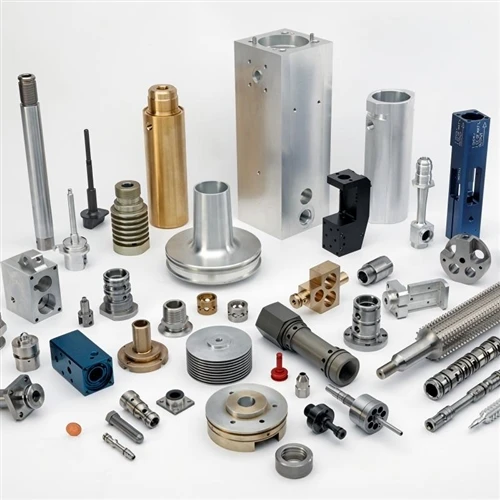
In addition to bend insensitive optical fiber, G.657.A1 fiber, G.657.A2 fiber, and bend insensitive single mode fiber, our product portfolio covers titanium alloys, synthetic diamond, niobium, tantalum, and other specialty materials.
For optical fiber projects, we focus on the customer's required specifications, application conditions, quantity, and delivery requirements.
Our standard products are maintained with sufficient inventory to support fast shipment. For projects requiring non-standard specifications, special lengths, packaging requirements, or other technical requirements, customization services are also available.For international buyers, this combination of stock availability and customization can simplify procurement, particularly when a project requires several fiber specifications rather than one standard product.
We can support customers from product selection and specification confirmation to production and delivery, providing a more integrated sourcing solution.
What Should You Confirm Before Buying Bend-Insensitive Fiber?
Instead of simply asking a supplier, "What is your price per kilometer?", buyers should provide the technical requirements of the project.
-
Fiber Type
Specify whether you need G.657.A1, G.657.A2, G.657.B3, or another fiber specification.
-
Application
State whether the fiber will be used for FTTH, indoor fiber networks, ODFs, data centers, telecom equipment, or fiber optic cable manufacturing.
-
Minimum Bend Radius
This is one of the most important parameters when purchasing bend-insensitive fiber. The required value should be determined according to the actual installation design.
-
Wavelength
Specify the required operating wavelengths, such as 1310 nm, 1550 nm, or 1625 nm.
-
Optical Performance
Confirm attenuation, mode-field diameter, PMD, chromatic dispersion, and other parameters required by the network design.
-
Compatibility
If the project uses existing G.652.D infrastructure, confirm whether the selected G.657 fiber needs to maintain the required compatibility.
-
Quantity and Delivery
Provide the estimated order quantity, annual demand, delivery schedule, and packaging requirements.
This information allows the supplier to recommend a suitable bend insensitive optical fiber for FTTH or high-density fiber networks instead of simply offering the lowest-cost option.
Who Should Consider China Super Tech?
China Super Tech primarily serves international industrial and technology customers requiring reliable product specifications, stable supply, and customized sourcing.
Our product portfolio covers optical fiber, titanium alloy, synthetic diamond, niobium, tantalum, and other specialty materials, allowing customers to source multiple industrial products through one supplier.
For optical fiber buyers in the United States, Germany, Japan, and South Korea, our standard products can be supplied from available inventory for faster shipment, while customized specifications can be discussed according to project requirements.
Whether you are an FTTH contractor, fiber optic cable manufacturer, telecom equipment supplier, data center integrator, or industrial distributor, providing your target fiber type, quantity, application, and delivery requirements allows us to evaluate the appropriate solution.
If you are currently sourcing G.657.A1, G.657.A2, G.657.B3, or other bend-insensitive optical fiber, contact China Super Tech with your specifications and project requirements. We can provide standard stock products or customized solutions according to your application.