




Custom Titanium Components: From Material Selection To Precision Manufacturing
 Aug 19, 2026|
As requirements for material performance and equipment reliability continue to increase across the semiconductor, vacuum equipment, chemical processing, aerospace, energy, and advanced manufacturing industries, the procurement of Titanium Vacuum Components is shifting from simply finding a titanium material to selecting the right grade, structure, manufacturing process, and supply solution.
For equipment manufacturers, engineering companies, and industrial procurement teams in Germany, Japan, India, and Southeast Asia, key considerations include material purity, vacuum compatibility, dimensional accuracy, surface condition, delivery time, and the supplier's ability to provide consistent customized components.
Why Titanium Is Increasingly Used in Vacuum and Advanced Equipment
Vacuum equipment places different demands on components than conventional mechanical systems. Components must not only provide mechanical strength and corrosion resistance but also maintain material stability, dimensional stability, cleanliness, and reliable performance under vacuum conditions.
Titanium offers a combination of high specific strength, excellent corrosion resistance, and good temperature resistance. These properties make it suitable for vacuum furnace components, vacuum coating equipment, semiconductor equipment parts, internal vacuum chamber structures, fixtures, supports, flanges, and other precision components.
As semiconductor equipment continues to move toward higher cleanliness requirements and increasingly complex manufacturing processes, equipment manufacturers are paying more attention to high-purity titanium and precision-machined titanium components.
China Super Tech Co., Ltd. provides high-purity titanium, molybdenum, tantalum, niobium, tungsten, and other specialty metal products for semiconductor equipment applications, covering material supply and precision component manufacturing.
This reflects an important change in purchasing requirements: customers are no longer simply buying titanium rods or plates. They increasingly need custom titanium vacuum components that can be directly integrated into their equipment.
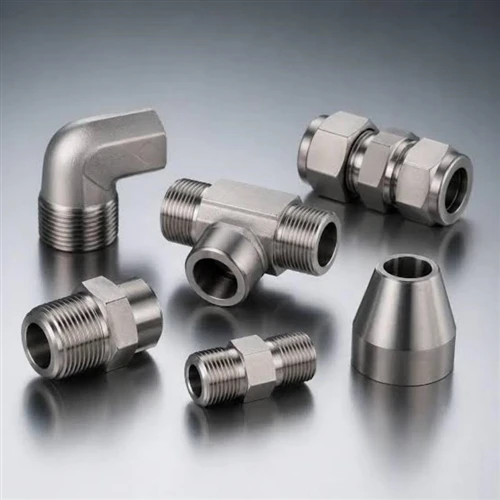
Material Selection Should Come Before Machining
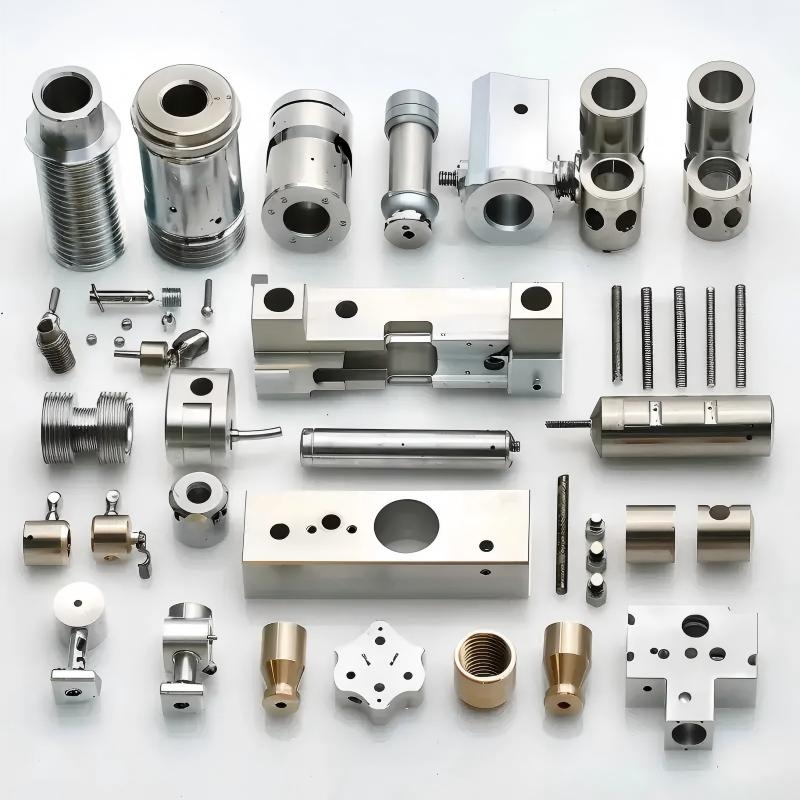
When purchasing customized titanium components, the first step should be identifying the operating environment rather than immediately requesting a machining quotation.
For general industrial vacuum equipment, different grades can be selected according to strength, corrosion resistance, machinability, and cost. Grade 1 and Grade 2 are commonly used commercially pure titanium grades with good corrosion resistance and processing characteristics. Grade 5, or Ti-6Al-4V, provides higher mechanical strength and is suitable for structural components requiring greater load-bearing capability.
For semiconductor, vacuum coating, and high-cleanliness equipment, buyers should also consider material purity, surface treatment, machining contamination control, and final cleaning requirements.
China Super Tech provides titanium grades including Grade 1, Grade 2, and Grade 5, with customized material and component solutions based on the customer's operating conditions and technical requirements.
Therefore, when requesting a quotation, buyers should provide the material grade, operating temperature, vacuum conditions, dimensional tolerances, surface roughness, connection method, and required quantity whenever possible. More complete technical information allows the supplier to recommend the appropriate material and manufacturing process at an early stage.
Precision Manufacturing Determines Final Component Performance
Titanium is a relatively high-value material, making material utilization and dimensional control important factors during manufacturing.
For complex Titanium Vacuum Components, common manufacturing processes include CNC turning, milling, drilling, grinding, precision machining, and heat treatment where required. For certain semiconductor equipment components, additional surface treatment and cleaning procedures may be required according to cleanliness specifications.
China Super Tech applies quality control throughout the manufacturing process, from raw material verification and machining to forming and final inspection. The company provides CNC precision machining, material traceability, dimensional inspection, and customized component manufacturing.
Its titanium product range includes titanium plates, titanium rods, titanium alloys, precision titanium parts, and semiconductor titanium components.
One practical example is the semiconductor-grade titanium alloy carrier component supplied by China Super Tech. It is designed for wafer module support in high-cleanliness environments where mechanical stability and resistance to vibration are important. The component uses a near-net-shape manufacturing approach to reduce unnecessary material removal while allowing the structure to be customized according to equipment space and load requirements.
This demonstrates why, for high-value titanium materials, manufacturing capability is just as important as material availability.

What Buyers in Germany, Japan, India, and Southeast Asia Should Consider
Although procurement priorities vary between markets, the fundamental evaluation criteria for industrial titanium components remain similar.
German and Japanese equipment manufacturers generally place strong emphasis on dimensional accuracy, material certification, quality consistency, and long-term supply capability. Suppliers should therefore be able to provide appropriate material certificates and inspection documentation.
Indian manufacturers and engineering companies in areas such as vacuum equipment, chemical processing, energy, and industrial machinery often pay close attention to cost, delivery time, and customization capability. Suppliers with commonly used titanium materials in stock can reduce the waiting time associated with raw material procurement.
Southeast Asian manufacturers are expanding production capabilities across semiconductor, electronics, chemical processing, and new energy industries. For equipment maintenance and replacement components, stable supply is particularly important. Maintaining inventory of standard titanium materials and commonly requested specifications can help reduce equipment downtime caused by material shortages.
China Super Tech's product range extends beyond titanium. The company also supplies tungsten, molybdenum, tantalum, niobium, synthetic diamond, and other specialty metal products, with a broad selection of material grades and specifications.
Standard products can be shipped quickly based on inventory availability, while non-standard components can be manufactured according to customer drawings, samples, dimensions, and technical requirements.
Why One-Stop Supply Matters for Customized Projects
When a procurement team needs titanium components together with molybdenum, tantalum, niobium, or tungsten components, working with multiple suppliers can increase technical communication, quality management, and logistics coordination.
China Super Tech Co., Ltd. has been engaged in specialty metal materials and precision manufacturing since 2013, providing products for international markets.
For long-term projects, the company can support material selection, specification confirmation, machining, inspection, and delivery through an integrated supply process.
For standard products, available inventory can support faster delivery. For customized components, production can be arranged according to drawings, samples, or technical specifications.
For equipment manufacturers in Germany, Japan, India, and Southeast Asia, this approach can reduce procurement complexity while improving consistency between different batches of components.
Procurement Checklist for Titanium Vacuum Components

Before purchasing Titanium Vacuum Components, buyers should confirm the following:
Material grade: Select the titanium grade according to the actual operating conditions rather than simply specifying "titanium alloy."
Dimensions and tolerances: Confirm critical dimensions, especially flange dimensions, threads, hole positions, and mating surfaces.
Surface treatment and cleaning: Define surface roughness, passivation, polishing, and cleaning requirements when required by the vacuum or semiconductor application.
Material certification: Confirm whether material certificates and inspection documents are required for traceability.
Inventory and customization: Check whether the supplier maintains standard materials in stock and can manufacture non-standard components.
Multi-material capability: For projects involving titanium, tungsten, molybdenum, tantalum, or niobium, consider whether one supplier can provide multiple materials and components.
For industrial procurement, the lowest unit price is not necessarily the lowest total cost. Material availability, machining accuracy, documentation, quality consistency, delivery time, and long-term supply capability should all be considered.
China Super Tech: From Materials to Precision Components
China Super Tech Co., Ltd. provides titanium alloys, tungsten, molybdenum, tantalum, niobium, synthetic diamond, and other specialty metal materials and precision-machined products for international customers.
The company maintains a broad range of standard materials and specifications in inventory, allowing standard products to be shipped quickly when stock is available. At the same time, customized titanium vacuum components, semiconductor components, chemical equipment parts, and other precision metal components can be manufactured according to customer drawings, samples, dimensions, and application requirements.
For projects involving vacuum furnaces, vacuum coating equipment, semiconductor equipment, chemical processing systems, or other high-performance industrial applications, customers can provide drawings, material requirements, dimensions, quantities, and operating conditions. China Super Tech can then assist with material selection and develop a suitable manufacturing solution.
FAQ
1. What titanium grade is best for vacuum components?
There is no single titanium grade suitable for every vacuum application. Grade 1 and Grade 2 are widely used where corrosion resistance and good machinability are required, while Grade 5 Ti-6Al-4V is suitable for structural components requiring higher strength. The final selection should consider the vacuum environment, temperature, mechanical load, dimensions, cleanliness requirements, and other operating conditions.
2. Can titanium vacuum components be custom-made from drawings?
Yes. China Super Tech can manufacture customized titanium components based on customer drawings, samples, dimensions, and technical specifications. The company supports an integrated process covering material selection, precision machining, inspection, and delivery, making it suitable for both standard and non-standard Titanium Vacuum Components.