

Titanium Alloys For The Ship Components
Titanium alloys for ship components are advanced marine engineering materials designed for long-term operation in seawater, offshore, and high-humidity environments. Compared with conventional stainless steel, copper alloys, and carbon steel, titanium alloys offer significantly superior resistance to chloride corrosion, seawater erosion, and biofouling. Through optimized alloy composition, vacuum melting, hot forging, and precision machining processes, China Super Tech Co., Ltd. supplies high-performance marine-grade titanium components that help shipbuilders reduce structural weight, extend maintenance intervals, and improve overall vessel reliability in demanding marine applications.

- Product Introduction
Titanium alloys for ship components are advanced marine engineering materials designed for long-term operation in seawater, offshore, and high-humidity environments. Compared with conventional stainless steel, copper alloys, and carbon steel, titanium alloys offer significantly superior resistance to chloride corrosion, seawater erosion, and biofouling. Through optimized alloy composition, vacuum melting, hot forging, and precision machining processes, China Super Tech Co., Ltd. supplies high-performance marine-grade titanium components that help shipbuilders reduce structural weight, extend maintenance intervals, and improve overall vessel reliability in demanding marine applications.
Product Features
1.Exceptional Seawater Corrosion Resistance
Marine environments contain high concentrations of chloride ions, which can rapidly initiate pitting and crevice corrosion in many metallic materials. Titanium naturally forms a dense and stable titanium oxide film on its surface. This passive layer continuously self-repairs when damaged, providing long-term protection against seawater corrosion without requiring additional coatings.
(1)Reduced maintenance costs
(2)Longer service life
(3)Lower risk of unexpected equipment failure
(4)Improved vessel availability
2.High Strength-to-Weight Ratio
Marine structures often require a balance between strength and weight. Titanium alloys such as Ti-6Al-4V provide mechanical strength comparable to many high-strength steels while weighing approximately 40% less.
Reducing component weight lowers overall vessel mass, which can contribute to:
(1)Improved fuel efficiency
(2)Increased payload capacity
(3)Better vessel stability
(4)Reduced structural loading on connected systems
3.Resistance to Marine Biofouling
Unlike many traditional marine metals, titanium surfaces are less susceptible to biological attachment and corrosion-assisted fouling.
This characteristic makes titanium particularly suitable for components exposed to continuous seawater flow, helping maintain system efficiency over extended operating periods.
4.Reliable Performance Under Cyclic Loading
Ship components are continuously subjected to vibration, wave impact, pressure fluctuations, and mechanical stress.
By controlling grain structure through thermomechanical processing and heat treatment, China Super Tech Co., Ltd. produces titanium components with enhanced fatigue resistance, helping improve operational reliability in dynamic marine environments.
5.Long-Term Cost Efficiency
Although the initial material cost is higher than conventional metals, titanium components often remain in service for decades with minimal corrosion-related replacement requirements.
For many marine systems, the total lifecycle cost becomes significantly lower compared with stainless steel or copper-based alternatives.
Product Applications
1.Propeller Shafts and Propulsion System Components
Propulsion systems operate continuously in seawater while experiencing torsional loads and cyclic stresses.
Titanium alloys provide corrosion resistance and fatigue strength simultaneously, reducing the risk of shaft degradation and minimizing downtime caused by maintenance or replacement.
2.Seawater Piping Systems
Seawater cooling circuits are among the most corrosion-prone systems aboard vessels.
Titanium pipes, flanges, elbows, and fittings resist pitting and crevice corrosion caused by chloride-rich seawater, allowing long-term operation without the frequent replacement associated with conventional materials.
3.Heat Exchangers and Condensers
Marine heat exchangers operate under continuous exposure to seawater and elevated temperatures.
The corrosion-resistant oxide film on titanium maintains thermal transfer efficiency over time while preventing leakage caused by tube-wall degradation.
4.Offshore Platform Structural Components
Offshore structures encounter harsh environmental conditions including salt spray, humidity, and wave impact.
Titanium alloys reduce structural weight while providing excellent corrosion resistance, helping extend maintenance intervals for offshore installations.
5.Pumps, Valves, and Marine Fluid Control Equipment
Marine pumps and valves often experience erosion-corrosion caused by high-velocity seawater.
Titanium components withstand both chemical attack and flow-induced wear, resulting in improved operational reliability and longer service life.
6.Subsea and Deep-Sea Equipment
Deep-sea systems require materials capable of resisting corrosion under high-pressure conditions.
Titanium's combination of strength, corrosion resistance, and relatively low density makes it an ideal material for underwater instrumentation, subsea housings, and deep-ocean engineering equipment.
Custom Manufacturing Services
1.Marine Alloy Selection Support
Different marine systems require different performance characteristics.
Our engineering team assists customers in selecting suitable grades including:
(1)Grade 2 Commercially Pure Titanium
(2)Grade 5 Ti-6Al-4V
(3)Grade 7 Palladium-Enhanced Titanium
(4)Grade 12 Titanium Alloy
(5)Other customized marine-grade titanium materials
This helps customers avoid unnecessary material costs while achieving required performance targets.
2.Precision Machining for Complex Ship Components
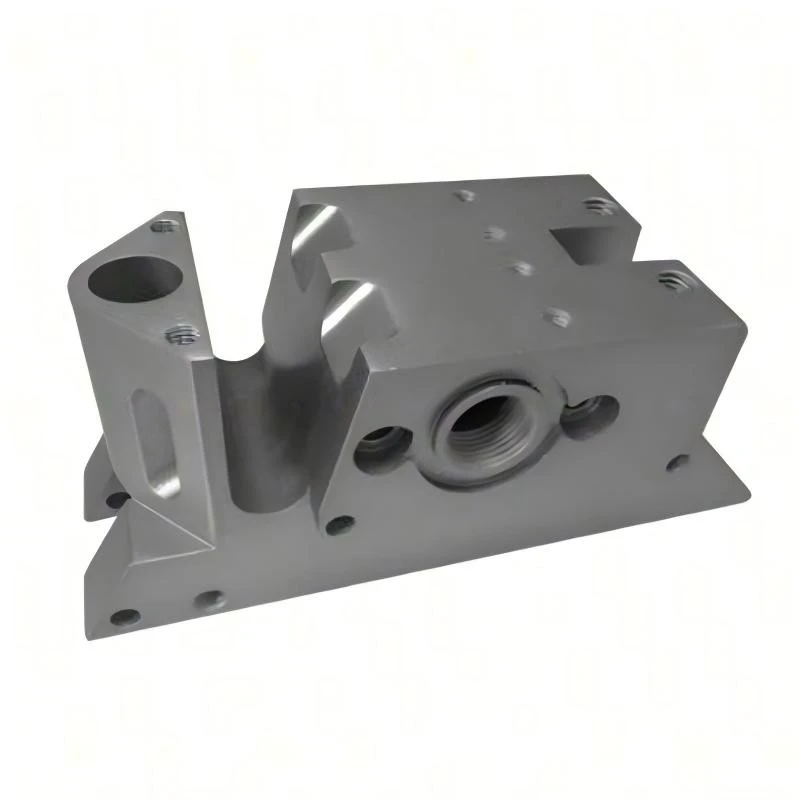
China Super Tech Co., Ltd. combines CNC machining, multi-axis milling, turning, drilling, and precision finishing to manufacture complex marine components with tight dimensional tolerances.
This enables direct integration into shipbuilding and offshore engineering projects while reducing assembly adjustments.
3.Large Forging and Near-Net Shape Production
For large marine components, we utilize forging and near-net-shape manufacturing techniques to improve internal material integrity and reduce machining waste.
(1)Better mechanical properties
(2)Reduced material loss
(3)Lower overall manufacturing cost
(4)Improved structural reliability
4.Full Traceability and Quality Control
Each production batch can be supplied with:
(1)Material certificates
(2)Chemical composition reports
(3)Mechanical property reports
(4)Ultrasonic testing reports
(5)Dimensional inspection reports
This ensures compliance with marine engineering procurement requirements.
Specifications
|
Parameter |
Specification |
|
Material Grades |
Grade 2, Grade 5 (Ti-6Al-4V), Grade 7, Grade 12, Custom Grades |
|
Standard Compliance |
ASTM B348, ASTM B381, ASTM B265, AMS Standards |
|
Manufacturing Process |
Vacuum Melting + Forging + Heat Treatment + CNC Machining |
|
Density |
Approx. 4.51 g/cm³ |
|
Tensile Strength |
345 MPa – 1100 MPa |
|
Yield Strength |
275 MPa – 1000 MPa |
|
Elongation |
10% – 30% |
|
Corrosion Resistance |
Excellent in Seawater and Chloride Environments |
|
Surface Finish |
Machined, Polished, Pickled, Sandblasted |
|
Dimensional Tolerance |
According to Drawing Requirements |
|
Inspection Methods |
UT, PMI, Mechanical Testing, Dimensional Inspection |
|
Custom Sizes |
Available |
|
OEM / ODM Service |
Supported |
FAQ
1.Why choose titanium instead of stainless steel for marine components?
While high-grade stainless steels offer good corrosion resistance, long-term exposure to seawater can still result in pitting and crevice corrosion. Titanium develops a highly stable oxide film that provides significantly better protection in chloride-rich environments, often leading to a much longer service life.
2.Which titanium grade is most suitable for shipbuilding?
The selection depends on the application.
(1)Grade 2 is commonly used for seawater piping and heat exchangers.
(2)Grade 5 is preferred where high strength is required.
(3)Grade 7 offers enhanced corrosion resistance in particularly aggressive marine environments.
Our engineers can recommend the most cost-effective option based on operating conditions.
3.Can you manufacture components according to shipyard drawings?
Yes. China Super Tech Co., Ltd. regularly manufactures custom marine components based on customer drawings, CAD files, or technical specifications, including complex geometries and precision-machined parts.
4.How do titanium components reduce lifecycle costs?
Although initial procurement costs may be higher, titanium significantly reduces corrosion-related maintenance, replacement frequency, coating expenses, and downtime, resulting in lower total ownership costs over the equipment's operational life.
5.What quality inspections are performed before shipment?
Depending on project requirements, inspections may include:
(1)Chemical composition analysis
(2)Mechanical property testing
(3)Ultrasonic testing
(4)Positive material identification (PMI)
(5)Dimensional verification
(6)Surface quality inspection
(7)Inspection reports can be provided with each shipment.
6.Can large offshore or naval projects be supported?
Yes. We provide customized manufacturing solutions for commercial shipbuilding, offshore platforms, seawater systems, marine engineering contractors, and specialized vessel projects, with support for both prototype and volume production requirements.
Hot Tags: titanium alloys for the ship components, China titanium alloys for the ship components manufacturers, suppliers, factory, 316 Titanium Stainless Steel, Aluminum Titanium Carbon, Ti Nb Alloy, titanium alloy, Titanium Columbium Alloy, Titanium Zirconium Molybdenum