




Bend-Insensitive Fiber Supplier Selection: 7 Factors To Check Before Placing An Order
 Sep 17, 2026|
For FTTH projects, choosing a bend-insensitive fiber supplier is not simply a matter of comparing price per kilometer. The fiber must match the cable structure, bending requirements, transmission performance, delivery schedule and project specifications.
This is particularly important in markets such as the United States, Japan, South Korea, Singapore and Malaysia, where FTTH, high-speed broadband and dense optical access networks continue to expand.

In June 2026, NTT East announced another expansion of its 10 Gbps FTTH service area in Japan. Singapore has also moved toward 50 Gbps fiber broadband trials, while Malaysia continues to expand national digital infrastructure.
For these projects, the following seven factors should be checked before placing an order.
1. Confirm the Exact G.657 Category
The term bend-insensitive fiber G 657 covers different fiber categories. A supplier should clearly state whether the proposed fiber is G.657.A1, G.657.A2 or another category.
G.657.A1 and G.657.A2 are Category A bend-insensitive single-mode fibers. For current project selection, G.657.A1 is specified for a minimum design radius of 10 mm, while G.657.A2 supports a smaller minimum design radius of 7.5 mm.
G.657.A1 Fiber
G.657.A1 is designed for applications where improved bend performance is required while the installation can maintain a minimum design radius of around 10 mm.
It is commonly evaluated for FTTH access networks, indoor optical networks, distribution systems and other compact routing applications.
View G.657.A1 Fiber →G.657.A2 Fiber
G.657.A2 is designed for tighter routing conditions where the project requires a smaller minimum design radius, approximately 7.5 mm.
It can be evaluated for compact FTTH, indoor wiring, high-density distribution equipment and restricted installation spaces.
View G.657.A2 Fiber →G.652.D Fiber
G.652.D remains a widely used single-mode fiber specification for general optical communication networks. When the installation environment provides sufficient routing space, it may meet the project requirement without requiring a tighter bend specification.
View Optical Fiber Products →2. Check Compatibility With Your FTTH Cable Design
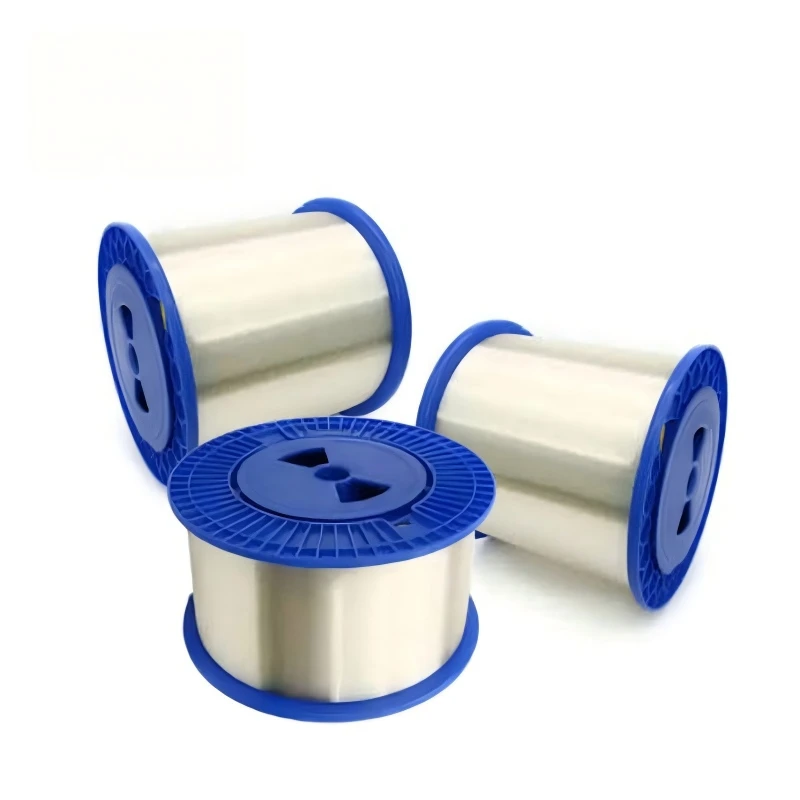
A fiber may meet the required optical specification but still be unsuitable for a particular cable construction.
Before ordering, confirm:
- Cable diameter
- Fiber count
- Loose-tube or tight-buffer structure
- Required bending radius
- Indoor or outdoor installation
- Drop cable or distribution cable application
- Operating wavelength
- Required attenuation
For compact FTTH drop cables and high-density distribution boxes, G.657.A1 fiber may be sufficient. Projects requiring tighter routing may need G.657.A2 bend-insensitive fiber.
See our bend-insensitive fiber product range for different bend-performance requirements.
3. Do Not Compare Suppliers Only by Price
A lower fiber price does not necessarily mean a lower project cost.
Fiber specification → Test data → MOQ → Production lead time → Available stock → Delivery schedule → Customization → Technical support
For an FTTH project, delayed fiber delivery can affect cable production and ultimately network deployment.
This is particularly relevant for international buyers managing FTTH and optical infrastructure projects across Asia-Pacific and other high-density markets.
4. Ask for Actual Test Data
A professional supplier should be able to provide technical data rather than only a product brochure.
5. Check G.652.D Compatibility
For many FTTH projects, compatibility with existing G.652.D infrastructure is important.
Category A G.657 fibers are designed within the G.652.D-compatible framework, which makes G.657.A1 and G.657.A2 relevant options when a project requires both bend performance and network compatibility.
Ask: "Which G.657 category do you supply, and is it compatible with the G.652.D requirements specified for our network?"
This question can eliminate unsuitable suppliers before sampling.
6. Confirm Stock and Customization Capability

For international FTTH projects, supply flexibility can be as important as optical performance.
China Super Tech Co., Ltd. supplies bend-insensitive fiber for optical communication and access-network applications, with options selected according to cable structure, bend-radius requirements, wavelength and project specifications.
Our optical fiber range includes G.657.A1, G.657.A2, Bend-Insensitive Fiber and other single-mode and multimode optical fiber products.
For standard specifications, we maintain inventory to support faster shipment. For project-specific requirements, we can also discuss customized specifications and supply arrangements.
This is useful for buyers managing different FTTH cable constructions across the United States, Japan, South Korea, Singapore and Malaysia.
7. Evaluate the Supplier's Ability to Support the Whole Project
A fiber supplier should not only provide a datasheet and quotation.
| Project Stage | What to Confirm |
|---|---|
| Specification | Fiber type, bend radius, wavelength and optical requirements |
| Sample | Sample availability and technical validation support |
| Documentation | Technical specifications and test documentation |
| Production | Production scheduling and batch consistency |
| Bulk Supply | Quantity, MOQ and delivery schedule |
| Customization | Fiber configuration, packaging and project-specific requirements |
| After-Sales | Technical communication and continued project support |
A Practical Supplier Checklist for FTTH Buyers
Before sending a purchase order, confirm these seven points:
| Check | What to Confirm |
|---|---|
| Fiber Type | G.652.D / G.657.A1 / G.657.A2 |
| Bend Performance | Required minimum design bend radius |
| Optical Data | Attenuation, MFD, PMD and dispersion |
| Compatibility | G.652.D and cable design compatibility |
| Application | FTTH, FTTB, indoor, distribution or access |
| Supply | Stock, MOQ and lead time |
| Service | Testing, customization and technical support |
Why Work With China Super Tech?
China Super Tech Co., Ltd. supplies optical fiber together with a broader range of advanced materials, including titanium alloys, artificial diamond, niobium, tantalum and optical fiber products.
For optical fiber buyers, our focus is on practical project requirements: complete specifications, available inventory, standard products with fast shipment, customized supply options and one-stop service.
If your project requires bend-insensitive fiber, G.657.A1 fiber, G.657.A2 fiber or other single-mode optical fiber, send us your required fiber type, cable structure, bend radius, quantity and delivery destination.
Need a Bend-Insensitive Fiber Supplier?
Send your fiber type, minimum bend radius, cable structure, required quantity and delivery destination. China Super Tech can review the specification and provide a suitable standard-stock or customized supply solution.
Request a Fiber Quote View Optical Fiber Products- Required fiber type: G.657.A1 / G.657.A2 / other
- Minimum design bend radius
- Operating wavelength
- FTTH cable or application type
- Required quantity
- Required delivery date
- Destination country or port
- Any coating, spool, packaging or customization requirements
Frequently Asked Questions
Bend-insensitive fiber is a single-mode optical fiber designed to reduce additional optical loss associated with bending. It is commonly evaluated for FTTH, indoor optical networks, compact distribution systems and other applications where routing space is restricted.
G.657.A1 is designed for a minimum design radius of approximately 10 mm, while G.657.A2 supports a smaller minimum design radius of approximately 7.5 mm. Both are Category A bend-insensitive single-mode fiber categories. The correct choice depends on the actual installation, cable construction and project specification.
For a more detailed comparison, see: G.657 A1 vs G.657 A2 Fiber .
Technical selection should be confirmed against the applicable fiber and cable specifications for the actual project.