

G.657.A1 Fiber
G.657.A1 fiber is a single-mode optical fiber with superior bend performance, developed for communication systems where installation space is limited and cabling routes require smaller bend radii. Compared with conventional G.652.D fiber, its optimized glass waveguide design improves bend resistance, helping reduce excess optical loss caused by fiber bending, while maintaining low attenuation and standard single-mode transmission characteristics. It is widely used in fiber-to-the-home (FTTH) networks, indoor access networks, data centers, and compact fiber distribution systems.

- Product Introduction
G.657.A1 Fiber | Bend-Insensitive Single-Mode Optical Fiber
G.657.A1 Fiber
Bend-Insensitive Single-Mode Optical Fiber
Product Overview
G.657.A1 fiber is a single-mode optical fiber with superior bend performance, developed for communication systems where installation space is limited and cabling routes require smaller bend radii. Compared with conventional G.652.D fiber, its optimized glass waveguide design improves bend resistance, helping reduce excess optical loss caused by fiber bending, while maintaining low attenuation and standard single-mode transmission characteristics. It is widely used in fiber-to-the-home (FTTH) networks, indoor access networks, data centers, and compact fiber distribution systems.
China Super Tech Co., Ltd. supplies G.657.A1 fiber with controllable optical and geometric parameters, fully compliant with ITU-T G.657 (Category A1) and IEC 60793-2-50 Type B6_a1, and compatible with mainstream G.652.D single-mode systems - supporting stable cable production and customized deployment requirements.
Product Features
1. Enhanced Bend Performance
An enhanced waveguide structure allows the fiber to withstand tighter routing than conventional single-mode fiber, reducing excess bending loss at corners, inside cabinets, or through compact distribution boxes (additional loss ≤0.75 dB at a 10 mm radius, 1 turn, 1550 nm).
2. Stable Single-Mode Transmission
Mode field diameter (MFD) closely matches common G.652.D single-mode systems, easing integration with existing optical components and reducing connection loss caused by mode field mismatch.
3. Low Attenuation Across All Bands
Covers the full O, E, S, C, and L bands (1260–1625 nm). Low-loss glass composition and tightly controlled drawing processes maintain stable attenuation for reliable transmission over access and short-to-medium reach links.
4. Controlled Fiber Geometry
Cladding diameter, coating diameter, core/cladding concentricity error, and non-circularity are all tightly controlled, improving splicing performance and helping maintain consistent connection quality during cable assembly.
5. Cable-Ready Customization
Coating diameter, fiber count, color, and delivery length can be coordinated to match customer cable structure requirements, rather than offering a one-size-fits-all specification.
Applications
- FTTH / FTTx Access Networks - Access cables frequently route through small cabinets, wall boxes, and terminal points; superior bend tolerance reduces the risk of excess loss in space-constrained installations.
- Indoor Fiber Distribution - Suited to narrow conduits and compact distribution boxes in office buildings, residential towers, hotels, and commercial facilities.
- Data Center Cabling - Supports stable transmission performance in high-density fiber cabinets and compact rack layouts.
- Fiber Distribution Boxes & Termination Units - Meets the routing and storage needs of compact distribution enclosures while preserving single-mode optical characteristics.
- Inter-Building & Campus Networks - Suitable for short- and medium-reach links between buildings or distribution points, integrated into appropriate indoor/outdoor cable structures.
Standards & Compliance
- ITU-T G.657 (Category A1) - ITU recommendation for bend-insensitive fiber for access networks
- ITU-T G.652.D - Baseline standard for single-mode fiber interoperability
- IEC 60793-2-50, classification Type B6_a1 - IEC optical fiber product classification
- YD/T 1272.3 - China communications industry standard (applicable for domestic-market products)
Technical Specifications
| Item | Specification |
|---|---|
| Fiber Type | Bend-performance-enhanced single-mode fiber |
| ITU-T Category | G.657.A1 |
| IEC Fiber Category | B6_a1 (IEC 60793-2-50) |
| Fiber Compatibility | Compatible with common G.652.D single-mode systems |
| Item | Specification |
|---|---|
| Cladding Diameter | 125 ± 0.7 μm |
| Cladding Non-Circularity | ≤0.7% |
| Coating Diameter | 242 ± 5 μm (customizable; 250 μm / 900 μm tight-buffered options available) |
| Coating Non-Circularity | ≤6.0% |
| Core/Cladding Concentricity Error | ≤0.5 μm |
| Curl (Radius of Curvature) | ≥4.0 m |
| Item | Specification |
|---|---|
| Mode Field Diameter (MFD) @1310 nm | 9.2 ± 0.4 μm |
| Mode Field Diameter (MFD) @1550 nm | 10.4 ± 0.5 μm |
| Cable Cutoff Wavelength (λcc) | ≤1260 nm |
| Attenuation @1310 nm | ≤0.36 dB/km |
| Attenuation @1383 nm (water peak, post hydrogen aging) | ≤0.31 dB/km |
| Attenuation @1550 nm | ≤0.21 dB/km |
| Attenuation @1625 nm | ≤0.24 dB/km |
| Zero Dispersion Wavelength (λ0) | 1300–1324 nm |
| Zero Dispersion Slope (S0) | ≤0.092 ps/(nm²·km) |
| Chromatic Dispersion @1550 nm | ≤18 ps/(nm·km) |
| Polarization Mode Dispersion (PMDQ, link design value) | ≤0.20 ps/√km |
| Test Condition | Additional Loss Limit |
|---|---|
| 10 mm radius, 1 turn @1550 nm | ≤0.75 dB |
| 10 mm radius, 1 turn @1625 nm | ≤1.50 dB |
| 15 mm radius, 10 turns @1550 nm | ≤0.25 dB |
| 15 mm radius, 10 turns @1625 nm | ≤1.00 dB |
| Item | Specification |
|---|---|
| Proof Test | ≥0.69 GPa (approx. 1.0% strain) |
| Coating Strip Force | 1.3–8.9 N |
| Operating Temperature Range | −60°C to +85°C (bare fiber) |
Customization Services
1. Fiber Structure Matching
Coating structure, fiber diameter, color, and fiber count can be adjusted to match customer cable designs, reducing the need to redesign existing production processes.
2. Optical Parameter Control
For projects with specific attenuation, MFD, dispersion, or bend-loss requirements, target specifications can be evaluated pre-production and matched configurations provided.
3. Cable Production Compatibility
Fiber specifications can be coordinated with loose tube, tight-buffered, micro-cable, and other cable structures to meet size or installation constraints.
4. Length & Packaging Customization
Delivery length, spool configuration, labeling, and packaging can be arranged per production needs. Standard put-up lengths include 2 km / 4 km / 12.6 km / 25.2 km, with custom lengths available.
5. Batch Consistency Control
For repeat orders, established specifications are used as a production reference, with key optical and geometric parameters checked across batches to ensure consistent downstream results.
Packaging & Delivery
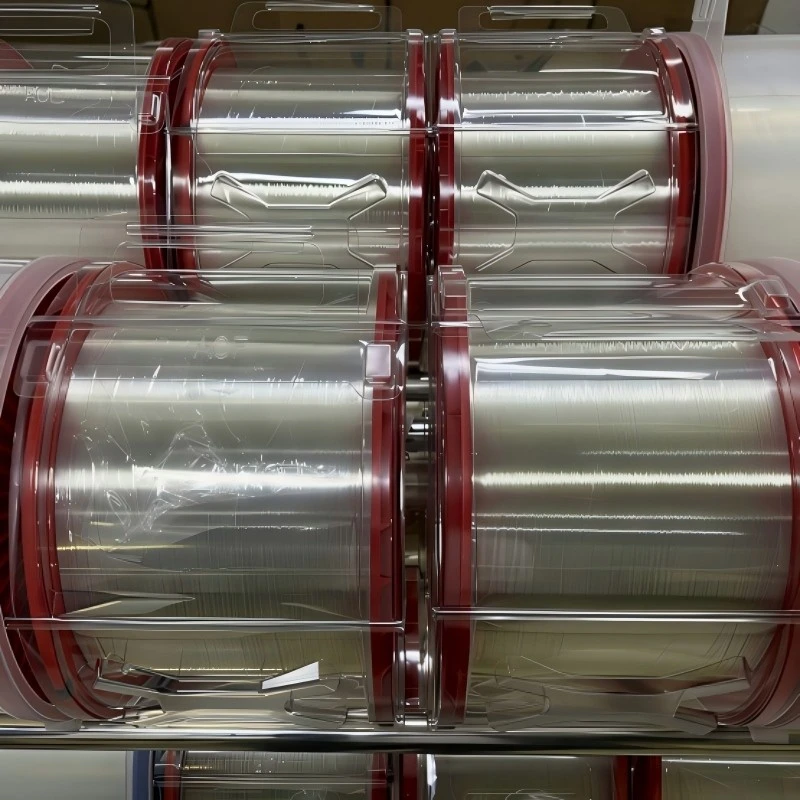
- Product Form - Bare fiber on spool, or tight-buffered finished fiber (250 μm / 900 μm) upon request.
- Packaging - Moisture- and shock-resistant professional spool packaging, suitable for long-distance sea/air freight.
- MOQ & Lead Time - Contact our sales engineers to confirm standard MOQ and lead times; custom specifications are assessed per order volume.
- Quality Assurance - Outgoing inspection reports provided; third-party test reports available upon request.
Frequently Asked Questions
Not for every application. G.657.A1's main advantage is lower loss at smaller bend radii. For standard routing with sufficient installation space, G.652.D is often adequate. For compact FTTH, indoor, and high-density cabling, G.657.A1's superior bend performance provides a real advantage.
Yes. G.657.A1 is designed to be compatible with conventional single-mode systems. Its mode field characteristics are close to G.652.D, allowing direct splicing and simplified network integration or field upgrades.
Its main advantage is improved resistance to bend-induced additional loss. The optimized waveguide structure helps control excess attenuation when fiber is routed through tight corners or compact enclosures.
Yes. FTTH installations typically involve compact distribution boxes, indoor corners, wall outlets, and narrow cable paths - conditions where bend performance is critical, making G.657.A1 a common choice for access cable design.
Yes. CST can customize coating structure, delivery length, color, packaging, and selected optical specifications based on customer cable designs and application requirements.
Yes. We support small-batch samples for testing and validation, and can provide third-party inspection reports upon request to support qualification before bulk procurement.
Hot Tags: g.657.a1 fiber, China g.657.a1 fiber manufacturers, suppliers, factory