


Advantage 01
7.5 mm Design Radius
The 7.5 mm minimum design radius gives cable designers more freedom when space is restricted and the fiber has to follow compact routing paths.
 Language

G.657.A2 Fiber is a bend-insensitive single-mode optical fiber developed for optical networks where installation space is especially restricted. Its waveguide structure is optimized to limit the increase in optical loss caused by tight bending, making it suitable for compact FTTH drop cables, indoor wiring, fiber outlets, and high-density distribution equipment. Compared with conventional single-mode fiber designs, G.657.A2 provides greater routing flexibility when the specified bend radius must be maintained. China Super Tech Co., Ltd. manufactures the fiber with controlled drawing, coating, and optical inspection processes to support consistent performance in cable production and customized network applications.
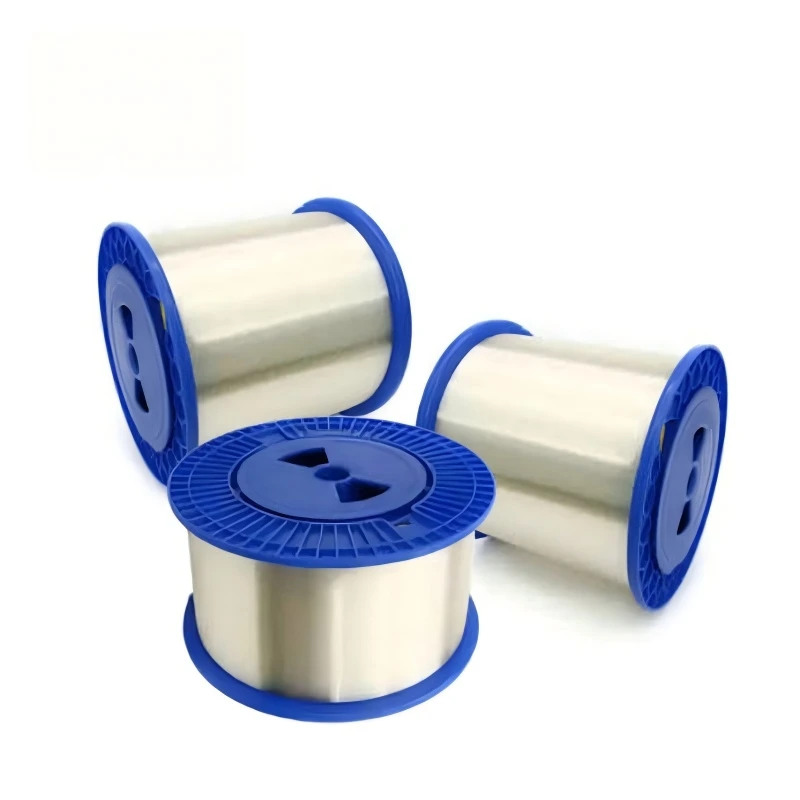
When optical fiber has to pass through small enclosures, tight corners, compact distribution points or densely packed cable structures, the available routing space can become a practical limitation. Conventional single-mode fiber may require a larger bend radius to control additional optical loss.
G.657.A2 addresses this installation requirement by providing a significantly tighter design radius within the ITU-T G.657 Category A family. The current ITU-T G.657 recommendation specifies a 7.5 mm minimum design radius for G.657.A2, compared with 10 mm for G.657.A1.
A2 is not simply a general-purpose single-mode fiber with a different product name. Its primary value is the combination of tighter routing capability and Category A compatibility.
The 7.5 mm minimum design radius gives cable designers more freedom when space is restricted and the fiber has to follow compact routing paths.
A2 is optimized to control macrobending loss at smaller radii, helping protect optical performance when the fiber is routed through tight bends.
G.657.A fibers are a subset of G.652.D and are designed to retain the transmission and interconnection characteristics required for compatible network deployment.
A2 can be considered where fiber density, enclosure dimensions and routing flexibility are more demanding than those encountered in conventional installations.
Category A G.657 fibers are designed for applications covering the O-, E-, S-, C- and L-bands from 1260 nm to 1625 nm.
Fiber parameters and delivery formats can be coordinated with cable manufacturers' production requirements rather than relying on a fixed one-size-fits-all configuration.
The choice between these fiber types should start with the required routing radius rather than simply selecting the fiber with the strongest bend-resistance specification.
| Requirement | G.652.D | G.657.A1 | G.657.A2 |
|---|---|---|---|
| General single-mode transmission | Yes | Yes | Yes |
| Compact routing | Limited | Good | Very good |
| Minimum design radius | Application dependent | 10 mm | 7.5 mm |
| G.652.D compatibility | Baseline | Yes | Yes |
| Best fit | Conventional routing | Space-constrained access cabling | Tighter access and high-density routing |
Suitable for drop-cable structures that need to pass through compact terminals, indoor corners and customer-side access points.
Helps accommodate fiber routing and storage where enclosure dimensions limit the available bending space.
Useful for building entrances, residential installations and indoor access points with constrained cable paths.
Provides additional routing flexibility in fiber distribution structures where multiple fibers occupy limited space.
Category A fibers are applicable to high-density optical cable solutions such as data center networks where optimized routing can provide installation advantages.
Suitable for access-network sections where bend performance and compatibility with established single-mode infrastructure are both required.
The defining characteristic of G.657.A2 is its macrobending performance. Under ITU-T G.657 (08/2024), A2 is specified for a 7.5 mm minimum design radius.
| Cladding Diameter | 125.0 ± 0.7 μm |
| Core Concentricity Error | ≤0.5 μm |
| Cladding Non-Circularity | ≤1.0% |
| Cable Cut-Off Wavelength | ≤1260 nm |
| Mode Field Diameter @1310 nm | 8.6–9.2 μm nominal range, ±0.4 μm tolerance |
| Zero Dispersion Wavelength | 1300–1324 nm |
| Zero Dispersion Slope | 0.073–0.092 ps/(nm² × km) |
| Chromatic Dispersion @1550 nm | 13.3–18.6 ps/(nm × km) |
| Chromatic Dispersion @1625 nm | 17.2–23.7 ps/(nm × km) |
| 15 mm radius / 10 turns @1550 nm | ≤0.03 dB |
| 10 mm radius / 1 turn @1550 nm | ≤0.10 dB |
| 7.5 mm radius / 1 turn @1550 nm | ≤0.50 dB |
| 15 mm radius / 10 turns @1625 nm | ≤0.10 dB |
| 10 mm radius / 1 turn @1625 nm | ≤0.20 dB |
| 7.5 mm radius / 1 turn @1625 nm | ≤1.00 dB |
| Proof Stress | ≥0.69 GPa |
| Attenuation, 1310–1625 nm | ≤0.40 dB/km |
| Attenuation @1530–1565 nm | ≤0.30 dB/km |
| Attenuation @1383 nm after hydrogen ageing | ≤0.40 dB/km |
| Maximum PMDQ | ≤0.20 ps/km1/2 |

ITU-T G.657 (08/2024) - Characteristics of bending-loss insensitive single-mode optical fibre and cable.
G.657.A2 - Category A2 fiber designed for a minimum design radius of 7.5 mm.
G.652.D compatibility - Category A G.657 fibers are a subset of G.652.D and retain its transmission and interconnection characteristics.
IEC 60793-2-50 - Applicable optical fiber product specification framework.
Coating diameter and structure can be coordinated with the customer's downstream cable construction and processing requirements.
Fiber color and identification requirements can be arranged for multi-fiber cable production and internal production management.
Projects with defined attenuation, MFD, dispersion or bending-loss targets can be reviewed before bulk production.
Spool configuration, put-up length, labeling and packaging can be adjusted according to cable manufacturing and logistics requirements.
For recurring procurement, the approved product specification can be retained as the production reference to support consistency between successive batches.
For cable manufacturers and network integrators, the following information should be confirmed before bulk procurement:
Not exactly. The practical distinction is the specified design radius. G.657.A1 is appropriate for a minimum design radius of 10 mm, while G.657.A2 is specified for 7.5 mm. Therefore, A2 is more appropriate when the cable design requires tighter routing.
The primary reason is installation geometry. If the available routing space is restricted and the fiber needs to withstand tighter bends with controlled additional loss, A2 provides a specification specifically addressing that requirement.
The 7.5 mm value is the minimum design radius specified for G.657.A2. Actual cable design should consider the cable structure, installation method, long-term mechanical conditions and the customer's network specification rather than treating the minimum value as a universal installation target.
Yes. ITU-T G.657 Category A fibers are a subset of G.652.D and are designed to maintain the same transmission and interconnection properties, allowing them to be used in networks where G.652.D fibers are specified.
Yes. FTTH access cables frequently pass through distribution terminals, building entry points, wall outlets and compact enclosures. A2's tighter design radius can provide additional routing flexibility in these environments.
Yes. Fiber configuration, coating structure, color, spool format, delivery length, packaging and selected technical requirements can be discussed according to the customer's cable design and procurement specification.
An RFQ should ideally include the required fiber category, attenuation limits, MFD, bend-loss requirements, coating configuration, cable structure, spool length, annual or project quantity, applicable standards and required inspection documents.
Send us your required bend radius, optical parameters, cable structure, spool length and estimated quantity. China Super Tech can evaluate the appropriate G.657.A2 configuration for your project.
```
Hot Tags: g.657.a2 fiber, China g.657.a2 fiber manufacturers, suppliers, factory
(0/10)


