

Molybdenum Heater
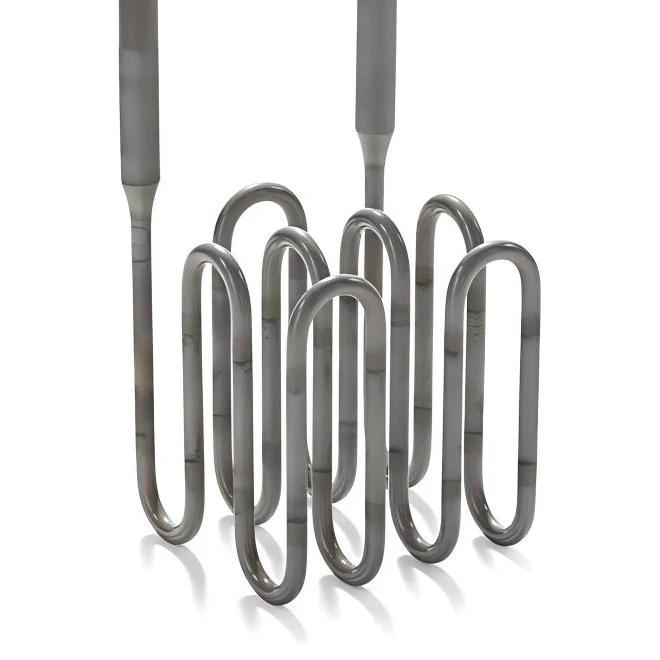
The Molybdenum Heater is a high-performance resistance heating element, specially designed for extreme high-temperature processes in vacuum or protective atmospheres (such as hydrogen or argon). Leveraging the physical properties of molybdenum metal, such as its high melting point (approximately 2610°C), high temperature strength, low vapor pressure, excellent thermal conductivity and electrical conductivity, it can achieve stable, pure and efficient heating beyond the limits of ordinary alloy heating elements. It is an indispensable core equipment in cutting-edge industrial and scientific research production.

- Product Introduction
Molybdenum Heater
The Molybdenum Heater is a high-performance resistance heating element, specially designed for extreme high-temperature processes in vacuum or protective atmospheres (such as hydrogen or argon). Leveraging the physical properties of molybdenum metal, such as its high melting point (approximately 2610°C), high temperature strength, low vapor pressure, excellent thermal conductivity and electrical conductivity, it can achieve stable, pure and efficient heating beyond the limits of ordinary alloy heating elements. It is an indispensable core equipment in cutting-edge industrial and scientific research production.
Product Features
1.Outstanding temperature resistance performance
The operating temperature of this heater can typically reach 1600°C. The optimally designed molybdenum heating chamber can withstand temperatures above 2000°C, meeting the requirements of extreme processes.
2. Precise Temperature Control
Thanks to the high thermal conductivity of about 142 W/(m·K) of molybdenum metal, this heating element can be designed in complex shapes such as spirals, effectively controlling the temperature difference within the furnace. For instance, in a single-crystal silicon furnace with an 800mm diameter furnace chamber, the temperature difference can be reduced to within 8°C, significantly improving product yield and performance.
3. Carbon-free high-purity environment
Unlike graphite heaters, this molybdenum heating element does not produce hydrocarbons in hydrogen or other atmospheres, thus avoiding contamination of the workpiece. It is particularly suitable for the processing of carbon-sensitive materials such as stainless steel and titanium, ensuring the high purity of both the vacuum and the process atmosphere.
4. Stable Output and Long Lifespan
The resistance temperature coefficient of molybdenum is low (approximately 0.0043/°C), resulting in small changes in resistance value with temperature. The output power is stable, and the temperature control accuracy can reach ±4°C (traditional equipment ±15°C). It has strong resistance to creep at high temperatures and a low evaporation rate (approximately 0.015g/h·m²). After continuous operation for 5000 hours, this heating system still maintains 92% of the initial performance, significantly reducing maintenance costs.
5. Energy-saving and consumption-reducing design
This heating system optimizes the radiation shielding structure to reduce heat loss. The example shows that after adopting the molybdenum heating system, the electricity consumption per furnace operation can be reduced by 18%, helping enterprises achieve green production and cost optimization.

Application
1.Vacuum heat treatment furnace
The heating element is used for solid solution treatment and annealing of key components in aerospace and nuclear energy fields (such as titanium alloys, beryllium bronze), with the maximum heating temperature reaching 1500°C, ensuring a bright surface and no oxidation of the workpiece.
2. Material Sintering and Crystal Growth
In the manufacturing of high-performance materials such as silicon carbide ceramics and aluminum nitride substrates, The heating element provides a stable thermal field of up to 2050°C; it is also applied in sapphire and single-crystal silicon growth furnaces to ensure crystal quality and production efficiency.
3. Glass Melting and Processing
As the electrode for the glass electric melting furnace, this heating element is directly immersed in the glass liquid for heating. Its energy efficiency is higher than that of traditional flame heating, and the uniformity of the material temperature is better. At the same time, it improves the safety of the working environment.
4. High Purity and Special Processes
In processes such as metal injection molding (MIM), thermal degreasing, and high-temperature pyrolysis that require a carbon-free environment, the heating element prevents reactions with graphite, ensuring process purity. It is the preferred choice for handling high-precision materials.

Specification
|
Item |
Specification |
|
Product Name |
Molybdenum Heater |
|
Material |
High-purity Molybdenum (Mo ≥ 99.95%) |
|
Material Grade |
Mo1 / TZM (optional, based on application) |
|
Form Types |
Wire, rod, strip, plate, spiral coil, custom-shaped heating elements |
|
Operating Temperature |
1200°C – 1900°C (vacuum or inert atmosphere) |
|
Melting Point |
2620°C |
|
Density |
10.2 g/cm³ |
|
Electrical Resistivity |
~5.2 μΩ·cm (20°C) |
|
Thermal Conductivity |
~138 W/m·K |
|
Thermal Expansion Coefficient |
~4.8 × 10⁻⁶ /K |
|
Working Atmosphere |
Vacuum, Argon, Hydrogen (non-oxidizing environment required) |
|
Surface Finish |
Bright / Polished / Chemically cleaned |
|
Manufacturing Standard |
ASTM B386 / ASTM B387 or equivalent |
|
Design Type |
Resistance heating element, custom furnace heater |
|
Service Life |
Long service life under controlled atmosphere conditions |
|
Customization |
Available (geometry, resistance, power rating, dimensions) |
|
Applications |
Vacuum furnace, semiconductor processing, crystal growth, HIP, sintering, high-temperature research equipment |
Customized Service

This heating element offers multi-dimensional customizable design to meet various process requirements:
1. Material purity: Provide high-purity molybdenum materials with a purity of ≥ 99.95%, ensuring high-temperature performance and anti-pollution capability.
2. Temperature range: Customize the working temperature from 1300°C to 2000°C based on design, atmosphere, and protection measures.
3. Shape structure: Support structures such as rods, plates, meshes, and helices, suitable for furnace types and heat zone dimensions.
4. Atmosphere compatibility: Optimized design to adapt to different process atmospheres such as vacuum, hydrogen, argon, and nitrogen.
We offer comprehensive technical support covering the entire process from selection consultation to installation and commissioning, helping customers quickly meet their process requirements and enhancing production efficiency and product competitiveness.

FAQ
1. What is a molybdenum-based heating element used for?
A molybdenum heating element is mainly used for high-temperature heating in vacuum furnaces and inert gas environments, such as sintering, heat treatment, crystal growth, and semiconductor processing.
2. What is the maximum operating temperature of a molybdenum heating element?
It can typically operate between 1200°C and 1900°C, and in some controlled conditions it can reach up to 2000°C depending on design and furnace structure.
3. Can molybdenum heaters be used in air?
No. Molybdenum oxidizes rapidly at high temperatures in air (above ~400–600°C), so it must be used in vacuum or inert gas (argon/hydrogen) environments.
4. Why is molybdenum used for high-temperature heaters?
Because it has a very high melting point (~2620°C), excellent thermal conductivity, low thermal expansion, and strong creep resistance, making it stable under extreme heat.
5. What forms are available for molybdenum heaters?
Common forms include wire, rod, strip, plate, and custom-shaped coil or frame heaters, depending on furnace design requirements.
6. What industries commonly use molybdenum-based heater ?
They are widely used in semiconductor manufacturing, vacuum heat treatment, metallurgy, aerospace materials processing, ceramics, and crystal growth industries.
7. How long is the service life of a molybdenum heater?
Service life depends on operating conditions, but under proper vacuum or inert atmosphere, it can operate for a long cycle life with stable performance and minimal deformation.
8. What is the difference between molybdenum and tungsten heating elements?
Tungsten has a higher temperature resistance, but molybdenum is easier to process, more cost-effective, and widely used for 1700–1900°C applications.
9. Does molybdenum-based heater deform at high temperature?
It has very low thermal expansion and good high-temperature strength, so it shows minimal deformation and excellent dimensional stability during operation.
10. Can molybdenum heaters be customized?
Yes. They can be fully customized in terms of shape, resistance value, power rating, dimensions, and furnace compatibility based on application requirements.
Hot Tags: molybdenum heater, China molybdenum heater manufacturers, suppliers, factory, MoCu Heat Sink, Molybdenum Copper Heat Sink, Molybdenum Disilicide Heater, Molybdenum Element For Vacuum Furnace, Molybdenum Furnace Components, Molybdenum Heater