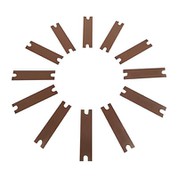
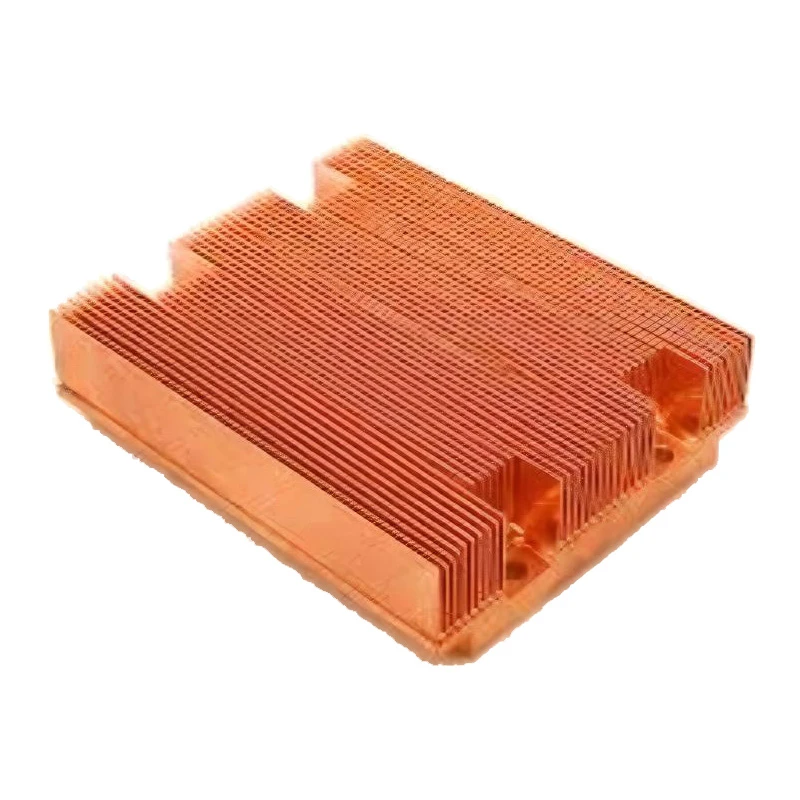

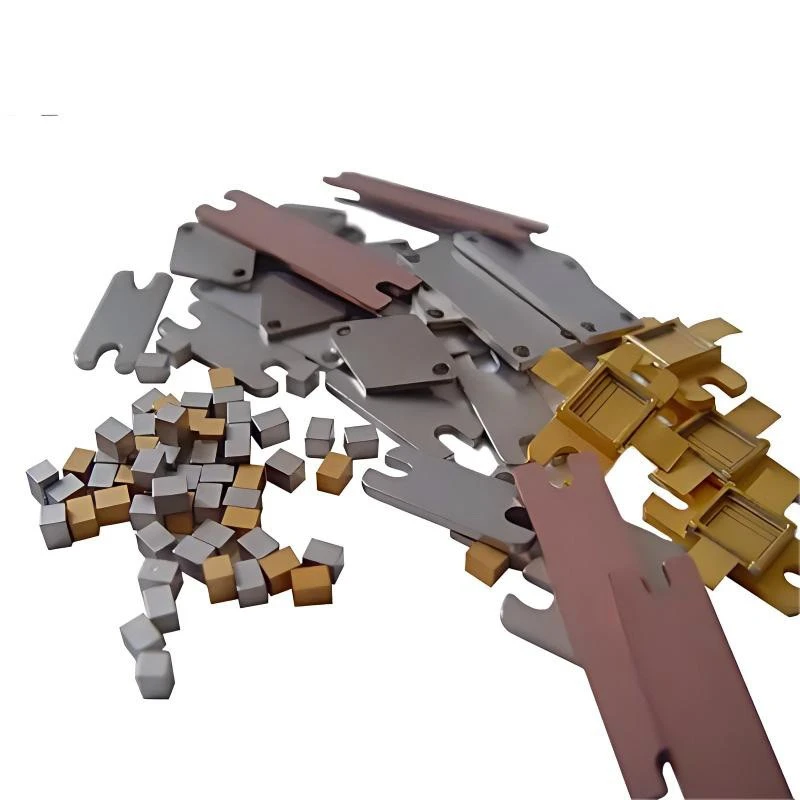
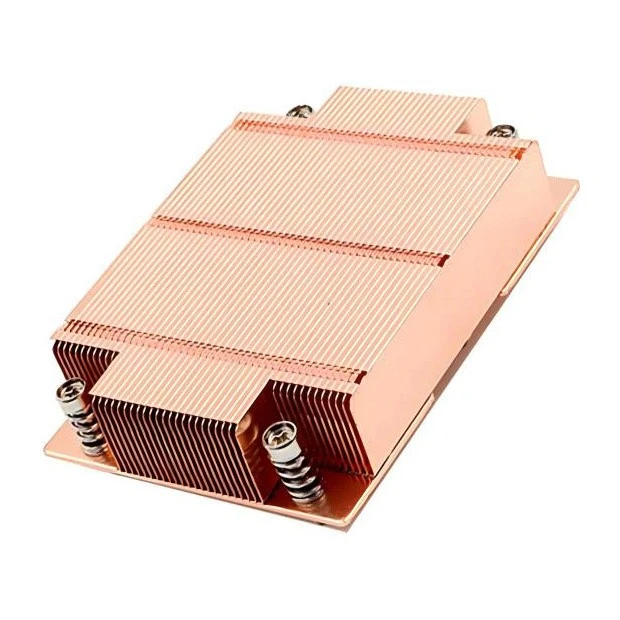
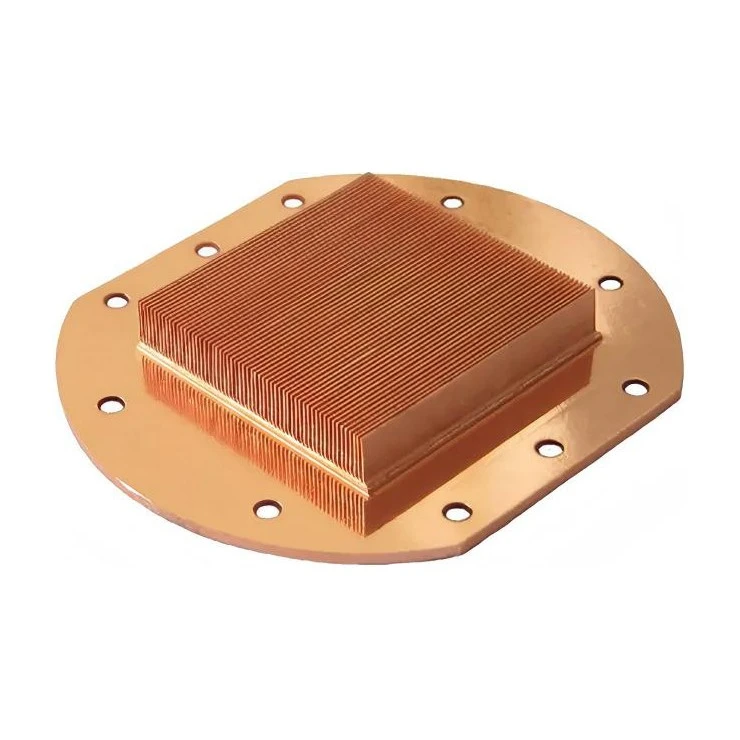
Molybdenum Copper Heat Sink
The molybdenum-copper (Mo-Cu) heat sink is a metal-based composite material cooling solution specifically designed for high-power electronic devices. It is not a simple metal alloy; instead, it is formed through powder metallurgy, where molybdenum (Mo) and copper (Cu) are microscopically combined to create a unique "molybdenum framework - copper filling" structure. This structure ingeniously combines the low thermal expansion coefficient of molybdenum, the high-temperature stability, and the excellent thermal and electrical conductivity of copper, effectively resolving the contradiction between heat dissipation and thermal stress of high-power chips.

- Product Introduction
Molybdenum Copper Heat Sink
The molybdenum-copper (Mo-Cu) heat sink is a metal-based composite material cooling solution specifically designed for high-power electronic devices. It is not a simple metal alloy; instead, it is formed through powder metallurgy, where molybdenum (Mo) and copper (Cu) are microscopically combined to create a unique "molybdenum framework - copper filling" structure. This structure ingeniously combines the low thermal expansion coefficient of molybdenum, the high-temperature stability, and the excellent thermal and electrical conductivity of copper, effectively resolving the contradiction between heat dissipation and thermal stress of high-power chips.
Product Features
1.Adjustable thermal expansion coefficient
The most crucial attribute of MoCu Heat Sink, lies in their adjustable thermal expansion coefficient. By changing the ratio of molybdenum and copper, the thermal expansion coefficient (CTE) can be precisely controlled, enabling a good thermal match with ceramic substrates (such as Al₂O₃, BeO) or semiconductor chips (such as Si, GaAs, GaN). The performance of molybdenum-copper heat sinks with different ratios varies. For example, a Mo70Cu heat sink with a molybdenum content of 70 ± 1 wt% has a density of approximately 9.8 g/cm³ and a thermal expansion coefficient of about 9.1 ppm/K, with a thermal conductivity ranging from 170 - 200 W/m·K; a Mo60Cu heat sink with a molybdenum content of 60 ± 1 wt% has a density of approximately 9.66 g/cm³ and a thermal expansion coefficient of about 10.3 ppm/K, with a thermal conductivity ranging from 210 - 250 W/m·K, etc.
2.High thermal conductivity
In the molybdenum-copper heat sink, the copper forms a continuous network structure, providing a rapid heat conduction path. Its thermal conductivity is much higher than that of traditional semiconductor materials, enabling the rapid diffusion of heat generated by local hotspots to the entire substrate, effectively improving the heat dissipation efficiency.
3.Excellent high-temperature resistance and reliability
The high melting point of molybdenum enables molybdenum copper heat sinks to maintain structural stability and mechanical strength in high-temperature environments, which is crucial for equipment operating under harsh conditions (such as in aerospace). Additionally, its high hardness and wear resistance ensure reliability during packaging and long-term use.
4.Significant weight reduction advantage
Compared with tungsten-copper (W-Cu) heat sinks with similar performance, molybdenum-copper heat sinks have a density that is approximately 40% lower. In fields such as aerospace, satellite communication, and microwave packaging where weight sensitivity is a concern, molybdenum-copper heat sinks offer significant advantages, helping to reduce the overall weight of equipment and enhancing equipment performance.

Application
1.High-power semiconductor devices
Molybdenum-copper heat sinks (MoCu heat sinks) are widely used as heat sinks and thermal bases for insulated gate bipolar transistors (IGBTs), high-power LEDs, radio frequency (RF) and microwave power tubes. They can effectively reduce the junction temperature, extend the device lifespan, and ensure the stable operation of high-power semiconductor devices.
2.Aerospace and Defense
In the thermal management of systems such as spacecraft electronic equipment, satellite communication antennas, and airborne phased array radars, molybdenum-copper heat sinks play a crucial role. Their lightweight nature, high reliability, and matching thermal expansion characteristics with chips make them indispensable thermal management materials in these fields, ensuring the normal operation of equipment in complex environments.
3.Advanced Packaging and Microelectronics
In 3D packaging and system-in-package (SiP), molybdenum-copper heat sinks can serve as package covers, interposers, or chip mounting substrates, providing mechanical support and thermal conduction paths for stacked chips. As the integration density of chips continues to increase, directly fabricating molybdenum-copper heat sinks into micro heat dissipation structures (such as microchannels) has become a cutting-edge research direction.
4.Chip-level microchannel cooling
The latest research trend is to use the molybdenum-copper heat sink itself as the main body of the microchannel cooler. Due to its thermal expansion matching with the chip, micro-millimeter-sized channels can be directly machined on the heat sink, allowing the cooling fluid (such as deionized water) to flow over the vicinity of the chip for boiling heat exchange. Experiments have shown that this "chip proximal cooling" design can significantly enhance the cooling efficiency and effectively cope with extreme heat flux densities exceeding 1000 W/cm².

Specification
|
Parameter |
Specification / Range |
|
Material Type |
Molybdenum Copper Heat Sink |
|
Manufacturing Process |
Powder Metallurgy / Copper Infiltration |
|
Composition (Cu Content) |
10% – 30% (customizable) |
|
Common Grades |
Mo70Cu30 / Mo80Cu20 / Mo90Cu10 |
|
Density |
9.4 – 9.8 g/cm³ |
|
Thermal Conductivity |
160 – 220 W/m·K |
|
Coefficient of Thermal Expansion (CTE) |
6.5 – 8.5 ×10⁻⁶ /K (25–300°C) |
|
Electrical Conductivity |
≥ 30% IACS |
|
Specific Heat |
~250 J/kg·K |
|
Operating Temperature |
Up to 500°C+ |
|
Melting Point |
> 2600°C (Mo matrix) |
|
Hardness |
150 – 220 HB |
|
Surface Finish |
Polished / Ground / Machined |
|
Surface Roughness |
Ra 0.8 – 3.2 μm (customizable) |
|
Coating Options |
Ni / Au / Ag plating available |
|
Dimensional Tolerance |
±0.01 mm (precision machining available) |
|
Available Forms |
Plate / Sheet / Block / Flange / Custom Parts |
|
Standard Sizes |
Customized per drawing |
|
Joining Methods |
Brazing / Soldering / Mechanical fastening |
|
Packaging |
Vacuum sealed / Export standard wooden case |
Customized Service
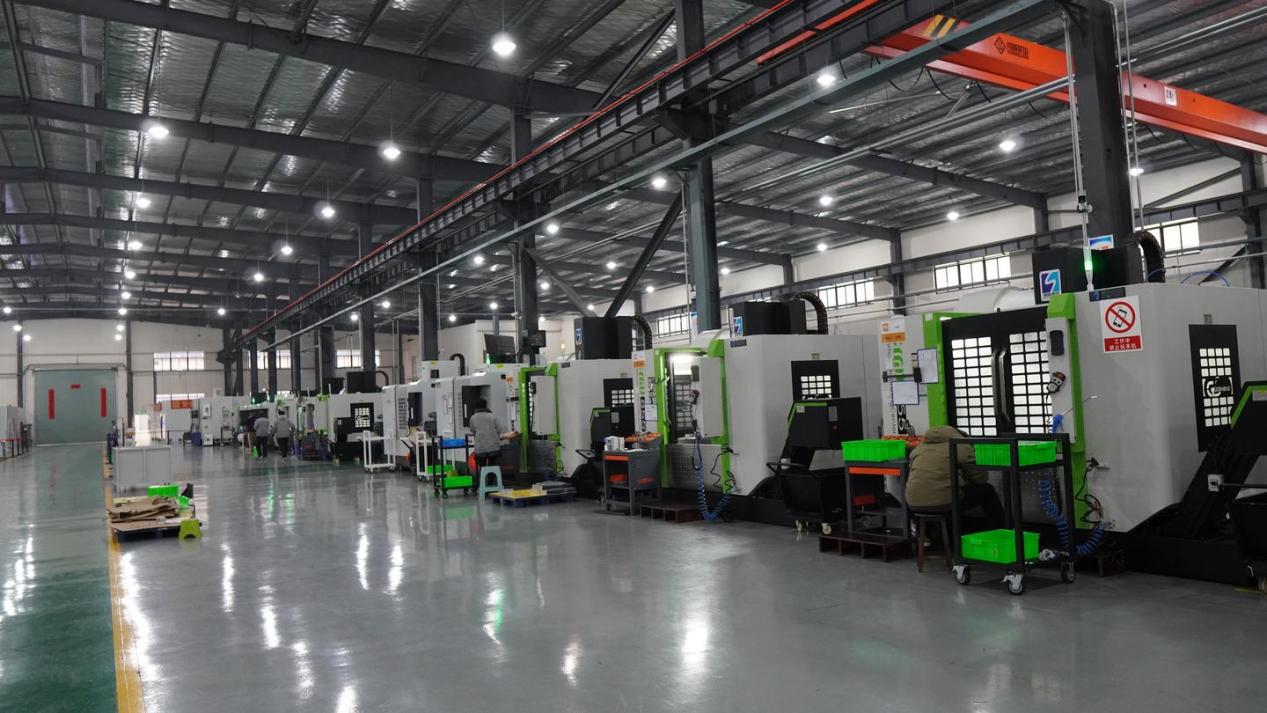
Molybdenum copper heat sinks are usually manufactured by powder metallurgy and fusion infiltration methods, resulting in a dense and gas-tight material.
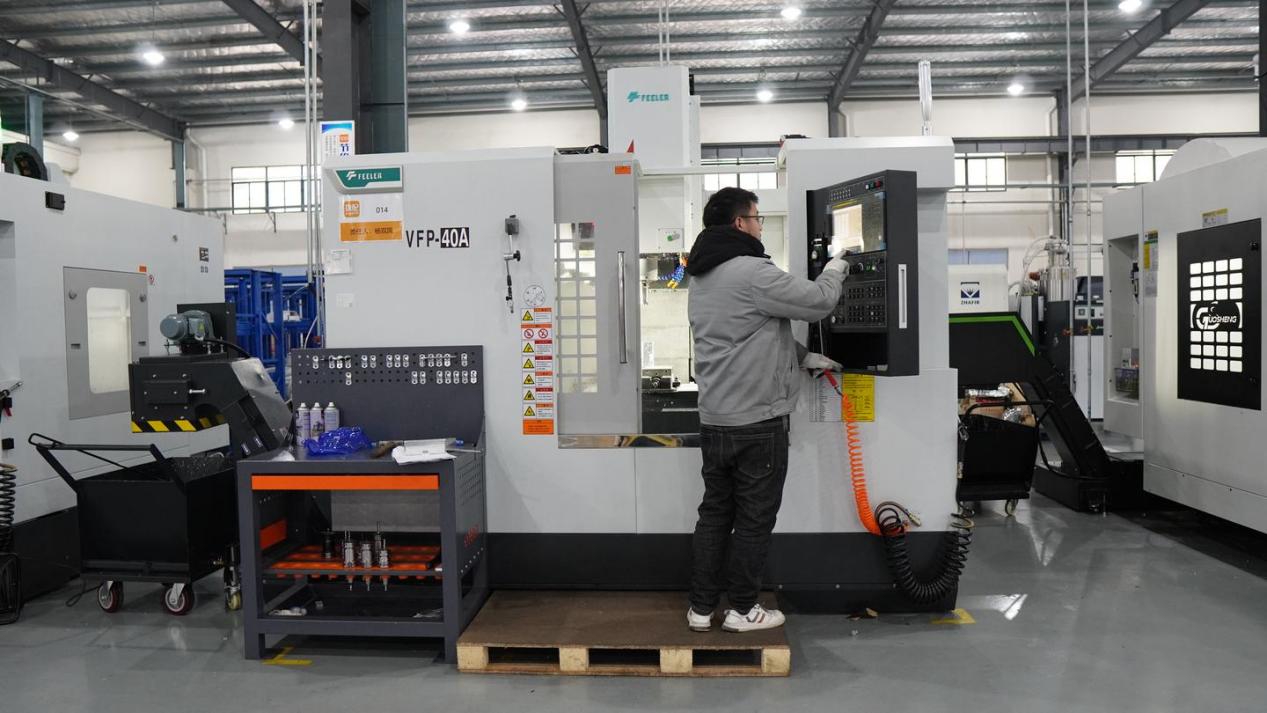
It has excellent processing properties and can be processed into precise thin sheets or complex structures through cutting, laser processing, hot rolling and other techniques according to different customer requirements.
At the same time, we can also perform surface treatments such as nickel plating and gold plating according to customer requests to enhance the weldability and corrosion resistance of them, meeting the diverse application requirements.
If you have any customization requirements for our molybdenum-copper heat sinks, please feel free to contact us at any time.
FAQ
1. What is a Molybdenum Copper Heat Sink?
It is a composite material made by combining molybdenum and copper, typically through infiltration processes. It offers high thermal conductivity and controlled thermal expansion, making it ideal for electronic cooling applications.
2. Why is MoCu better than pure copper or aluminum heat sinks?
MoCu provides a unique balance of high heat dissipation (from copper) and low thermal expansion (from molybdenum), reducing thermal stress and improving reliability. Unlike aluminum, it maintains performance even at high temperatures.
3. What are the main applications of MoCu heat sinks?
They are widely used in:
Power electronics (IGBT, MOSFET)
RF and microwave devices
Laser diodes and LED modules
Aerospace and satellite systems
These applications require efficient heat transfer and dimensional stability.
4. Can the thermal expansion (CTE) of MoCu be customized?
Yes. The CTE of MoCu can be adjusted by changing the copper-to-molybdenum ratio, allowing it to match materials like silicon, ceramics, and GaAs.
5. What are the typical compositions of MoCu materials?
Common compositions include:
Mo70Cu30
Mo80Cu20
Mo90Cu10
Higher copper content increases thermal conductivity, while higher molybdenum improves dimensional stability.
6. Is MoCu suitable for high-temperature environments?
Yes. MoCu performs well in high-temperature environments due to molybdenum's high melting point (~2620°C) and its ability to retain thermal performance better than aluminum at elevated temperatures.
7. Does MoCu have good machinability and plating capability?
Yes. MoCu offers good machinability and can be plated with materials like nickel (Ni), gold (Au), or silver (Ag) to improve solderability and corrosion resistance.
8. How does MoCu compare to tungsten copper (WCu)?
MoCu is generally lighter and more cost-effective than WCu, while still offering excellent thermal and mechanical properties, making it suitable for aerospace and electronic packaging.
9. Is MoCu compatible with semiconductor materials?
Yes. Its adjustable CTE allows it to closely match semiconductor materials like Si and GaAs, reducing internal stress and improving device lifespan.
10. What are the key advantages of MoCu heat sinks?
High thermal conductivity
Low and tunable thermal expansion
Excellent high-temperature performance
Good hermeticity and stability
Non-magnetic and vacuum compatible
Hot Tags: molybdenum copper heat sink, China molybdenum copper heat sink manufacturers, suppliers, factory, Cu Mo Cu Base Flange Heat Sink, Molybdenum Copper Heat Sink, Molybdenum Disilicide Heater, Molybdenum Furnace Components, Molybdenum Heater, molybdenum heating elements