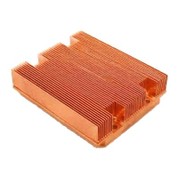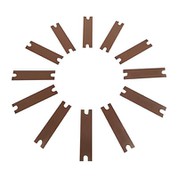


Molybdenum Furnace Components
Molybdenum Furnace Components are core functional components specifically designed for high-temperature vacuum furnaces and industrial melting furnaces. These systems often integrate the Molybdenum Element For Vacuum Furnace to ensure stable heating performance.Based on the high melting point (2623°C) of molybdenum, excellent high-temperature strength, good electrical and thermal conductivity, and low thermal expansion coefficient, our products can meet all scenarios such as heating, insulation, structural support, and process implementation, providing customers in fields like semiconductors, aerospace, metal processing, and new energy with highly reliable and long-lasting solutions.

- Product Introduction
Molybdenum Furnace Components
Molybdenum Furnace Components are core functional components specifically designed for high-temperature vacuum furnaces and industrial melting furnaces. These systems often integrate the Molybdenum Element For Vacuum Furnace to ensure stable heating performance.Based on the high melting point (2623°C) of molybdenum, excellent high-temperature strength, good electrical and thermal conductivity, and low thermal expansion coefficient, our products can meet all scenarios such as heating, insulation, structural support, and process implementation, providing customers in fields like semiconductors, aerospace, metal processing, and new energy with highly reliable and long-lasting solutions.
Product Features
1.Core heating element: Highly efficient and stable, precise temperature control
The molybdenum heating elements/bars in the Molybdenum Element For Vacuum Furnace are the core components for heat energy conversion. Through the use of molybdenum wires (zigzag/helical winding), molybdenum strips (wide flat shape), or molybdenum cage structures, the maximum radiation area is achieved, enabling efficient conversion of electrical energy to thermal energy. In a vacuum or inert gas (such as argon, hydrogen) environment, the molybdenum heating elements can operate stably at high temperatures of 1500°C to 1800°C for an extended period. Some high-end equipment uses titanium-zirconium-molybdenum (TZM) alloy, which significantly improves the anti-warping property and recrystallization temperature, meeting the requirements of extreme conditions.
2. Thermal Field Insulation System: Energy saving and consumption reduction, uniform temperature field
The insulation screen and reflection screen adopt a multi-layer structure design. The inner layer is a high-reflection molybdenum plate, the outer layer is a stainless steel plate, and the layers are isolated by molybdenum screws. The high-reflection property of the molybdenum plate can return the heat to the heating area, reducing energy consumption while ensuring the uniformity of the temperature field (with an accuracy of ±5°C). This effectively protects the furnace body and extends the equipment's lifespan.
3. Structural Connections and Fixing Components: High-strength and stable, ensuring safety without worries
Although the components such as connectors, screws, and support frames are small, they are crucial for ensuring the safety of the thermal field structure. Components like molybdenum connection plates, screws, material platforms/material racks, and molybdenum crucibles possess the same high-temperature strength and chemical stability as the heating element, preventing high-temperature deformation, fracture, or reaction with the sample, and ensuring the stability of the electrical path and the integrity of the thermal field structure.
4. Special Process Components: Customized Functions, Precise Adaptation
For specific process requirements, Molybdenum Furnace Components offers specialized components such as molybdenum rotating tubes and process material boxes. The molybdenum rotating tube can withstand continuous high temperatures of 1400°C in the rotary furnace and material wear, and is suitable for hazardous waste treatment or powder calcination; the molybdenum process material box is used in the metal injection molding (MIM) degreasing sintering process, carrying the products and guiding the binder exhaust gas out, protecting the furnace chamber from contamination.

Application
1.Semiconductor manufacturing
Molybdenum heating elements and insulation screens are used in equipment such as single-crystal silicon growth furnaces and oxidation furnaces to provide a stable high-temperature environment and ensure crystal quality; molybdenum crucibles and support frames ensure the purity and structural stability of the materials under high temperatures.
2. Aerospace material processing
During the heat treatment processes of materials such as high-temperature alloys and ceramic matrix composites, the high-temperature resistance and anti-warping properties of Molybdenum Furnace Components can meet the complex process requirements and improve the consistency of material performance.
3. Metal Processing and New Energy
In scenarios such as powder metallurgy and the sintering of lithium battery positive electrode materials, the molybdenum rotating tube and the process material box achieve efficient heat transfer and process control; the molybdenum heating element and the water cooling system work together to ensure the safe operation of the equipment under inert gas protection.
4. Industrial furnaces and research equipment
Among the equipment such as high-temperature vacuum furnaces and experimental electric furnaces, offers a complete solution from heating to insulation, supporting both material research and batch production.

Specification
|
Item |
Specification |
|
Material |
Pure Molybdenum (Mo ≥ 99.95%), TZM Alloy, Mo-La Alloy |
|
Density |
10.2 – 10.3 g/cm³ |
|
Melting Point |
2620°C |
|
Maximum Operating Temperature |
1600 – 2000°C (vacuum / inert atmosphere) |
|
Thermal Conductivity |
~138 W/m·K |
|
Electrical Resistivity |
5.2 × 10⁻⁸ Ω·m |
|
Thermal Expansion Coefficient |
4.8 × 10⁻⁶ /K |
|
Product Forms |
Plates, sheets, crucibles, boats, heating elements, liners, shields, fasteners, electrodes, trays |
|
Thickness Range |
0.1 mm – 50 mm |
|
Dimensional Tolerance |
±0.01 mm – ±0.1 mm (depending on part type) |
|
Surface Finish |
As-sintered, machined, ground, polished |
|
Processing Methods |
Powder metallurgy, forging, rolling, CNC machining, grinding |
|
Operating Environment |
Vacuum furnaces, hydrogen furnaces, inert gas furnaces |
|
Customization |
Available based on drawings and application requirements |
Customized Service

We offer a full-process customized service for Molybdenum Furnace Components and Molybdenum Element For Vacuum Furnace, covering material selection (pure molybdenum/ TZM alloy), structural design (dimensions, shapes, connection methods), process adaptation (temperature, atmosphere, load requirements), and surface treatment (polishing, sandblasting).
Our professional team can promptly respond to customer needs and provide one-stop support from drawing design to sample delivery, ensuring a perfect match between the components and the equipment, shortening the R&D cycle, and reducing the cost of trial and error.
Contact us immediately to obtain detailed technical solutions and quotations for these furnace components, and help enhance the performance of your equipment and increase production efficiency.

FAQ
1. What are Molybdenum Furnace Components and Molybdenum Vacuum Furnace Elements used for?
They are used in high-temperature vacuum furnaces, hydrogen furnaces, and inert gas furnaces for applications such as sintering, annealing, heat treatment, and crystal growth.
2. What is the maximum operating temperature of molybdenum furnace parts?
Molybdenum components typically operate at 1600°C to 2000°C in vacuum or inert atmosphere conditions.
3. Why is molybdenum used in furnace applications?
Because it has a very high melting point (2620–2623°C), excellent thermal stability, low thermal expansion, and good creep resistance at high temperatures.
4. What materials are available for molybdenum furnace components?
Common materials include pure molybdenum (Mo ≥ 99.95%), TZM alloy, and Mo-La (lanthanum-doped molybdenum).
5. What are the main types of furnace components made from molybdenum?
Typical products include heating elements, heat shields, crucibles, boats, trays, liners, electrodes, fasteners, and structural supports.
6. Can molybdenum components be used in air or oxidizing environments?
No. Molybdenum must be used in vacuum, inert gas, or hydrogen atmospheres, as it oxidizes rapidly at high temperatures in air.
7. What are the advantages of TZM over pure molybdenum?
TZM offers higher strength, better creep resistance, and improved performance under long-term high-temperature stress compared to pure molybdenum.
8. How are molybdenum furnace components manufactured?
They are typically produced by powder metallurgy, forging, rolling, and precision CNC machining, followed by grinding or polishing.
9. What industries commonly use these components?
They are widely used in semiconductors, LED sapphire crystal growth, aerospace, metallurgy, glass, ceramics, and research furnaces.
10. Can molybdenum furnace components be customized?
Yes. They can be custom-machined according to drawings, including special shapes, tolerances, surface finishes, and material grades (Mo, TZM, Mo-La).
Hot Tags: molybdenum furnace components, China molybdenum furnace components manufacturers, suppliers, factory, Cu Mo Cu Base Flange Heat Sink, Cu Mo Cu Heat Sink, Molybdenum Copper Heat Sink, Molybdenum Element For Vacuum Furnace, Molybdenum Furnace Components, Molybdenum Heater