






G657 A1 Fiber For FTTH
OPTICAL FIBER G657 A1 Fiber for FTTH Bend-Insensitive Single-Mode Optical Fiber China Super Tech Co., Ltd. supplies G.657.A1 single-mode optical fiber for FTTH and other access-network applications where installation space is limited. Its optimized waveguide design helps reduce additional...

- Product Introduction

G657 A1 Fiber for FTTH
Bend-Insensitive Single-Mode Optical Fiber
China Super Tech Co., Ltd. supplies G.657.A1 single-mode optical fiber for FTTH and other access-network applications where installation space is limited. Its optimized waveguide design helps reduce additional optical loss caused by bending while maintaining standard single-mode transmission characteristics and compatibility with G.652.D systems.
Request a QuoteProduct Introduction
China Super Tech Co., Ltd. provides G.657.A1 single-mode optical fiber for FTTH access networks. Designed according to ITU-T G.657.A1 requirements, the fiber uses an optimized glass waveguide structure to improve bending performance and reduce additional optical loss when the fiber is routed through limited spaces. With a 10 mm minimum design radius and compatibility with G.652.D single-mode systems, it is suitable for FTTH drop cables, indoor access networks, fiber distribution boxes and other compact optical routing applications.
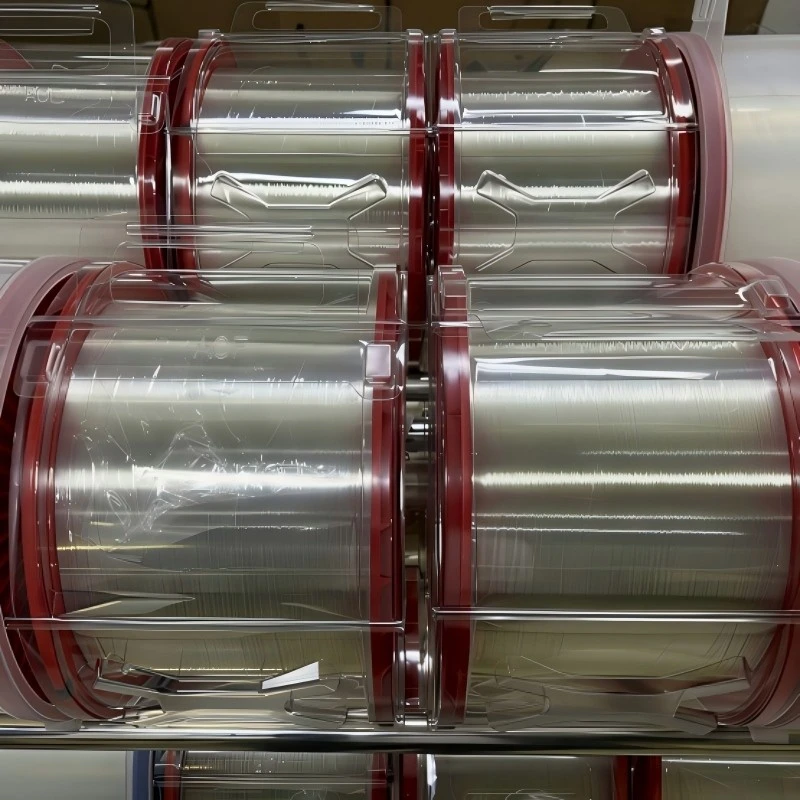
10 mm Minimum Design Radius for Compact Routing
The main value of A1 is its controlled bending performance rather than simply being described as a "bend-resistant" fiber. Its optimized waveguide structure helps reduce additional optical loss when the fiber is routed around corners, inside distribution boxes or through compact installation spaces. The 10 mm minimum design radius defined for A1 makes it suitable for many FTTH and indoor access-network layouts where routing space is limited.
For customers who require tighter routing than A1 can provide, China Super Tech also supplies G.657.A2 fiber as another option.
Designed for Compatibility with G.652.D Systems
A1 belongs to the G.657 Category A family and is designed within the compatibility framework of conventional G.652.D single-mode systems. Its mode field characteristics are close to common G.652.D fiber, which helps simplify integration with existing optical components and network infrastructure.
This is particularly useful when an FTTH project needs improved bending performance without changing the basic single-mode transmission architecture.

Product Features
Controlled Fiber Geometry
Cladding diameter, coating diameter, concentricity and non-circularity are controlled to support more consistent splicing and cable assembly. Stable geometry is important because dimensional variation can affect fiber alignment during connection.
Stable Single-Mode Transmission
The optical design maintains standard single-mode transmission characteristics while improving bending performance, allowing the fiber to be integrated into common access-network configurations.
Low Attenuation
Controlled glass composition and drawing parameters help maintain stable attenuation across commonly used optical transmission bands, supporting reliable access-network transmission.
Product Applications
A1 is mainly selected when the finished optical network has limited routing space and the project needs improved bending performance without moving away from a conventional single-mode network design.
FTTH / FTTx Access Networks
FTTH cables often pass through wall boxes, terminal points and compact distribution areas. The improved bend performance helps reduce the risk of additional loss when the fiber is routed within these restricted spaces.
Indoor Fiber Distribution
In apartments, offices, hotels and commercial buildings, optical cables may need to pass through narrow conduits and compact distribution boxes. A1 provides more flexibility for these controlled routing conditions.
Fiber Distribution Boxes
Distribution boxes require organized fiber routing and storage within a limited enclosure. A1 can help reduce bending-related loss when the fiber is properly routed and stored according to the cable design.
Data Center & High-Density Cabling
Compact racks and high-density fiber management systems leave less space for routing. A1 can be considered where controlled bend performance is required while maintaining single-mode transmission characteristics.
Customization Services
Fiber Structure Matching
China Super Tech can discuss coating configuration, fiber diameter, color, delivery length and other requirements according to the customer's cable structure. This allows the supplied fiber to better match the customer's existing production process instead of forcing the project to use one fixed configuration.
Optical Parameter Matching
If a project has specific requirements for attenuation, mode field diameter, dispersion or bend performance, the target parameters can be reviewed before production. This helps customers confirm whether the selected fiber is suitable for the intended cable and network design before placing a bulk order.
Cable Production Compatibility
The fiber configuration can be discussed according to loose-tube, tight-buffered, micro-cable and other cable structures. The purpose is to make the optical fiber fit the customer's actual cable construction and installation requirements.
Length, Packaging and Labeling
Delivery length, spool configuration, labeling and packaging can be arranged according to production and transportation requirements. This is useful for customers who need the fiber to enter an existing cable production or distribution process directly.
Batch Consistency for Repeat Orders
For recurring projects, the confirmed specification can be retained as the reference for subsequent orders. Key optical and geometric parameters can be checked between batches to help customers maintain more consistent downstream cable production.
Technical Specifications
| Parameter | Specification |
|---|---|
| Fiber Type | Bend-performance-enhanced single-mode fiber |
| ITU-T Category | G.657.A1 |
| IEC Fiber Category | B6_a1 (IEC 60793-2-50) |
| Fiber Compatibility | Compatible with common G.652.D single-mode systems |
| Cladding Diameter | 125 ± 0.7 μm |
| Cladding Non-Circularity | ≤ 0.7% |
| Coating Diameter | 242 ± 5 μm; customizable, with 250 μm / 900 μm options |
| Core/Cladding Concentricity Error | ≤ 0.5 μm |
| Mode Field Diameter @1310 nm | 9.2 ± 0.4 μm |
| Mode Field Diameter @1550 nm | 10.4 ± 0.5 μm |
| Cable Cut-off Wavelength | ≤ 1260 nm |
| Attenuation @1310 nm | ≤ 0.36 dB/km |
| Attenuation @1550 nm | ≤ 0.21 dB/km |
| Attenuation @1625 nm | ≤ 0.24 dB/km |
| Zero Dispersion Wavelength | 1300–1324 nm |
| Chromatic Dispersion @1550 nm | ≤ 18 ps/(nm·km) |
| 10 mm Radius, 1 Turn @1550 nm | Additional loss ≤ 0.75 dB |
| 10 mm Radius, 1 Turn @1625 nm | Additional loss ≤ 1.50 dB |
| Proof Test | ≥ 0.69 GPa |
| Operating Temperature | −60°C to +85°C (bare fiber) |
Specifications should be confirmed against the agreed project specification and applicable test documentation before bulk production. Actual batch test data takes precedence over reference values shown on this page.
Related Optical Fiber Solutions
Frequently Asked Questions
Need G.657.A1 Fiber for Your FTTH Project?
Send us your required fiber standard, attenuation, bending requirement, delivery length and cable structure. China Super Tech can review the specifications and provide a suitable supply configuration.
Contact China Super TechHot Tags: g657 a1 fiber for ftth, China g657 a1 fiber for ftth manufacturers, suppliers, factory


