

Bend Insensitive Single Mode Fiber
Bend Insensitive Single Mode Fiber is designed for communication networks where limited installation space can cause conventional single-mode fiber to experience additional bending loss. Its optimized refractive-index profile improves light confinement inside the core when the fiber is curved, helping maintain stable optical transmission. It is especially suitable for FTTH, indoor access networks, distribution boxes, and compact communication equipment where fiber routing cannot always follow a large bend radius. China Super Tech Co., Ltd. supplies bend-optimized single-mode fiber with controlled optical geometry and coating performance for cable manufacturers and network projects.

- Product Introduction
Single-Mode Optical Fiber | Technical Selection
Bend Insensitive Single Mode Fiber
Choosing bend insensitive single mode fiber involves more than checking a minimum bend radius. The selected fiber must also meet the optical requirements of the transmission system, fit the intended cable design, and remain compatible with the project's splicing and installation practices.
China Super Tech provides product specification discussions for buyers evaluating G.657 single-mode fiber and related optical fiber requirements. Final grade availability and technical limits should be confirmed against the applicable product datasheet.

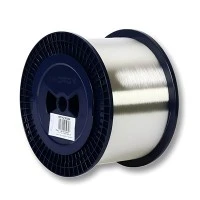
Product image. Confirm the ordered fiber grade, optical limits and delivery configuration before procurement.
How Bending Performance Affects a Single-Mode Network
In a single-mode optical link, a bend can introduce additional optical loss. The practical impact depends on the fiber design, bend radius, number and arrangement of bends, operating wavelength, and the conditions under which the fiber is installed.
This matters when cable routes pass through compact distribution boxes, wall outlets, access cabinets or equipment enclosures. If bending loss is not included in the link budget, the installed link may have less optical margin than expected.
A bend-insensitive fiber can help address routing constraints, but it does not remove the need to follow the cable manufacturer's installation limits or the project's optical-loss requirements.

Use the intended installation geometry when evaluating bend performance, rather than relying on the product name alone.
Five Checks Before Selecting Single-Mode Fiber
These checks help procurement teams translate a network requirement into a fiber specification that can be reviewed and quoted.
1. Transmission Wavelength
Identify the system's operating wavelength or wavelength range. Confirm that the selected fiber's attenuation, mode field diameter and other applicable parameters meet the requirements at the relevant wavelengths.
2. Attenuation and Link Budget
Specify the required attenuation limit in dB/km, the measurement wavelength and the applicable test method. Include connector, splice and installation losses separately when calculating the link budget.
3. Mode Field Diameter
Check the required MFD range and measurement wavelength. MFD affects optical coupling and splice compatibility, so the actual fiber specification matters when matching existing fiber or equipment.
4. Bend Conditions
Define the minimum intended bend radius, number of bends and installation conditions. Confirm whether the requirement refers to a standard macrobending test, a design reference or the actual installation limit.
5. Splicing and Compatibility
Identify the existing fiber type, splicing method and acceptance criteria. Confirm the relevant optical and dimensional parameters and validate the splicing procedure where required.
Procurement Documentation
Request the applicable datasheet, standard designation, parameter tolerances, test conditions and available inspection documentation before approving the specification.
When Should You Compare G.657.A1 and G.657.A2?
G.657 grade selection should start with the routing geometry and the required optical performance, not with the assumption that the smallest bend radius is always the best choice. The applicable edition of ITU-T G.657 defines fiber characteristics and test requirements; the exact product datasheet should be checked before approval.
| Selection question | What to verify | Procurement action |
|---|---|---|
| Does the route have limited space? | Minimum bend radius, bend locations, routing arrangement and cable construction. | Provide a routing drawing or installation requirement. |
| Is G.652.D compatibility required? | The required compatibility category and all relevant optical parameters. | Confirm the exact G.657 category and compliance documentation. |
| Could A1 meet the routing requirement? | The actual bend conditions and the selected product's specified performance. | Evaluate G.657.A1 against the project specification. |
| Are tighter bends required? | Required bend conditions, applicable test criteria and system compatibility. | Compare G.657.A2 and verify its datasheet against the project requirements. |
For grade-specific selection, see G.657.A1 Fiber and G.657.A2 Fiber. This page focuses on system compatibility and procurement checks rather than repeating the complete grade descriptions.
Single-Mode Fiber Specification Checklist
Use the table below to prepare a technically complete RFQ. The values in the right-hand column are items to confirm, not unverified performance guarantees from .
| Parameter | What the buyer should specify or verify |
|---|---|
| Fiber category | Required standard and category, such as G.657.A1 or G.657.A2; state any required G.652.D compatibility. |
| Operating wavelength | Required wavelength or wavelength range, with relevant optical limits at each specified wavelength. |
| Attenuation coefficient | Maximum attenuation in dB/km, measurement wavelength, test method and applicable specification. |
| Mode field diameter (MFD) | Required range, measurement wavelength, tolerances and standard reference. |
| Macrobending performance | Required bend radius, number of turns or bends, test wavelength and specified loss limit. |
| Cladding diameter | Nominal diameter and permitted tolerance, verified against the ordered grade and datasheet. |
| Cladding non-circularity and concentricity | Required limits and applicable measurement or compliance documentation. |
| Cutoff wavelength | Applicable cutoff wavelength parameter, limit and test method specified for the fiber category. |
| Coating diameter and type | Nominal coating diameter, tolerance, coating type and any project-specific requirements. |
| Proof test | Required proof-test level, unit and supporting inspection documentation, where applicable. |
| Splicing requirements | Existing fiber type, splice method, acceptable splice loss and any validation requirements. |
| Length and quantity | Required length per spool, total quantity, packaging arrangement and shipment requirements. |
Reference: ITU-T G.657 (08/2024), Characteristics of a bending-loss insensitive single-mode optical fibre and cable. Confirm the applicable standard edition and the exact product datasheet for the order.

Confirm the fiber configuration and packaging before placing a project order.
Splicing Compatibility and System Integration
When bend-insensitive single-mode fiber is introduced into an existing network, compatibility should be checked at the fiber, splice and cable-system levels.
- Fiber-to-fiber splicing: compare fiber categories, MFD and applicable dimensional tolerances. Confirm the splice procedure and acceptance limits.
- Optical performance: evaluate attenuation and any relevant system parameters at the operating wavelength.
- Existing cable infrastructure: verify cable construction, installation restrictions and the compatibility requirements defined by the network owner.
- Validation: determine whether splice-loss measurements, optical link testing or other acceptance tests are required for the project.
A fiber's bend-insensitive classification does not, by itself, guarantee a specific splice loss or end-to-end network performance. These results depend on the selected fibers, equipment, workmanship and test conditions.
Where Single-Mode Bend Performance Matters
FTTH and FTTx Access Networks
Check routing around subscriber outlets, access terminals and distribution boxes. Confirm the required fiber category, installation geometry and cable bend limits.
Indoor Distribution and Equipment Enclosures
Review available space, routing paths and handling requirements. Make sure the selected fiber and finished cable assembly meet the installation specification.
High-Density Single-Mode Routing
Evaluate fiber arrangement, bend locations, splice access and link-budget margin. Do not assume that a tighter bend specification alone resolves every routing constraint.
The final choice depends on the network design and verified product specifications. For general product-category information, see Optical Fiber Products or Bend Insensitive Optical Fiber.
What to Include in a Single-Mode Fiber RFQ
A clear RFQ helps the supplier review the requested configuration and identify technical details that need confirmation before quotation.
Application and fiber grade
State the network application, required category, relevant standard edition and any compatibility requirements.
Optical and bend requirements
Provide operating wavelength, attenuation limits, MFD requirements, bend conditions and applicable test criteria.
Quantity and packaging
Specify length per spool, total length or quantity, preferred packaging and shipping destination.
Technical documentation
Identify required datasheets, compliance statements, test reports and acceptance documents. Confirm availability before order approval.
FAQ
Confirm the required fiber category, operating wavelength, attenuation limit, MFD range, bend conditions, compatibility requirements, length, quantity and packaging. Request the applicable datasheet and verify any mandatory test or inspection documents before approval.
2.Does bend-insensitive single-mode fiber work at 1310 nm and 1550 nm?The required operating wavelengths must be checked against the selected fiber's specification. The current page lists 1310 nm and 1550 nm, but the applicable attenuation, MFD and other optical limits should be confirmed for the exact grade and product datasheet. Do not treat those two wavelengths as proof of compliance with every wavelength-dependent requirement.
3.How should I evaluate attenuation for a single-mode fiber order?Specify the maximum attenuation in dB/km, the measurement wavelength and the applicable test method. Then evaluate the total link budget, including fiber length and separate losses from splices, connectors and installation conditions. A supplier should confirm the relevant limits in the product specification.
4.Why is mode field diameter important for fiber selection?MFD describes the effective distribution of the guided optical mode and is relevant to coupling and splicing. Buyers should specify the applicable MFD range and measurement wavelength, especially when the new fiber must be spliced to an existing fiber type.
5.Does a 10 mm or 7.5 mm bend radius mean that the fiber can always be installed at that radius?No. A reference design radius and a standardized macrobending test condition are not automatically equivalent to an unrestricted installation allowance. Confirm the exact grade, test wavelength, bend configuration, allowable loss and cable manufacturer's installation instructions.
6.Can G.657 fiber be spliced to existing G.652.D single-mode fiber?Compatibility depends on the selected G.657 category and the relevant product specifications. G.657 category A fibers are designed for compatibility with G.652.D requirements under the applicable standard, but the actual fiber specifications, splice procedure and acceptance limits should still be verified for the project.
7.How do I decide between G.657.A1 and G.657.A2?Start with the actual routing geometry, required bend performance, operating conditions and system compatibility. Compare the relevant standard requirements and datasheets rather than selecting A2 solely because its designation is associated with tighter bends. See the dedicated G.657.A1 and G.657.A2 pages for grade-specific evaluation.
8.What information should I send to request a quotation?Provide the intended application, fiber grade, operating wavelength, required optical parameters, bend conditions, length per spool, total quantity, packaging preference and destination. Attach a project specification or datasheet if available, and identify any test documents required for acceptance.
Related Fiber Specifications
G.657.A1 Fiber
Review this grade when evaluating bend-optimized single-mode fiber against the project's routing and compatibility requirements.
Review G.657.A1 Fiber →G.657.A2 Fiber
Review this grade when the design calls for evaluation of tighter bend conditions and the corresponding optical requirements.
Review G.657.A2 Fiber →Bend Insensitive Optical Fiber
Use the general product page for an overview of bend-insensitive fiber options before narrowing the requirement to a single-mode specification.
View General Selection Guide →Request a Single-Mode Fiber Specification Review
Send China Super Tech your target fiber grade, application, wavelength, required optical limits, bend conditions, length and quantity. Include your technical specification if available so that the requested configuration and any outstanding requirements can be reviewed before quotation.
Product availability, technical compliance, documentation and supply conditions are subject to confirmation for the specific inquiry.
Hot Tags: bend insensitive single mode fiber, China bend insensitive single mode fiber manufacturers, suppliers, factory