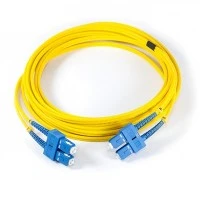


G657 A1 Single Mode Fiber
G657 A1 Single Mode Fiber is designed for optical cable and access-network applications where controlled bending performance is required without moving away from the transmission characteristics of the G.652.D family. Under the current ITU-T G.657 recommendation, A1 is specified for a minimum design radius of 10 mm and remains suitable for the 1260–1625 nm transmission range. For buyers, the important point is not simply bend resistance, but whether the fiber specification matches the cable construction, operating wavelengths, production process, and repeat-order requirements.

- Product Introduction

Product Features
1. Defined 10 mm Minimum Design Radius
The A1 category is specified for a minimum design radius of 10 mm. This gives cable designers a defined bending-performance reference instead of relying on a generic "bend-insensitive" description. The value is especially useful when checking whether the planned cable routing and installation geometry are within the selected fiber category.
2. Suitable Across the 1260–1625 nm Range
Category A fibers are specified for the O-, E-, S-, C- and L-bands. This gives cable and network designers a broad transmission window when the system may operate at different wavelengths or needs future wavelength flexibility.
3. G.652.D-Related Transmission Compatibility
Category A requirements are a subset of ITU-T G.652.D requirements. This matters during network expansion because the fiber can be integrated into systems where G.652.D fiber is already specified, reducing the need to redesign the transmission architecture around the fiber type.
4. Controlled Fiber Geometry
Parameters such as mode-field diameter, cladding diameter, concentricity and non-circularity directly affect splicing and connectorization. Maintaining these dimensions within specification helps cable manufacturers achieve more predictable fiber processing and connection results.
5. Suitable for Cable Manufacturing
The fiber can be specified according to the structure of the customer's cable rather than treated as a standalone optical component. Coating configuration, attenuation requirements, fiber length and other order parameters can therefore be confirmed before production.
6. Better Control for Repeat Orders
For cable manufacturers, consistency between production batches is often more important than a single test result. A clearly defined specification allows repeat orders to be controlled against the same technical requirements, reducing unnecessary adjustments to downstream cable production.
Where G657 A1 Fiber Fits in the Cable Production Chain
FTTH Drop Cable Production
FTTH drop cables often need to pass through relatively compact routing sections around buildings and subscriber premises. A1 provides improved macrobending performance while remaining within Category A requirements, making it suitable when the cable design does not require the smaller design radius of A2.
Indoor Access Cables
Indoor cable structures may involve repeated direction changes around cabinets, wall outlets, distribution boxes and building pathways. The A1 specification gives cable designers a defined bending reference while retaining the transmission characteristics expected from Category A fiber.
Distribution and Access Network Cables
In distribution sections, fiber may be routed through cabinets and connection points where space is limited but the design does not necessarily require an ultra-small bending radius. A1 can be considered when the project requires improved bending performance together with G.652.D-related transmission compatibility.
Fiber Cable Assembly and Connectorization
Fiber dimensions influence splicing and connectorization. For assembly operations, controlled cladding diameter, concentricity and mode-field characteristics help maintain more predictable connection performance and reduce process variation.
Access Network Upgrades
When upgrading an existing access network, compatibility with the existing fiber specification can be a practical procurement requirement. Category A fiber is designed around G.652.D-related transmission characteristics, allowing A1 to be considered where the network architecture already uses G.652.D-class fiber.
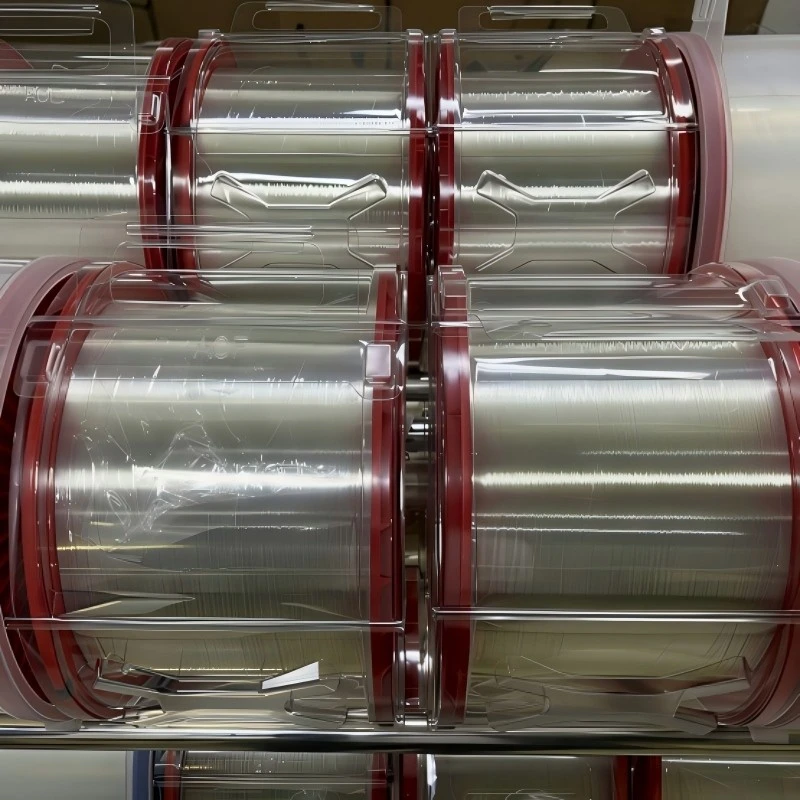
Custom Fiber Supply for Cable Manufacturers
Instead of supplying a standard fiber specification without considering the customer's cable, China Super Tech can confirm the key parameters around the actual production requirement.
Cable Structure Matching
Provide the cable construction, such as loose-tube, tight-buffered or drop-cable structure, and we can review the relevant fiber specification before quotation.
Wavelength Requirements
If your system uses specific operating wavelengths, such as 1310 nm, 1550 nm or 1625 nm, the attenuation requirements can be confirmed against the intended application.
Coating Configuration
The coating configuration can be discussed according to the downstream cable process. This is important when the fiber must pass through a specific buffering or cabling line.
Order Length and Put-Up
Required fiber length, reel configuration and production quantity can be confirmed before manufacturing so the supply format better matches the customer's cable production schedule.
Batch Consistency
For repeat cable production, the agreed technical specification can be used as the reference for subsequent orders, helping reduce unnecessary changes to downstream production settings.
Pre-Order Specification Review
Send your existing fiber specification, cable drawing or project requirement before ordering. We can first check whether the requested A1 configuration is suitable for the intended use.
Technical Specifications
| Parameter | G.657.A1 | Unit / Reference |
|---|---|---|
| Fiber Category | G.657.A1 | ITU-T G.657 |
| Minimum Design Radius | 10 | mm |
| Mode Field Diameter at 1310 nm | 8.6–9.2 | μm |
| Mode Field Diameter Tolerance | ±0.4 | μm |
| Cladding Diameter | 125.0 ± 0.7 | μm |
| Cladding Non-Circularity | ≤1.0 | % |
| Core Concentricity Error | ≤0.5 | μm |
| Cable Cut-Off Wavelength | ≤1260 | nm |
| Macrobending Loss at 1550 nm, 10 mm / 1 turn | ≤0.75 | dB |
| Macrobending Loss at 1625 nm, 10 mm / 1 turn | ≤1.5 | dB |
| Proof Stress | ≥0.69 | GPa |
| Operating Wavelength Range | 1260–1625 | nm |
| Coating / Cable Configuration | Customizable | According to order requirement |
FAQ
What information should I provide when requesting a quotation?
The most useful information includes the required fiber category, attenuation requirements, operating wavelengths, coating configuration, required quantity, reel or put-up length and intended cable structure. If you already have a technical specification or cable drawing, providing it can make the quotation process more accurate.
Can G.657.A1 fiber be used with G.652.D fiber?
Category A requirements are a subset of ITU-T G.652.D requirements. This is why A1 is commonly considered when a network needs improved macrobending performance while retaining G.652.D-related transmission and interconnection characteristics.
Do I need to specify the 1625 nm requirement when ordering?
It depends on the system. If your network or test equipment operates at 1625 nm, the corresponding attenuation and macrobending requirements should be included in the purchasing specification. This avoids selecting a fiber based only on its 1310 nm or 1550 nm performance.
Can you supply fiber for a specific cable production line?
Yes. If you provide the cable construction, buffering method, required coating configuration, production quantity and other technical requirements, the fiber specification can be reviewed before production so that it better matches the downstream cable process.
Can repeat orders maintain the same specification?
Repeat orders can be produced against the agreed technical specification. For cable manufacturers, maintaining the same key fiber parameters between batches helps reduce changes to established production and testing procedures.
How do I confirm whether A1 is suitable for my project?
Start with the cable's minimum routing radius, transmission wavelengths, attenuation requirement, existing fiber specification and downstream cable structure. Send these details to China Super Tech and the required fiber configuration can be reviewed before you place the order.
Need G.657.A1 Fiber for Your Cable Production?
Send us your fiber specification, cable structure, required quantity and operating wavelength. China Super Tech can review the key parameters and provide a suitable supply configuration.
Request a Quote
Hot Tags: g657 a1 single mode fiber, China g657 a1 single mode fiber manufacturers, suppliers, factory