

Bend Insensitive Fiber Optic Cable
Products Description Bend Insensitive Fiber Optic Cable is designed for communication installations where cables must pass through tight corners, narrow pathways, or compact equipment spaces. It combines bend-optimized optical fiber with a suitable cable structure to reduce additional signal...

- Product Introduction
Bend Insensitive Fiber Optic Cable | G.657 Cable for Compact Fiber Routing
Bend Insensitive Fiber Optic Cable
G.657 Single-Mode Cable for FTTH, Indoor Networks and Space-Constrained Installations
Product Overview

Bend Insensitive Fiber Optic Cable is developed for cable installations in which routing space, enclosure dimensions, or fiber-management layout place greater demands on cable flexibility. Instead of focusing only on the optical fiber, the finished cable combines a suitable bend-insensitive fiber with the required buffer, reinforcement, and jacket structure for the intended installation.
China Super Tech Co., Ltd. supplies configurable fiber optic cable solutions based on G.657-series single-mode fiber. Fiber grade, fiber count, cable structure, strength member, jacket material, delivery length, and other construction details can be reviewed according to the customer's network design. The cable can be specified for FTTH, indoor access networks, distribution equipment, and other applications where controlled fiber routing is important.
Product Features
1. Cable-Level Bend Control
The bending behavior of the finished cable is considered together with fiber selection and cable construction, helping reduce unexpected optical loss during routing within the specified design limits.
2. Configurable Fiber Count
Single-fiber and multi-fiber configurations can be arranged for different cable designs, from simple point-to-point connections to higher-density access applications.
3. Multiple Jacket Options
LSZH, PVC, and other jacket materials can be considered according to the installation environment, cable construction, and customer's project specification.
4. Reinforcement Options
FRP, aramid yarn, and other strength-member arrangements can be evaluated when the cable needs a specific balance of flexibility and mechanical protection.
5. Compatible with G.657 Designs
G.657.A1 and G.657.A2 options can be selected according to the required bend radius. This allows the cable configuration to follow the actual routing requirement instead of using one specification for every installation.
6. Project-Specific Configuration
Cable diameter, structure, length, packaging, and selected optical specifications can be coordinated for OEM, replacement, and repeat-order requirements.
How to Select the Right G.657 Cable
The fiber grade should be determined by the installation requirement. A smaller specified bend radius is useful only when the cable route actually requires it.
| Requirement | G.657.A1 | G.657.A2 |
|---|---|---|
| Minimum design radius | 10 mm | 7.5 mm |
| Typical positioning | General access and FTTH cable designs | More space-restricted routing |
| Suitable installation | Boxes, indoor pathways and standard access routes | Compact enclosures and higher-density routing |
| Selection principle | Use when a 10 mm radius is sufficient | Consider when the design calls for a smaller radius |
G.657.A1 and G.657.A2 are not interchangeable simply by appearance. The appropriate choice should be based on the customer's installation drawing, minimum routing radius, cable structure, and required optical performance.
Applications
-
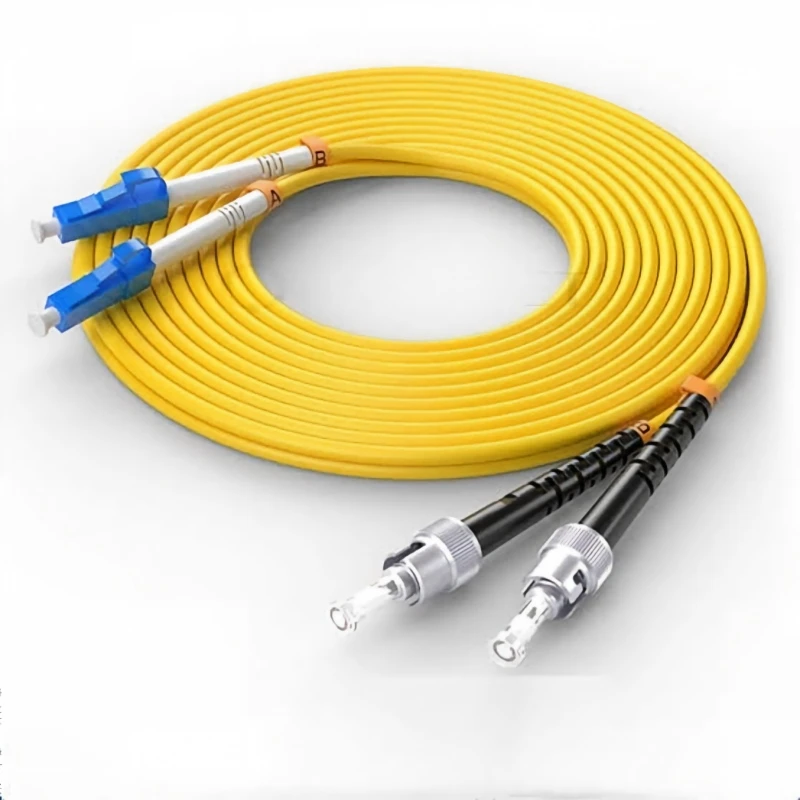
- FTTH Drop and Access Cabling - Suitable for access routes that pass through terminal boxes, wall outlets, customer premises equipment, and other areas where cable routing space is restricted.
- Indoor Communication Networks - Used for building-level fiber connections where cables need to follow organized pathways around cabinets, panels, and equipment.
- Fiber Distribution Equipment - Applicable to distribution boxes, termination units, patching areas, and other enclosures with limited internal routing space.
- High-Density Fiber Management - Helps cable designers address routing requirements when multiple fibers or connections need to be arranged within a confined footprint.
- Compact Optical Equipment - Can be configured for short cable runs around equipment where cable diameter, flexibility, and minimum routing radius need to be considered together.
- OEM Fiber Cable Assemblies - Suitable as a configurable cable platform for customers with established cable drawings, fiber counts, jacket specifications, or recurring procurement requirements.
Cable Construction
The finished cable is determined by more than the selected fiber. The following elements can be matched to the intended application:
| Component | Configuration | Purpose |
|---|---|---|
| Optical Fiber | G.657.A1 / G.657.A2 / Other specified fiber | Provides the required single-mode optical transmission and bend performance. |
| Buffer / Coating Structure | According to cable design | Protects the fiber and supports the selected cable geometry. |
| Strength Member | FRP / Aramid Yarn / Other options | Provides mechanical reinforcement according to installation requirements. |
| Outer Jacket | LSZH / PVC / Other materials | Provides environmental and handling protection. |
| Cable Configuration | Simplex / Duplex / Multi-Fiber | Matches the required fiber count and installation format. |
Technical Specifications
| Item | Specification |
|---|---|
| Product Type | Bend-Insensitive Single-Mode Fiber Optic Cable |
| Fiber Type | G.657.A1 / G.657.A2 / Other G.657 options |
| Fiber Count | 1–24 fibers, depending on cable construction |
| Operating Wavelength | 1310 / 1550 nm; other requirements can be evaluated |
| Cable Structure | Simplex / Duplex / Multi-Fiber |
| Strength Member | FRP / Aramid Yarn / Other options |
| Outer Jacket | LSZH / PVC / Other materials |
| Cable Diameter | Determined by selected cable structure |
| Minimum Design Radius | Determined by fiber grade and complete cable construction |
| Cable Length | Standard or customized |
| Installation | FTTH / Indoor / Duct / Access Network |
| Packaging | Spool / Drum / Customer-specified packaging |
| Parameter | Specification |
|---|---|
| Attenuation | According to selected fiber specification |
| Mode Field Diameter | According to selected fiber specification |
| Chromatic Dispersion | According to selected fiber specification |
| PMD | According to selected fiber specification |
| Macro-Bending Performance | According to selected G.657 grade and test condition |
| Tensile Strength | According to finished cable construction |
| Crush Resistance | According to finished cable construction |
| Operating Temperature | According to jacket material and cable design |
Standards & Compatibility
-

ITU-T G.657 - Applicable G.657 fiber categories can be selected according to the required bend performance.
ITU-T G.652.D - G.657.A1/A2 designs can be used where compatibility with established single-mode network systems is required, subject to the selected fiber specification.
IEC 60793-2-50 - Applicable optical fiber classification can be specified according to the selected fiber type.
Customer Cable Specification - Existing drawings, technical sheets, or approved samples can be used as production references for customized orders.
Customization Services
1. Fiber Grade Selection
G.657.A1, G.657.A2, and other applicable fiber options can be evaluated according to the minimum routing radius and network design.
2. Fiber Count & Cable Structure
Fiber count and cable configuration can be arranged around the customer's equipment, installation method, and required connection format.
3. Jacket & Reinforcement
LSZH, PVC, FRP, aramid yarn, and other suitable construction options can be considered where the project has specific environmental or mechanical requirements.
4. Dimensional Matching
Cable diameter, construction dimensions, delivery length, and packaging can be coordinated with an existing production line or cable-management system.
5. OEM & Repeat Orders
Customer drawings, specifications, and approved samples can be used as references for repeat production, helping maintain consistency across subsequent batches.
Information Required for a Quote
For a faster technical review, provide the following information whenever available:
| Requirement | Example |
|---|---|
| Fiber Grade | G.657.A1 / G.657.A2 |
| Fiber Count | 1F / 2F / 4F / 12F |
| Application | FTTH / Indoor / Distribution Box |
| Required Bend Radius | Project-specific value |
| Jacket Material | LSZH / PVC |
| Cable Structure | Simplex / Duplex / Multi-Fiber |
| Length | Required length per reel |
| Quantity | Sample / Project / Annual demand |
If you already have a cable drawing, specification sheet, or existing sample, sending it with the inquiry is recommended. It allows the cable to be evaluated as a complete construction rather than only by its fiber grade.
Packaging & Delivery
- Product Form - Finished fiber optic cable supplied according to the agreed cable construction and delivery format.
- Packaging - Spool, drum, labeling, and protective packaging can be coordinated according to cable length and shipping requirements.
- Sample Orders - Sample configuration can be discussed before larger production where technical validation is required.
- Quality Documentation - Applicable inspection and technical documentation can be discussed according to the selected specification and order requirements.
FAQ
Bend-insensitive fiber describes the optical fiber itself, while a fiber optic cable is a finished construction that also includes the fiber, buffer or positioning structure, strength member, and outer jacket. Cable performance therefore depends on the complete design.
The choice should follow the minimum bend radius required by the installation. G.657.A1 uses a 10 mm minimum design radius, while G.657.A2 uses a 7.5 mm minimum design radius. If the installation does not require a smaller radius, A1 may be sufficient.
Yes. Fiber count, cable configuration, reinforcement, jacket material, delivery length, and packaging can be reviewed according to the project specification.
Yes. A technical drawing, specification sheet, or approved sample can be used as a reference for evaluating a customized cable construction.
LSZH is an available jacket option for applicable cable constructions. The final material and construction should be confirmed according to the intended installation environment.
Fiber grade, fiber count, application, required bend radius, cable structure, jacket material, cable length, and estimated quantity are the most useful starting points.
Sample availability can be evaluated according to the required cable structure and project specification before bulk procurement.
Applicable technical and inspection documentation can be discussed according to the selected fiber grade and finished cable construction. Specific test requirements should be confirmed before production.
Request a Fiber Optic Cable Quote
Have a cable specification already?
Send your fiber grade, fiber count, required bend radius, cable structure, jacket, length, and quantity. If you have a drawing or existing sample, include it with the inquiry for a more accurate technical review.
Hot Tags: bend insensitive fiber optic cable, China bend insensitive fiber optic cable manufacturers, suppliers, factory