




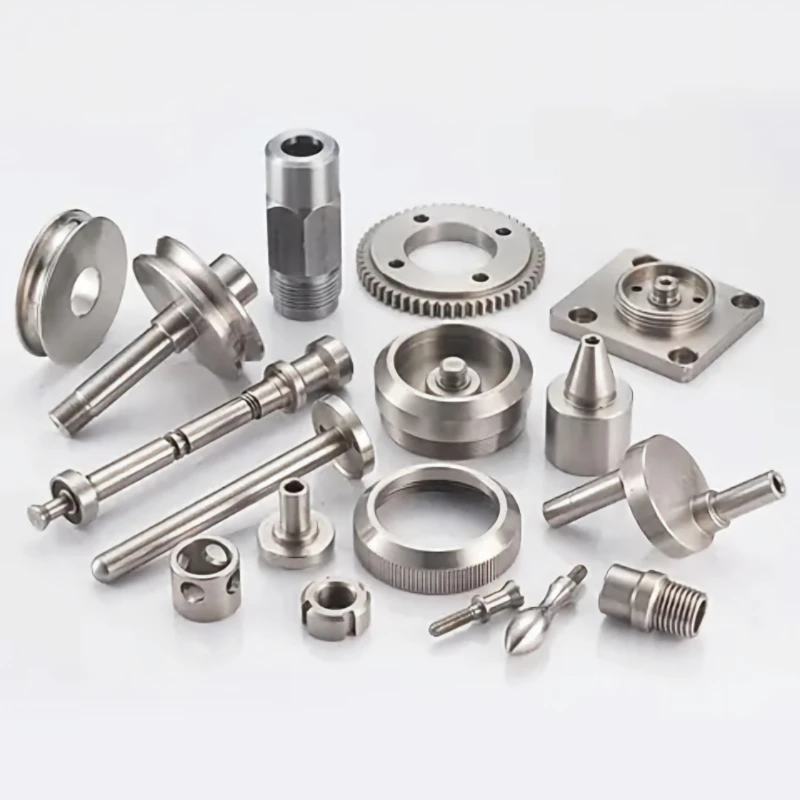

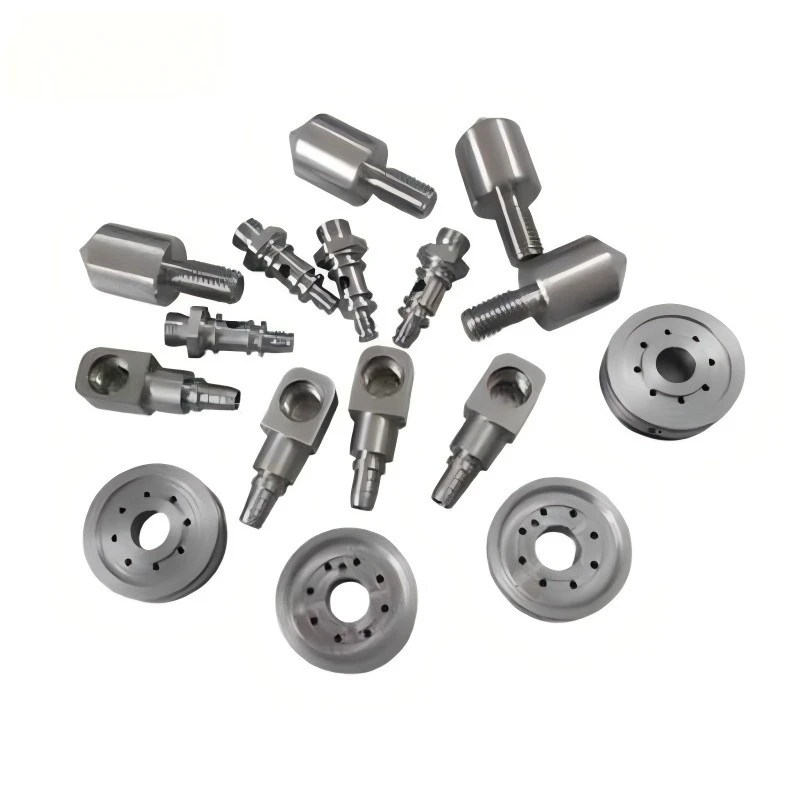
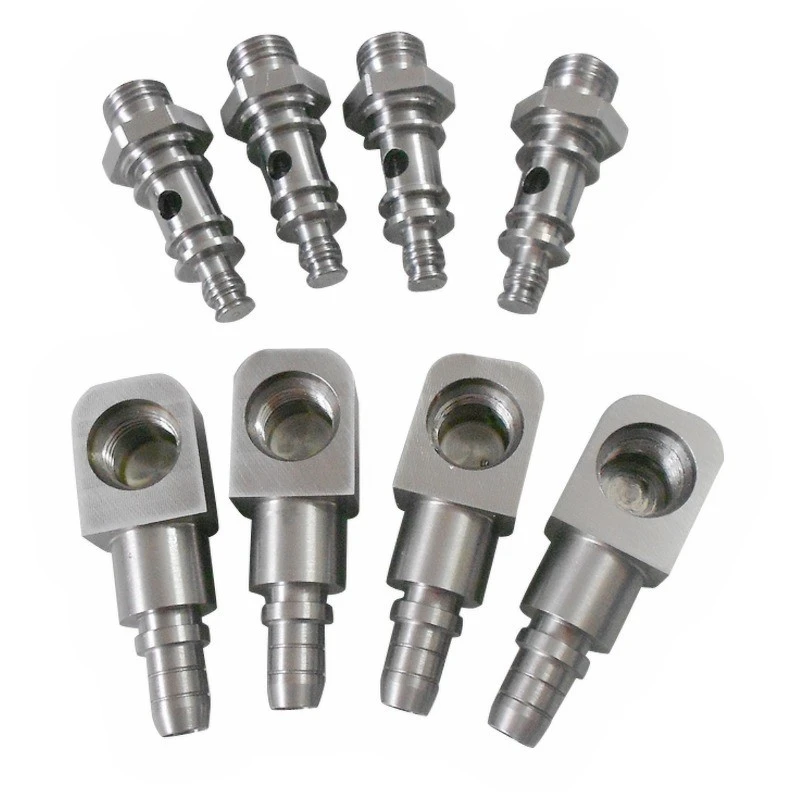
Titanium Alloy Precision Instrument Parts
China Super Tech Co., Ltd. relies on its independently developed cold isostatic pressing forming technology to create this Titanium Alloy Precision Instrument Part. The material is made from medical-grade titanium ingots through melting and purification, with the internal impurity content controlled within 0.05%. The overall positional tolerance is stable at ±0.002mm, making it suitable for the core transmission and sensing parts of various high-precision instruments. It is unlikely to experience deformation or rusting over a long period of use.

- Product Introduction
Product features
1. Low residual stress
By adopting our exclusive three-stage vacuum annealing process, the residual stress inside the parts is 60% lower than the industry standard level. Long-term operation will not cause spontaneous deformation, ensuring stable reading accuracy of the instrument.
2. High wear resistance
Adding 0.2% nano ceramic phase in the titanium matrix, combined with the CNC mirror polishing process, the surface roughness can reach Ra0.05. After repeated friction for 100,000 times, the wear amount does not exceed 0.001mm.
3. Anti-magnetic and anti-interference
The material undergoes two demagnetization treatments, with the overall magnetic permeability lower than 1.0005. It will not cause signal interference to the sensors and magnetic sensitive components inside the instrument.
4. Lightweight and adaptable
Under the same strength, it is 45% lighter than stainless steel parts. It can reduce the overall load of the precision instrument, extend the equipment's battery life and service life.
Product Application
1. Core valve core of household smart water meter
This part will not be corroded by tap water, and there will be no wear and jamming even after long-term opening and closing. It can keep the water meter's measurement error within the allowable range of national standards, avoiding the problem of inaccurate water consumption measurement for users.
2. Sensor support of medical electronic thermometer
The non-magnetic and non-corrosive characteristics will not interfere with the temperature sensing signal. At the same time, it meets the biological compatibility standards. During daily disinfection and contact, no harmful substances will be released, ensuring accurate and safe temperature measurement.
3. Transmission components of portable pH meter in laboratory
The advantages of lightweight and low deformation enable more precise electrode fine-tuning actions of the pH meter. During outdoor on-site detection, the data will not drift due to the deformation of the parts.
4. Anti-shake base for civilian unmanned aerial vehicle aerial camera
The high-strength and lightweight properties can reduce the load of the aerial camera mount. During flight, the parts are less likely to loosen due to vibration, resulting in clearer and more stable pictures.
Customized service
1. Tolerance-oriented optimization
Based on your instrument's precision requirements, the tolerance of the designated area can be further tightened to ±0.001mm. We have 12 years of experience in adjusting titanium alloy parts, and can specifically avoid the precision bottlenecks of conventional processes.
2. Surface functional modification
It is possible to perform micro-arc oxidation wear-resistant layer and biocompatible passivation layer treatment as needed. Without the need to replace materials, the parts can be adapted to special contact scenarios.
3. Small batch rapid delivery
Supports small orders starting from 5 pieces for customization. Relying on our own CNC processing cluster, the first sample can be delivered as soon as 7 days, without waiting for the industry's conventional 30-day scheduling cycle.
4. Full-process traceability service
Each customized part comes with a complete material inspection report and process record. You can follow the production process throughout to avoid unclear rights and responsibilities after delivery.
Specifications
|
Item |
Specification |
|
Product Name |
Titanium Alloy Precision Instrument Parts |
|
Material Grade |
Titanium Grade 2, Grade 5 (Ti-6Al-4V), Grade 7, Grade 9, Grade 23 (Ti-6Al-4V ELI) |
|
Material Standard |
ASTM B348, ASTM F136, ASTM F67, AMS Standards |
|
Titanium Content |
≥ 90% (depending on alloy grade) |
|
Density |
Approx. 4.43–4.51 g/cm³ |
|
Tensile Strength |
345–1000 MPa (depending on material grade and heat treatment) |
|
Yield Strength |
275–950 MPa (depending on alloy grade) |
|
Hardness |
Approx. 200–400 HV (customizable by heat treatment) |
|
Machining Process |
CNC Milling, CNC Turning, Grinding, EDM, Laser Cutting |
|
Surface Treatment |
Polishing, Anodizing, Passivation, Sandblasting, PVD Coating |
|
Dimensional Tolerance |
±0.01 mm (precision machining available) |
|
Surface Roughness |
Ra ≤ 0.8 μm (fine finish available) |
|
Part Size |
Customized according to drawings and applications |
|
Wall Thickness |
Customized, suitable for thin-wall precision components |
|
Heat Treatment |
Annealing, Aging Treatment, Stress Relieving |
|
Operating Temperature |
Approx. -200°C to 500°C (depending on alloy and application) |
|
Biocompatibility |
Excellent (Grade 23 titanium alloy available for medical applications) |
|
Manufacturing Methods |
Forging, CNC Machining, Precision Casting, Additive Manufacturing |
FAQ
1. Why are titanium alloys used for precision instrument parts?
Titanium alloys are widely used for precision instrument parts because of their high strength-to-weight ratio, excellent corrosion resistance, low density, and non-magnetic properties. They help improve equipment reliability while reducing component weight.
2. What titanium alloy grades are available for precision instrument components?
Common materials include Grade 2, Grade 5 (Ti-6Al-4V), Grade 9, and Grade 23 (Ti-6Al-4V ELI). Grade 5 titanium alloy is the most widely used due to its excellent strength, durability, and machining performance.
3. What machining accuracy can titanium alloy precision parts achieve?
With advanced CNC machining technology, titanium precision parts can typically achieve tolerances of ±0.01 mm, with surface roughness as low as Ra ≤ 0.8 μm depending on part design and customer requirements.
4. What are the main challenges in machining titanium alloy parts?
Titanium alloys have low thermal conductivity and high strength, which can cause tool wear and machining difficulties. Professional manufacturers use optimized cutting parameters, suitable tooling, and strict quality control to ensure stable production.
5. Can titanium alloy precision instrument parts be customized?
Yes. Titanium alloy parts can be customized according to drawings, 3D models, dimensions, surface requirements, and application needs. CNC machining, polishing, heat treatment, and surface finishing services are available for different industries.
Hot Tags: titanium alloy precision instrument parts, China titanium alloy precision instrument parts manufacturers, suppliers, factory, Aircraft Titanium Alloy, Aluminum Titanium Carbon, Beryllium Titanium Alloy, titanium alloy housing components, titanium alloy machined parts, titanium alloy semiconductor parts


