

G657 A1 Single Mode Optical Fiber
This page helps optical cable engineers, technical buyers and specification reviewers check G.657.A1 fiber data before sample evaluation or procurement. It explains the main optical and dimensional parameters, identifies the conditions behind each value, and lists the documents to request before approving a supplier's specification.

- Product Introduction
G657 A1 Single Mode Optical Fiber
Technical Specification Review for G.657.A1 Single-Mode Fiber
This page helps optical cable engineers, technical buyers and specification reviewers check G.657.A1 fiber data before sample evaluation or procurement. It explains the main optical and dimensional parameters, identifies the conditions behind each value, and lists the documents to request before approving a supplier's specification.
ITU-T G.657.A1 Single-Mode Fiber Datasheet Review Bare Fiber Specification
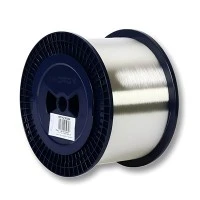
Existing product-page image. The pictured spool does not independently confirm the fiber's dimensions or optical performance.
1. What Does G.657.A1 Mean?
G.657.A1 is a category of bend-insensitive single-mode optical fiber defined by ITU-T Recommendation G.657. Single-mode means that the fiber is designed to carry light in one spatial propagation mode under its specified operating conditions.
The A1 category is intended to reduce additional optical loss when the fiber bends. Under ITU-T G.657 (08/2024), G.657.A1 is appropriate for a minimum design radius of 10 mm.
Category A fibers are compatible with the G.652.D fiber specification framework for transmission and interconnection. Actual system compatibility should still be checked against the required optical characteristics and connection conditions.
2. G.657.A1 Standard Reference Values
The following figures are reference values from ITU-T G.657 (08/2024), Category A. They are not a substitute for the supplier's approved datasheet or a batch test report.
| Parameter | Standard reference | Condition or limitation |
|---|---|---|
| Mode field diameter (MFD) | Nominal value within 8.6–9.2 μm; tolerance no greater than ±0.4 μm | Measured at 1310 nm. The supplier must state its selected nominal value and tolerance. |
| Cladding diameter | 125.0 ± 0.7 μm | Glass cladding diameter, not the outside diameter of the coated fiber. |
| Core/cladding concentricity error | Maximum 0.5 μm | Reference limit for the offset between the core and cladding centers. |
| Cladding non-circularity | Maximum 1.0% | Standard reference limit; confirm the applicable measurement method. |
| Cable cut-off wavelength | Maximum 1260 nm | This is a cable-level reference. Do not automatically treat it as the cut-off wavelength of an uncabled bare fiber. |
| Minimum design bend radius | 10 mm | G.657.A1 category reference. Do not confuse it with an unrestricted installation instruction or a complete cable's bend limit. |
| Proof stress | Minimum 0.69 GPa | Mechanical proof-test reference. Confirm the actual product specification and test documentation. |
| Coating diameter | Not assigned one universal fixed value by ITU-T G.657 | Obtain the actual nominal diameter, tolerance, coating structure and applicable product specification. |
| Attenuation | Check the applicable fiber and cable requirements separately | The G.657 table includes cable attenuation limits. These must not be presented as verified measurements of an individual bare fiber. |
Reference: ITU-T G.657 (08/2024), particularly the Category A attributes in Table 1 and the fiber and cable attribute clauses. Use the applicable standard text and agreed test methods for formal acceptance.

Illustrative product image. Physical dimensions and performance must be established from technical documentation.
3. What the Main Parameters Tell You
Mode Field Diameter (MFD)
MFD describes the effective width of the light distribution traveling through the fiber. It is not the physical diameter of the glass core.
Check: the nominal value, tolerance, measurement wavelength and test method. For the G.657.A1 standard reference, the MFD range is assessed at 1310 nm.
Cladding Diameter
The cladding is the glass surrounding the core. Its diameter affects fiber alignment and the fit of the fiber in splicing and cable-production processes.
Check: the nominal diameter, upper and lower tolerance, and whether the value refers to glass cladding rather than coated fiber.
Cut-Off Wavelength
The cut-off wavelength helps determine the wavelength conditions under which single-mode operation is supported. Fiber cut-off and cable cut-off are different measurements and can produce different results.
Check: whether the datasheet reports fiber cut-off wavelength (λc) or cable cut-off wavelength (λcc), along with the test method and sample conditions.
Attenuation
Attenuation is the reduction in optical signal power over a distance, commonly expressed in dB/km. The result depends on wavelength and measurement conditions.
Check: the maximum or typical value, test wavelength, unit, test method and whether the result applies to bare fiber or a finished cable. Do not compare values measured under different conditions without qualification.
Coating Diameter
The coating is the protective polymer layer around the glass fiber. Coating diameter affects handling, stripping, fiber identification and compatibility with the cable manufacturing process.
Check: the nominal outside diameter, tolerance, single- or dual-layer coating structure, and measurement method. Confirm whether the specification describes coated bare fiber or a tight-buffered product.
4. Parameter Checklist: What Buyers Should Verify
Use this table when reviewing a G657 A1 fiber datasheet. A product name alone is not sufficient evidence that every parameter meets the project requirement.
| Parameter name | What it means | How the buyer should check it |
|---|---|---|
| Standard and category | Defines the fiber classification and applicable requirements. | Confirm ITU-T G.657 (08/2024), Category A1, or the exact edition required by the project. |
| MFD | Describes the effective light distribution width. | Check nominal value, tolerance, wavelength and test method. |
| Cladding diameter | Defines the outside diameter of the glass cladding. | Compare nominal size and tolerance against the standard and cable-production requirements. |
| Fiber cut-off wavelength | Characterizes the wavelength-related single-mode behavior of the fiber. | Confirm λc versus λcc, sample configuration and measurement method. |
| Attenuation | Shows how much optical signal is lost per unit length. | Compare the value at each required wavelength and verify whether it is a bare-fiber or cable result. |
| Macrobending loss | Measures additional loss when the fiber is bent around a specified radius. | Check bend radius, wavelength, number of turns, loss limit and test method together. |
| Coating diameter and structure | Describes the protective layer surrounding the glass. | Confirm nominal diameter, tolerance, coating layers, stripping requirements and compatibility with the production line. |
| Mechanical properties | Cover proof testing and other specified mechanical characteristics. | Check proof stress, test conditions and relevant mechanical limits required by the project. |
| Documentation | Provides evidence supporting the declared product characteristics. | Request the current datasheet, conformity statement and applicable inspection or test records. |
5. How to Compare Two G657 A1 Fiber Datasheets
Two suppliers may use the same G.657.A1 product name but report different nominal values, tolerances or test conditions. Review the full specification rather than comparing one number in isolation.
Step 1 - Confirm the product identity
Both datasheets should identify single-mode optical fiber, Category A1 and the applicable standard edition. Check that neither document describes finished cable when your requirement is bare fiber.
Step 2 - Match the measurement conditions
Compare MFD at the same wavelength, attenuation at the same wavelength, and bend-loss results under the same radius and number of turns. Different test conditions may explain different results.
Step 3 - Compare tolerances, not just nominal values
A nominal diameter is only part of the specification. Review the permitted upper and lower limits and confirm that the full tolerance range fits your production requirements.
Step 4 - Separate standard references from supplier guarantees
Check whether each value is a standard limit, a typical value, a guaranteed maximum or a measured batch result. These descriptions are not interchangeable.
Step 5 - Verify supporting records
Confirm that the datasheet, conformity statement and inspection records refer to the same fiber category and product configuration. Ask the supplier to clarify any conflicting values before approval.

6. What to Include in a Technical RFQ
Provide the following information so the proposed fiber can be checked against your specification before quotation or technical approval.
- Fiber category: G.657.A1 single-mode optical fiber.
- Standard edition: ITU-T G.657 (08/2024), or the edition specified in your project.
- Product form: bare optical fiber with the required coating, not finished fiber optic cable.
- Optical limits: MFD, attenuation, cut-off wavelength and other required characteristics.
- Bending requirements: minimum design radius and any specified loss-test conditions.
- Dimensions: cladding diameter, coating diameter, tolerances and coating structure.
- Quantity and packaging: sample quantity if required, total length, length per spool and packaging requirements.
- Quality documents: required datasheet, conformity statement, inspection records or test reports.
- Project details: intended cable design, production requirements, destination and expected purchasing volume.
Where a requirement has not yet been finalized, identify it as a target or an item requiring confirmation. This helps prevent an unverified reference value from becoming an unintended contractual guarantee.
7. Datasheet and Technical Document Review
China Super Tech Co., Ltd. can review G.657.A1 inquiries against the technical requirements provided by the buyer. Before procurement, confirm the actual product configuration and the supporting documents available for that configuration.
| Document or record | What it should establish |
|---|---|
| Product datasheet | Product identity, applicable standard, nominal values, tolerances and stated test conditions. |
| Conformity statement | The declared conformity scope, standard edition and applicable product configuration. |
| Inspection or test report | Measured parameters, methods, test conditions and the sample or batch to which the results apply. |
| Packaging specification | Spool length, labeling, protection and delivery configuration, as agreed. |
Availability of specific documents, samples, coating configurations, order quantities and delivery arrangements must be confirmed for the actual inquiry. Do not assume that every document or configuration is available for every order.
Request a G657 A1 Fiber Datasheet
Share your required standard, optical limits, coating dimensions, quantity and documentation needs. The proposed specification can then be reviewed against your technical requirements.
For faster review, attach your existing fiber specification or cable-production requirement, if available.
Request a Datasheet8. Frequently Asked Questions
Is G.657.A1 a single-mode optical fiber?
Yes. G.657.A1 is a bend-insensitive category of single-mode optical fiber defined by ITU-T G.657. The category describes fiber characteristics; the actual product data still needs to be verified.
What is the minimum design bend radius of G.657.A1?
The ITU-T G.657 (08/2024) reference is 10 mm. This design value must not be confused with a universal installation limit for every bare fiber or finished cable.
What is the standard MFD for G.657.A1?
At 1310 nm, the standard reference nominal-value range for Category A is 8.6–9.2 μm, with a tolerance no greater than ±0.4 μm. The supplier should state the selected nominal value and its tolerance.
Does ITU-T G.657 specify one fixed coating diameter?
No. The recommendation does not establish one universal coating diameter for all G.657.A1 products. Confirm the actual coated-fiber diameter, tolerance and coating structure in the product datasheet.
Can cable attenuation values be used as bare-fiber guarantees?
Not automatically. Cable attenuation limits and bare-fiber measurements must be identified separately. Confirm the sample configuration, wavelength, measurement method and applicable specification.
What should I check first when reviewing a G657 A1 fiber datasheet?
Start with the fiber category and standard edition. Then verify MFD, cladding diameter, cut-off wavelength, attenuation, bending-loss conditions, coating dimensions and supporting documents.
Can I use a standard reference value as a purchase acceptance limit?
Only after confirming that it applies to the actual product and measurement method. The purchase specification should clearly identify each contractual limit and the evidence required for acceptance.
Hot Tags: g657 a1 single mode optical fiber, China g657 a1 single mode optical fiber manufacturers, suppliers, factory