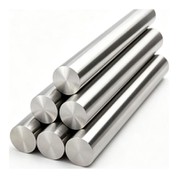


Titanium Parts For Oil And Gas
China Super Tech Co., Ltd. has specially developed high-strength titanium alloy components for oil and gas extraction scenarios. Leveraging years of precision processing experience, they strictly adhere to industry safety standards during production. This titanium alloy component weighs only 56% of the same-sized stainless steel, and can operate stably for a long time in high-corrosion and high-pressure oil and gas environments, significantly reducing the frequency of equipment maintenance and helping to reduce costs and increase efficiency in oil and gas operations.

- Product Introduction
Product features
1. Excellent corrosion resistance
The exclusive formula containing TA2 and a trace amount of palladium offers an annual corrosion rate of less than 0.005mm in environments with hydrogen sulfide and chloride ions commonly found in oil and gas fields. This is significantly lower than the corrosion level of conventional titanium materials in the industry, eliminating the need for additional anti-corrosion coating treatment.
2. Stable and non-deformable under high pressure
Through six cycles of hot isostatic pressing densification, there are no residual pores inside, and it can withstand a maximum instantaneous pressure of 140MPa. It will not experience the sudden cracking problems that occur in conventional castings.
3. Lightweight and suitable for installation
The overall weight is 42% lighter than steel components with the same performance. No additional modification of lifting fixtures is required. Skilled workers can complete the component replacement alone, significantly reducing equipment downtime.
Product Application
1. Components of the wellhead production tree
The valve body and connection flanges that come into direct contact with sulfur-containing oil and gas will not suffer from internal wall corrosion and perforation within three years like steel components. This can extend the overall maintenance cycle of the production tree by more than twice, in line with the safety operation norms of domestic oil and gas fields.
2. Subsea pipeline connection joints
At the joint position of the shallow sea oil and gas transportation pipeline, they can resist the dual corrosion of seawater and oil gas. No regular underwater anti-corrosion maintenance is required, reducing the safety risks and costs of offshore operations.
3. Shell of the downhole logging instrument
When the instrument penetrates several thousand meters into the well, it will not deform due to high temperature and high pressure, protecting the internal precision electronic components from damage, and improving the accuracy of logging data.
Customized Services
China Super Tech Co., Ltd. can offer a full-chain personalized customization service. Relying on its own titanium material melting and precision processing production line, it does not outsource any process and can strictly control the quality at every step.
1. Customized size design
Based on the installation space of the customer's existing oil and gas equipment, non-standard components with non-standard hole diameters and non-standard flange distances will be manufactured. There is no need for the customer to modify the original equipment interfaces.
2. Adaptation to specific working conditions
For special oil and gas fields with higher chlorine content, the elemental ratio of titanium materials can be adjusted to further enhance the anti-corrosion ability, meeting the specific requirements of the working conditions.
3. Rapid batch delivery
Standardized custom orders can be shipped within 15 days, which is 40% shorter than the industry average delivery cycle, without delaying the customer's equipment upgrade plan.
Specifications
|
Parameter |
Specification |
|
Product Name |
Titanium Parts for Oil and Gas |
|
Material Grades |
Grade 2, Grade 5 (Ti-6Al-4V), Grade 7, Grade 12, Grade 23 (Custom Available) |
|
Manufacturing Process |
CNC Machining, Precision Turning, Milling, Drilling, Grinding |
|
Available Types |
Valve Components, Flanges, Connectors, Bushings, Sleeves, Shafts, Fasteners, Pump Parts, Custom Precision Parts |
|
Size Range |
Custom Design According to Drawings or Samples |
|
Dimensional Tolerance |
±0.01 mm (Depending on Part Geometry) |
|
Surface Finish |
Machined, Polished, Sandblasted, Passivated, Anodized (Optional) |
|
Surface Roughness |
Ra 0.4–1.6 μm |
|
Operating Temperature |
-196°C to +400°C (Material Dependent) |
|
Corrosion Resistance |
Excellent Resistance to Seawater, Chlorides, H₂S, CO₂, and Corrosive Oilfield Environments |
|
Pressure Rating |
Customized According to Design Requirements |
|
Heat Treatment |
Stress Relieving, Annealing, Solution Treatment (Optional) |
|
Inspection |
100% Dimensional Inspection, Material Verification, Surface Inspection |
|
Testing Available |
PMI, UT, PT, MT, Hardness Test, CMM Inspection, Pressure Test (If Required) |
FAQ
Why are titanium parts used in the oil and gas industry instead of stainless steel?
+
-
Titanium offers an exceptional strength-to-weight ratio and outstanding resistance to seawater, chlorides, CO₂, and many corrosive oilfield environments. Compared with conventional stainless steel, titanium components typically provide a longer service life, lower maintenance costs, and improved reliability in offshore, subsea, and highly corrosive applications.
Are titanium parts suitable for sour service (H₂S) environments?
+
-
Yes, but material selection must comply with NACE MR0175 / ISO 15156 requirements. The correct titanium grade should be selected based on operating pressure, temperature, H₂S partial pressure, chloride concentration, and process conditions. Compliance with these standards helps reduce the risk of sulfide stress cracking (SSC) and improves long-term safety.
Can titanium parts be customized for my oilfield equipment?
+
-
Absolutely. Most oil and gas titanium components are custom-manufactured according to customer drawings or samples. Typical products include valve components, pump parts, flanges, connectors, shafts, bushings, fasteners, subsea hardware, and other precision CNC machined parts with tight tolerances and application-specific surface treatments.
What quality inspections are typically provided for titanium oil and gas parts?
+
-
Quality assurance usually includes 100% dimensional inspection, PMI (Positive Material Identification), CMM measurement, hardness testing, ultrasonic testing (UT), dye penetrant testing (PT), material certificates (EN 10204 3.1), and pressure or leak testing when required. These inspections help ensure each part meets project specifications and industry standards before shipment.
What information should I provide when requesting a quotation?
+
-
To receive an accurate quotation, it is recommended to provide:
2D drawings or 3D CAD files
Material grade (e.g., Grade 2, Grade 5, Grade 7)
Dimensions and tolerances
Surface finish requirements
Operating pressure and temperature
Service environment (offshore, subsea, H₂S, seawater, etc.)
Required quantity and testing or certification standards (such as NACE MR0175 or ISO 15156)
Providing complete technical information helps ensure the correct material selection,
manufacturing process, and inspection plan for your application.
Hot Tags: titanium parts for oil and gas, China titanium parts for oil and gas manufacturers, suppliers, factory, Aircraft Titanium Alloy, Alloy Of Tungsten and Titanium, Beryllium Titanium Alloy, Ti Nb Alloy, titanium alloy milled parts, Titanium Columbium Alloy