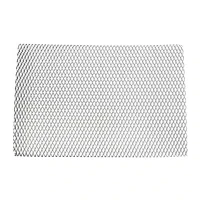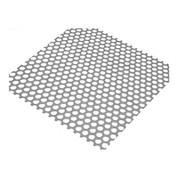


Titanium Alloy Plate
If your next project requires a material that actually pull its weight (or lack thereof), there are few options that rival the titanium alloy plate. However, the materials properties are not without note. Its density is approximately 4.51 g/cm³, so it is 45% less dense than carbon steel. Strength-wise, its tensile strength is generally equivalent to or greater than many other structural materials.

- Product Introduction
Product Introduction

Product Specifications
|
Parameter |
Value |
|
Thickness – Cold Rolled |
0.3 mm – 4.0 mm |
|
Thickness – Hot Rolled |
4.0 mm – 30.0 mm |
|
Width |
400 mm – 3,000 mm |
|
Density |
~4.51 g/cm³ |
|
Tensile Strength – TA2 |
400 – 550 MPa |
|
Tensile Strength – TC4 |
900 – 1,100 MPa |
|
Max. Service Temperature – TC4 |
Up to 400°C (752°F) |
|
Surface Finish Options |
Mill finish, pickled, sandblasted, polished |
|
Production Method |
Hot rolling / cold rolling |
Product Advantages
Strength-to-Weight Ratio That Stacks Up Against Steel TC4 titanium alloy plate achieves tensile strengths between 900 and 1,100 MPa while being less than 60% the weight of equivalent steel plate. In aerospace and structural applications, this means real weight savings without compromising load-bearing performance - a trade-off most metals simply can't offer. For OEMs designing for weight-critical environments, this is a genuine engineering advantage, not a marketing claim.
Corrosion Resistance That Holds Up in the Harshest Conditions Titanium naturally forms a stable, self-renewing oxide layer on its surface, providing outstanding resistance to seawater, chlorides, nitric acid, and a wide range of chemical media. TA1 and TA2 grades, in particular, outperform stainless steel in oxidizing environments and require no surface coatings or additional protection in most industrial applications. For chemical processing plants or offshore installations, that durability translates directly into longer service life and lower maintenance costs.
Wide Grade and Dimension Range for Diverse Engineering Needs From thin cold-rolled Titanium Alloy Sheet at 0.3 mm for precision fabricated parts to 30 mm hot-rolled plate for heavy structural use, this product line covers a broad working range. Multiple grades - commercially pure TA1/TA2 and high-strength TC4 - are available under ASTM B265 and GB/T standards, giving procurement teams the flexibility to match the material exactly to the mechanical and chemical demands of the project rather than overspecifying.
Biocompatible Grades Available for Medical Applications TC4 ELI (Grade 23) meets the elevated biocompatibility requirements for implantable devices and surgical instruments. Its low interstitial content enhances fracture resistance and fatigue performance, which are critical in long-term medical implant applications. Procurement teams in the medical device sector can source certified plate with the traceability and documentation required for regulated production environments.

Customization & Procurement Guide
When you are working on a project you will find that standard stock dimensions will work for projects. However you can also get custom sizing for the thickness and the sheet format.
If you want to place a custom order you need to confirm a things. You need to know what grade you want like ASTM or GB/T designation. You also need to think about the tolerances and the surface finish.. You have to check if there are any certification standards that apply, like ASME SB-265 for pressure vessel use.
For orders it usually takes 10 to 20 business days to get the materials. This depends on the grade and the specification of the material. If you are buying stocked sizes you will get them faster. It is an idea to ask for a material test report and a certificate of conformance when you get your shipment. This is especially important if you are working on something, for aerospace, pressure-rated applications.
The materials are usually packaged in wooden pallets that can withstand the sea. The pallets are labeled clearly on the outside. This helps to protect the materials during shipping.
If you need the materials to be cut to a size or if you need laser cutting or specific dimensional tolerancing this can be done. You just need to provide your drawing or dimensional list when you first ask about the materials.

Application Scenarios
- Aerospace & Defense - structural airframe components, compressor blades, engine parts, and armor plate (TC4 grade primarily)
- Chemical & Petrochemical Processing - reactor linings, heat exchanger shells, pipeline sections, and storage vessel walls where corrosive media are present
- Marine Engineering - seawater desalination equipment, offshore platform hardware, ship fittings, and submarine components
- Medical Devices - surgical instrument blanks, orthopedic implant components, and dental prosthetic substrates (TC4 ELI / GR23)
- Power Generation - condenser tubing support structures and components in nuclear and thermal power facilities
- Industrial Fabrication - electrodes for electrolytic processes, pollution control equipment, and food-grade processing machinery

FAQ
1. What is the difference between TA2 and TC4, and how do I choose?
TA2 (GR2) is commercially pure titanium - it's easier to weld, more ductile, and better suited for corrosive environments. TC4 (GR5) is an alloyed grade with roughly double the tensile strength, making it the right choice when structural loads or elevated temperature performance are the priority. If your main concern is corrosion resistance and formability, TA2 is usually sufficient and more cost-effective. If you need high strength in a lightweight material, TC4 is the standard selection.
2. Does this Titanium Alloy Sheet come with material certification?
Yes. Material test reports (MTRs) and certificates of conformance are available for all grades and are strongly recommended for any regulated application. Specific certifications such as ASME, AMS, or mill test certificates can be provided - please specify your requirements at the time of inquiry.
3. Can titanium plate be welded and machined on-site?
Both TA2 and TC4 are weldable. TIG welding under inert shielding gas (argon) is the standard method to prevent oxidation. TC4 requires more care during machining - appropriate cutting speeds, tool selection, and coolant use are important. Pure grades like TA1 and TA2 are more straightforward to machine and cold form.
4. What is the minimum order quantity for custom dimensions?
Minimum order quantities vary by grade and specification. For stocked standard sizes, smaller quantities are typically available. For custom-cut or non-standard dimensions, a minimum tonnage or piece count may apply. Contact us directly with your project specs to receive an accurate quote and lead time confirmation.
Hot Tags: titanium alloy plate, China titanium alloy plate manufacturers, suppliers, factory, Gold Titanium Sheet, Porous Titanium Sheet, Titanium Alloy Sheet, Titanium Mesh Sheet, Titanium Perforated Sheet, Titanium Steel Plate