





High Purity Molybdenum Foil
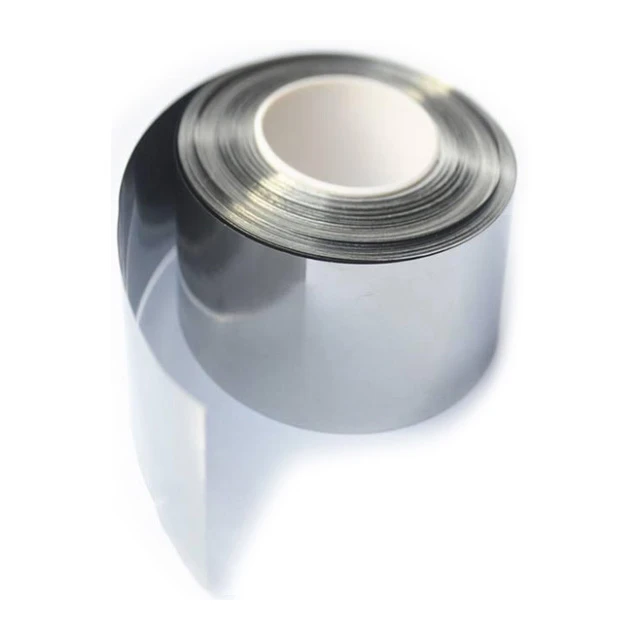
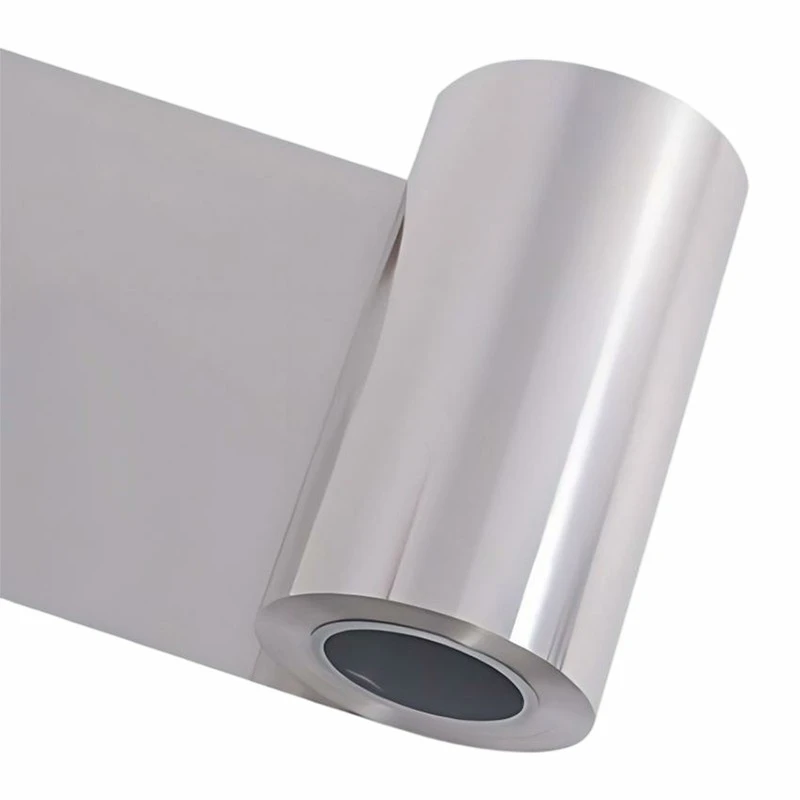
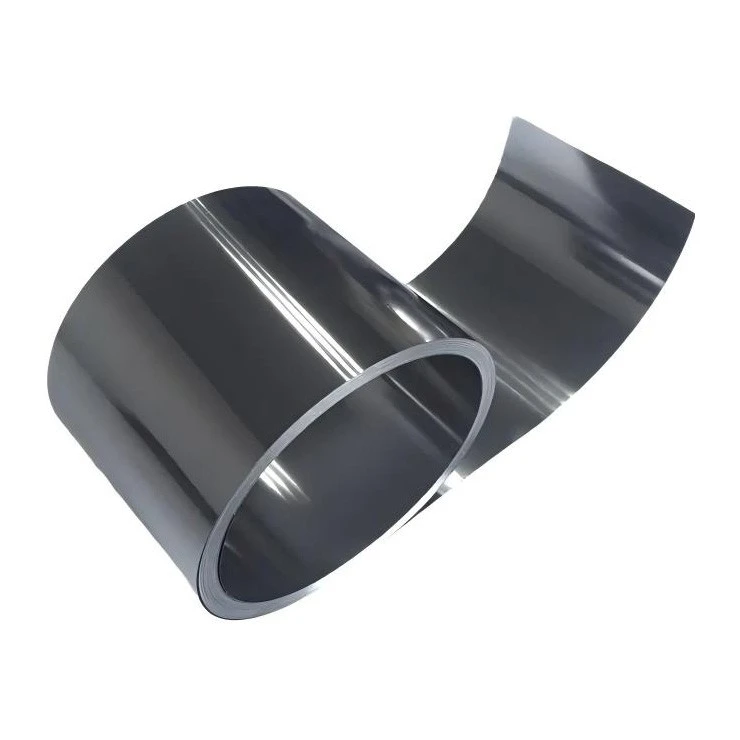
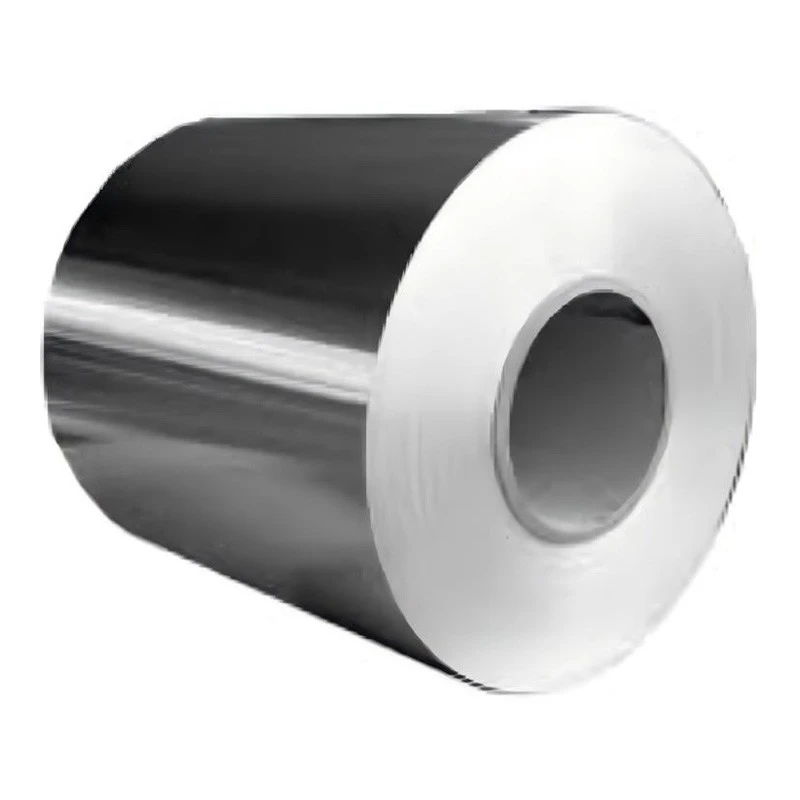
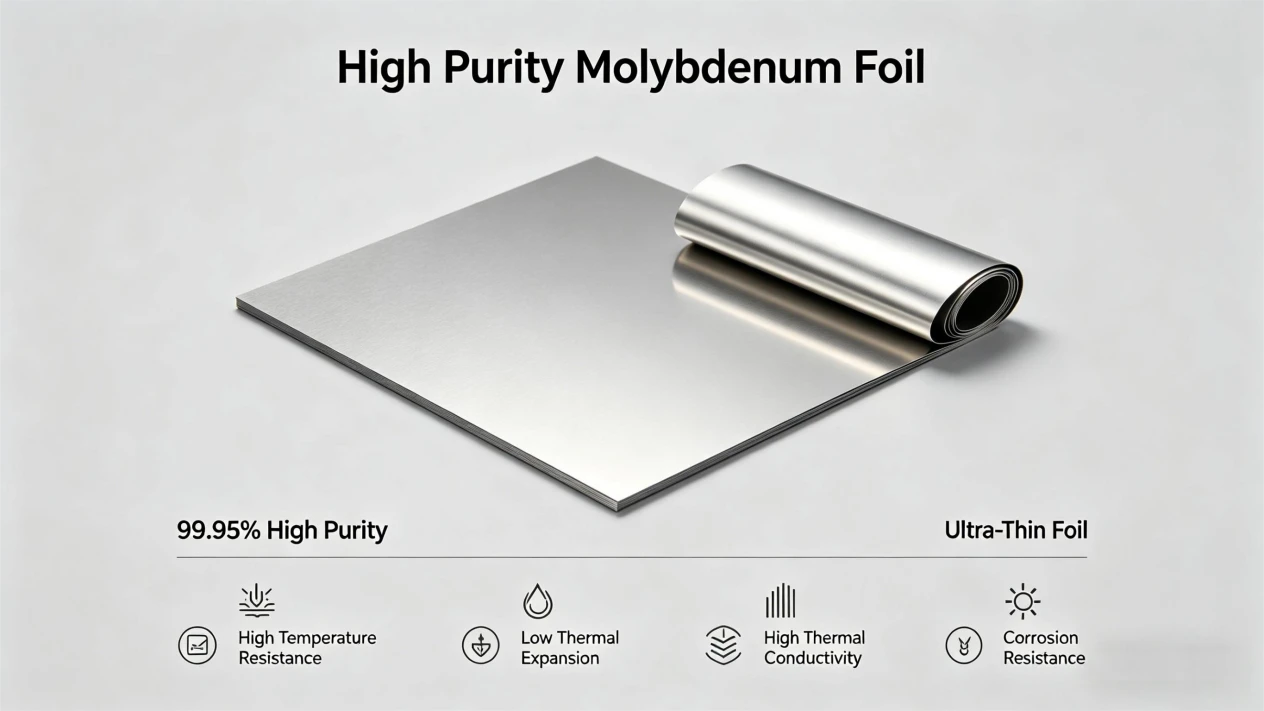
High Purity Molybdenum Foil is a thin sheet-like material made of metallic molybdenum (Mo), with a purity typically exceeding 99.95%. Common specifications include 99.97%, 99.99%, and even 99.999%. It combines the outstanding physical and chemical properties of molybdenum metal with the lightness, thinness, and flexibility of foil materials, making it an indispensable key material in many high-tech fields. Pure Molybdenum Foil is a commonly used term for high-grade molybdenum materials in industrial and engineering applications.

- Product Introduction
High Purity Molybdenum Foil
High Purity Molybdenum Foil is a thin sheet-like material made of metallic molybdenum (Mo), with a purity typically exceeding 99.95%. Common specifications include 99.97%, 99.99%, and even 99.999%. It combines the outstanding physical and chemical properties of molybdenum metal with the lightness, thinness, and flexibility of foil materials, making it an indispensable key material in many high-tech fields. Pure Molybdenum Foil is a commonly used term for high-grade molybdenum materials in industrial and engineering applications.
Product Features
1.The high purity advantage is remarkable.
The purity of this molybdenum foil exceeds 99.95%. This characteristic significantly reduces the negative impact of impurities. The iron, nickel, carbon and other impurities present in ordinary molybdenum will reduce its electrical conductivity and thermal conductivity, and may even form brittle phases under high-temperature conditions. However, the molybdenum foil ensures stable and reliable performance. High purity enables the molybdenum foil to withstand temperatures of up to 1900°C or higher in an inert atmosphere or vacuum. In semiconductor or electron beam applications, impurities may cause micro-leakage or uneven emission. High-purity molybdenum foil becomes an essential material to meet such strict requirements.
2. Unique foil shape
The thickness range of this molybdenum foil typically falls between 0.005 mm and 0.1 mm (5 microns to 100 microns). The width and length can be customized according to customer requirements. Although molybdenum is a hard metal by nature, when its thickness is reduced to a certain extent, the molybdenum foil acquires a certain degree of flexibility, facilitating operations such as winding, punching, or layering. Moreover, its sheet-like shape enables it to have a higher specific surface area, which can result in higher efficiency in applications requiring extensive contact, such as heating, shielding, or catalysis.
3. The inherent advantages of molybdenum metal are prominent
The molybdenum foil inherits many excellent characteristics of molybdenum metal. Its melting point is as high as 2620°C, much higher than that of common metals such as stainless steel, copper or aluminum. The low thermal expansion coefficient is approximately 4.8 × 10⁻⁶ /K, similar to that of silicon and glass ceramics, resulting in relatively small thermal stress. In terms of electrical and thermal conductivity, it is about 1/3 of that of copper, but far superior to many high-temperature alloys. Moreover, the molybdenum foil has excellent thermal shock resistance, capable of withstanding drastic temperature changes without cracking, and has stable corrosion resistance to most acids (except hydrofluoric acid and concentrated nitric acid) and molten metals.
Application
Pure Molybdenum Foil is widely applied across multiple high-performance industries due to its stability and consistency.
1.In the field of high-temperature furnace components
In a vacuum or protected atmosphere furnace, The molybdenum foil can be used as a heat insulation screen. By stacking multiple layers of molybdenum foil, it effectively reflects thermal radiation. At the same time, it can also be made into heating strips, trays, crucibles, etc., and used for sintering materials such as sapphire, ceramics, and hard alloys, meeting the usage requirements in high-temperature environments.
2. Semiconductor and Electronics Field
During the ion implantation process, High Purity Molybdenum Foil can be used as a gate electrode and an accelerating electrode; in MOCVD (Metal Organic Chemical Vapor Deposition) equipment, it can be used as a heating substrate; in the flat panel display (such as TFT-LCD) field, it can be used as a backboard material for sputtering molybdenum target; in power electronic devices, it can also be used as a heat sink or heat dissipation plate to ensure the normal operation of electronic devices.
3. Aerospace and Defense Field
The molybdenum foil can be used to manufacture rocket nozzles and the high-temperature-resistant shielding layer at the leading edge of missile tail wings, which can withstand extreme high-temperature environments. In liquid metal (such as lithium, lead-bismuth alloy) circuits, it can be used as a foil seal component to ensure the sealing and stability of the system.
4. Medical Device Field
In X-ray tubes, The molybdenum foil can serve as the rotating support structure for the target plate, leveraging its high thermal conductivity and low gas permeability to ensure the performance of the X-ray tube. In radiotherapy collimators, multiple layers of molybdenum foil can form gratings to achieve precise radiotherapy positioning.
5. Research and New Energy Field
In the high-temperature and high-pressure synthesis experiments in the laboratory, The molybdenum foil can be used as a heating element to provide a stable high-temperature environment. In solid-state batteries or fuel cells, it can be used as a current collector or an isolation layer to enhance the performance of the battery. Additionally, it can also be used as a protective coating on the surface of graphite or carbon-carbon composite materials to extend the service life of the materials.

Specification
|
Item |
Specification |
|
Material |
High Purity Molybdenum (Mo) |
|
Purity |
≥ 99.9% (3N) / up to 99.99% (4N) |
|
Density |
10.2 g/cm³ |
|
Thickness Range |
0.01 – 0.5 mm (customizable) |
|
Width |
≤ 300 mm (customized available) |
|
Length |
Coil or cut-to-size sheets |
|
Surface Condition |
Bright / Rolled / Polished |
|
Melting Point |
2623°C |
|
Operating Temperature |
Up to 1800°C (vacuum/inert atmosphere) |
|
Max Temp (Oxidizing) |
≤ 600°C |
|
Tensile Strength |
≥ 600 MPa (typical) |
|
Elongation |
5% – 15% |
|
Thermal Conductivity |
~138 W/m·K |
|
Thermal Expansion Coefficient |
~4.8 × 10⁻⁶ /K |
|
Standard |
ASTM B386 / GB/T 3876 |
|
Applications |
Semiconductor, vacuum furnace, aerospace, electronics, scientific research |
|
Processing |
Rolling, cutting, annealing (custom OEM available) |
Customized Service

We are well aware that different customers have varying demands for the products. Therefore, we offer comprehensive customized services.
According to the customer's requirements, we can customize the thickness, width and length of the molybdenum foil. The thickness range is between 0.005 mm and 0.1 mm, and the width and length can be adjusted flexibly.
At the same time, during the production process, we will strictly adjust the production process parameters according to the customer's special requirements to ensure that the products meet the specific application scenarios of the customers.
We have a professional technical team that can communicate deeply with the customers and provide professional suggestions and solutions to help the customers achieve their project goals.

FAQ
1. What is Pure Molybdenum Foil used for?
High purity molybdenum foil is widely used in semiconductors, vacuum furnaces, aerospace components, thin-film deposition (PVD/CVD), and scientific research due to its excellent high-temperature stability and conductivity.
2. What purity levels are available?
Typical purity ranges from 99.9% (3N) to 99.99% (4N), depending on application requirements such as electronics, vacuum systems, or precision instruments.
3. What temperature can molybdenum foil withstand?
It can operate up to ~1800°C in vacuum or inert gas environments, and has a melting point of 2623°C, making it ideal for extreme heat applications.
4. Can molybdenum foil be used in air at high temperatures?
Not recommended. In oxidizing environments, it should be limited to around ≤600°C, as oxidation accelerates at higher temperatures.
5. What thickness range is available?
Common thickness ranges from 0.01 mm to 0.5 mm, and ultra-thin foils can be customized for electronics or research applications.
6. Why is molybdenum foil used in semiconductors?
Because it has:
High thermal conductivity
Low thermal expansion
Stable electrical properties
It is ideal for thin-film deposition, substrates, and heat spreaders.
7. Is molybdenum foil corrosion resistant?
Yes. It has strong resistance to acids, molten metals, and inert gas environments, but it is not stable in strongly oxidizing conditions at high temperature.
8. Can molybdenum foil be customized?
Yes. It can be customized in:
Thickness
Width (up to 300 mm or more)
Length (coil or cut sheet)
Surface finish (bright, rolled, polished)
9. What industries commonly use molybdenum foil?
Main industries include:
Semiconductor & electronics
Aerospace & defense
Vacuum furnace manufacturing
Solar energy
Scientific laboratories
10. What are the main advantages of molybdenum foil compared to other metals?
Compared with other metals, it offers:
Higher melting point than most metals
Lower thermal expansion (high dimensional stability)
Excellent thermal & electrical conductivity
Strong performance in vacuum/high-temperature environments
This is why Pure Molybdenum Foil is preferred in high-temperature and vacuum environments.
Hot Tags: high purity molybdenum foil, China high purity molybdenum foil manufacturers, suppliers, factory, Molybdenum Aluminum Alloy, molybdenum products, Nickel Molybdenum Alloy, Pure Molybdenum Foil, TZM Alloy Molybdenum, TZM Molybdenum Alloy


