




G.657 A1 Vs G.657 A2 Fiber: Which Bend-Insensitive Fiber Is Right For Your Network?
 Aug 24, 2026|
For FTTH, indoor optical networks, high-density fiber distribution and compact communication equipment, the choice between G.657 A1 fiber and G.657 A2 fiber is usually not a question of which product is better. The more practical question is: how small does your installation space require the fiber to bend?
According to the current ITU-T G.657 (08/2024) recommendation, G.657.A1 is specified for a minimum design radius of 10 mm, while G.657.A2 supports a smaller minimum design radius of 7.5 mm. Both belong to Category A and can be used in networks where G.652.D fiber is specified.
For buyers in the United States, Germany, the UK, Japan and South Korea, the selection can therefore be simplified into one decision: choose A1 when 10 mm bending performance is sufficient; choose A2 when the installation requires tighter routing down to 7.5 mm.
G.657.A1 vs G.657.A2: What Is the Real Difference?
| Item | G.657.A1 Fiber | G.657.A2 Fiber |
|---|---|---|
| Minimum design radius | 10 mm | 7.5 mm |
| Bend resistance | Improved | Higher |
| G.652.D compliance | Yes | Yes |
| Typical application | General access networks, FTTH | Compact FTTH, indoor and high-density networks |
| Installation space requirement | Moderate | More limited |
| Best selection logic | 10 mm is sufficient | Smaller than 10 mm is required |
The difference is mainly related to macrobending performance. Under the ITU-T specification, G.657.A2 provides stronger bending performance than A1. At 1550 nm, for example, the specified maximum loss for the relevant one-turn test is 0.75 dB for A1 at 10 mm and 0.5 dB for A2 at 7.5 mm.
This does not mean A2 should automatically replace A1. If the cable route already provides enough space for a 10 mm radius, purchasing A2 may not provide a meaningful project benefit.
When Should You Choose G.657.A1 Fiber?
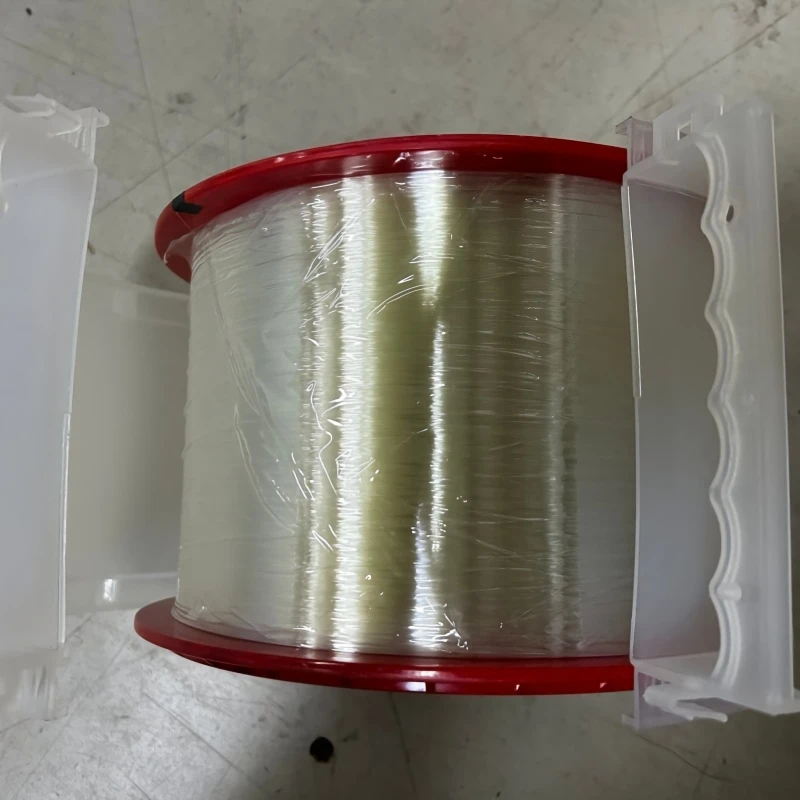
Choose G.657.A1 fiber when the network requires improved bend performance but does not have extremely tight routing requirements.
Typical applications include:
FTTH access networks
Outdoor-to-indoor fiber connections
Residential optical distribution
ODF and fiber distribution systems
General telecom access networks
Fiber optic cable manufacturing
For a standard FTTH project where the installation team can maintain a minimum design radius of 10 mm, A1 is often the more straightforward choice.
The advantage is that it provides improved bending performance while remaining within the G.652.D-compliant Category A framework.
Buyer decision: If your engineering drawing shows that the fiber can maintain a 10 mm or larger radius, G.657.A1 is usually sufficient.
When Should You Choose G.657.A2 Fiber?
Choose G.657.A2 fiber when installation space is restricted and the routing design requires a smaller bending radius.
Typical applications include:
High-density FTTH
Indoor optical wiring
Compact distribution boxes
Small wall-mounted optical terminals
High-density ODF systems
Telecom equipment with limited routing space
Compact data-center fiber management
This requirement is becoming more relevant as optical networks move toward higher fiber density and smaller equipment. In 2026, the industry is also seeing continued development of smaller-diameter bend-insensitive fiber. Prysmian, for example, introduced a 160 μm bend-insensitive single-mode fiber aimed at higher-density cables and space-constrained ducts, buildings and data centers, with G.652/G.657.A2 compliance.
The industry direction is clear: network density is increasing, while available installation space is decreasing.
Buyer decision: If your design requires routing at 7.5–10 mm, G.657.A2 is the more appropriate choice.
A Practical Procurement Example
Consider an FTTH upgrade project in a multi-unit residential building in Germany.
The existing communication cabinet has limited space, and additional fiber connections need to be installed without replacing the entire distribution structure. If the available routing path requires bends below 10 mm, using A1 would not solve the fundamental installation problem.
In this situation, the engineering team should evaluate G.657.A2 fiber, because its specified minimum design radius is 7.5 mm.
By contrast, if another access-network project has sufficient cable-management space and the minimum design radius remains above 10 mm, A1 can meet the bending requirement without selecting a tighter-bend specification that the project does not actually need.
This is why fiber procurement should begin with the installation drawing and required bend radius, rather than simply asking suppliers for the lowest-priced bend-insensitive fiber.
What Should Buyers Confirm Before Ordering?
For international projects, procurement teams should confirm at least six parameters:
Fiber type: G.657.A1 or G.657.A2.
Minimum design bend radius: 10 mm or 7.5 mm.
Operating wavelength: such as 1310 nm, 1550 nm or 1625 nm.
Optical performance: attenuation, mode-field diameter, chromatic dispersion and PMD.
Compatibility: particularly when integrating with existing G.652.D infrastructure.
Quantity and delivery schedule: especially for large FTTH or cable-manufacturing projects.
G.657.A1 and G.657.A2 are not simply interchangeable products with different names. The correct choice should match the actual network architecture and installation conditions.
China Super Tech: Standard Stock and Customized Fiber Supply
China Super Tech Co., Ltd. provides G.657.A1 fiber, G.657.A2 fiber, bend-insensitive single-mode fiber and related optical fiber products for international customers. Our optical fiber product range covers multiple bend-insensitive fiber solutions for FTTH, access networks and high-density fiber applications.
Our standard products are maintained with available inventory to support faster shipment. For projects requiring specific specifications, lengths, packaging or other technical requirements, customized solutions can also be evaluated.
China Super Tech is not limited to optical fiber. Our product portfolio also includes titanium alloys, synthetic diamond, niobium, tantalum, tungsten and molybdenum products, allowing international industrial customers to consolidate sourcing through one supplier. The company has more than 11 years of experience and exports products to more than 30 countries and regions.
For buyers in the US, Germany, UK, Japan and South Korea, our one-stop service covers product selection, specification confirmation, customized manufacturing, quality control and delivery.
If your project is still deciding between G.657.A1 and G.657.A2, send us the required bend radius, wavelength, fiber quantity and application. China Super Tech can evaluate the specification and provide the corresponding standard-stock or customized solution.
Final Decision: A1 or A2?
The selection can be summarized simply:
Choose G.657.A1 → your installation can maintain a 10 mm minimum design radius and you need a standard bend-insensitive access-network fiber.
Choose G.657.A2 → your installation requires a 7.5 mm minimum design radius, particularly for compact FTTH, indoor routing or high-density fiber management.
Do not choose A2 simply because it has stronger bend performance. Choose it when the project actually needs the smaller bend radius.
FAQ
1. Is G.657.A2 better than G.657.A1?
Not necessarily. G.657.A2 provides stronger bending performance and supports a smaller minimum design radius of 7.5 mm, while G.657.A1 is specified for 10 mm. If your installation does not require tighter bends, A1 may already meet the project requirement.
2. Can G.657.A2 replace G.652.D fiber?
G.657.A2 belongs to Category A and is compliant with G.652.D requirements under the current ITU-T G.657 recommendation. However, the complete project should still verify attenuation, dispersion, PMD, wavelength, connector/splicing requirements and other system specifications before substitution.