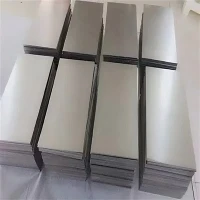
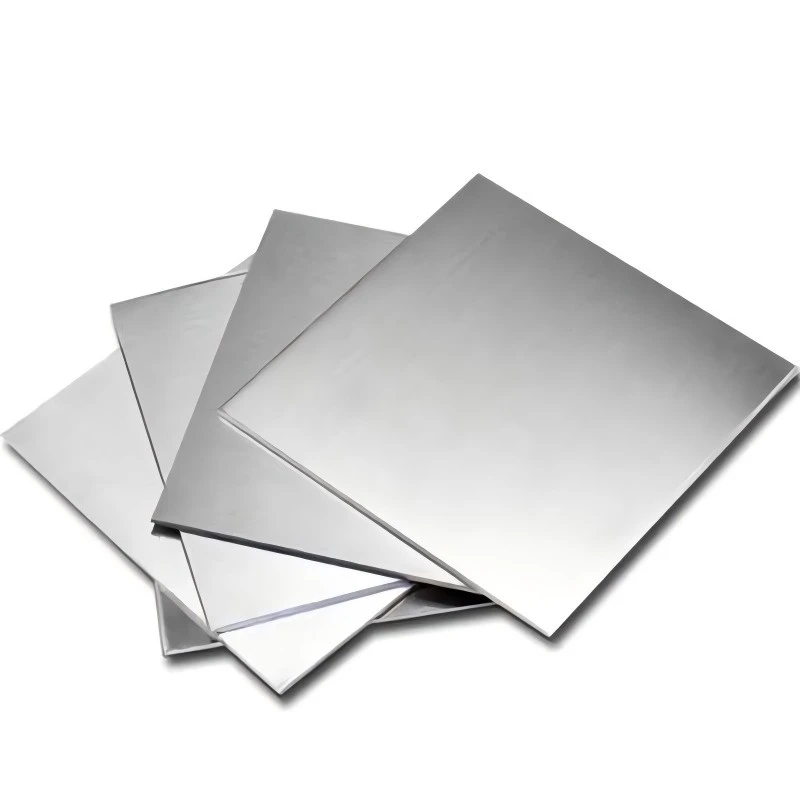
Molybdenum Thin Sheets
All-Where supplies commercial-grade Molybdenum Thin Sheets manufactured from unalloyed molybdenum (Mo >= 99.95%) conforming to ASTM B386 standards.
Engineered for mold makers, precision machining shops, and industrial component distributors worldwide, our rolled sheets deliver high-temperature strength, low thermal expansion, and dimensional reliability in demanding thermal environments.

- Product Introduction
High-Precision Molybdenum Thin Sheets for Plastic Injection Molds, EDM Electrodes, and High-Temperature Vacuum Furnaces
All-Where supplies commercial-grade Molybdenum Thin Sheets manufactured from unalloyed molybdenum (Mo >= 99.95%) conforming to ASTM B386 standards.
Engineered for mold makers, precision machining shops, and industrial component distributors worldwide, our rolled sheets deliver high-temperature strength, low thermal expansion, and dimensional reliability in demanding thermal environments.
Core Technical Properties
Molybdenum is a refractory metal featuring a high melting point of 2623 deg C (4753 deg F). Compared to conventional steel, copper, or nickel alloys, it retains structural integrity and resists thermal softening at elevated temperatures.
These thin sheets are produced via powder metallurgy, followed by multi-pass hot and cold rolling to achieve strict thickness tolerances and uniform surface finishes.
Melting Point: 2623 deg C
Density: 10.2 g/cm3
Coefficient of Thermal Expansion (CTE): Approx. 5.1 x 10^(-6) /K (20 deg C to 100 deg C)
Thermal Conductivity: Approx. 138 W/(m·K) at room temperature
Material Purity: >= 99.95% (Pure Mo1 / TZM alloy grades available)
Key Performance Advantages
High-Temperature Strength & Thermal Stability
Maintains mechanical load-bearing capacity and resists creep in continuous heat zones up to 1200 deg C in vacuum or protective atmospheres, significantly reducing thermal deformation compared to standard tool steels.
Low Thermal Expansion for Precision Tolerances
With a low CTE of 5.1 x 10^(-6) /K, molybdenum experiences minimal dimensional shift during rapid thermal cycling. This ensures tight machining tolerances and prevents shifting in precision mold inserts and EDM components.
Balanced Thermal Conductivity
A thermal conductivity of 138 W/(m·K) allows for rapid, uniform heat dissipation, avoiding local hot spots in thermal processing equipment and mold temperature control plates.
Technical Specifications & Manufacturing Capabilities
|
Parameter |
Specification Details |
|
Material Grade |
Pure Molybdenum (Mo >= 99.95%) / TZM Alloy |
|
Executive Standard |
ASTM B386 |
|
Available Thickness |
0.05 mm to 3.0 mm (Precision tolerance rolling available) |
|
Width |
Up to 600 mm max (Depending on thickness) |
|
Length / Form |
Custom cut sheets up to 2000 mm, or supplied in continuous strip/coil |
|
Surface Finish |
Chemically cleaned (Matte Rolled), Fine-Ground, or Mirror-Polished |
|
Secondary Processing |
Laser cutting, wire EDM, stamping, CNC machining per CAD drawings |
Primary Industrial Applications
Plastic Injection Molds: Mold inserts, heat-choke plates, and localized heat-transfer components in areas prone to thermal fatigue.
Electrical Discharge Machining (EDM): Precision electrodes and specialized cutting components requiring high arc erosion resistance.
Vacuum Furnaces: Heat shields, heating element supports, sintering boats, and structural fixture plates.
Electronics & Semiconductors: High-temperature component carriers and thin-film processing equipment internals.
Quality Control & Documentation
Our production workflow ensures batch-to-batch consistency:
Powder Metallurgy & Sintering: Isostatically pressed high-purity molybdenum powder sintered at high temperatures to eliminate internal voids.
Rolling & Annealing: Controlled multi-stage rolling with intermediate vacuum annealing to optimize grain structure and release residual stress.
Strict Inspection Protocol:
• Chemical Analysis: Spectrographic testing verifying purity >= 99.95%.
• Dimensional Verification: Micrometer and digital laser checks for thickness, width, and flatness tolerances.
• Surface Check: Visual and tactile inspection for rolling defects, laminations, or oxidation.
• Traceability: Each shipment includes a comprehensive Material Test Report (MTR) confirming chemical composition, density, and mechanical properties.
Packaging & Global Logistics
To prevent transit damage, oxidation, and moisture degradation during international ocean or air freight:
Interleaved with anti-corrosion paper or high-density plastic film to avoid surface scratches.
Vacuum-sealed in moisture-resistant polyethylene bags with active desiccant packets.
Packed in export-compliant, fumigation-free wooden cases or reinforced rigid cartons.
Frequently Asked Questions
Q: What thickness ranges can you supply for thin sheets?
A: We routinely supply thicknesses ranging from 0.05 mm up to 3.0 mm. Finer or specific gauge tolerances can be scheduled via custom rolling runs.
Q: Can you cut sheets according to my CAD drawings?
A: Yes. We offer in-house laser cutting, wire EDM, and shearing services to deliver components cut precisely to your blueprint specifications, minimizing scrap material.
Q: What surface condition is standard for these sheets?
A: The standard finish is a chemically cleaned, matte-rolled surface. Ground and polished finishes are available for applications requiring ultra-flatness or low surface roughness (Ra).
Q: What is your Minimum Order Quantity (MOQ) for custom sizes?
A: MOQ depends on the thickness and dimensions required. We support both low-volume prototyping runs for R&D departments and large-scale OEM production. Please share your specifications for a prompt quotation.
Hot Tags: molybdenum thin sheets, China molybdenum thin sheets manufacturers, suppliers, factory